A heated public debate has erupted following the Greek government’s recent decision to significantly increase the salaries of the Archbishop of Athens and All Greece, as well as the metropolitans of the Church of Greece. The relevant provision is included in Article 56 of the Ministry of National Economy and Finance’s omnibus bill, bringing the monthly gross salary of church hierarchs to a uniform rate of €4,671.90.
According to the details of the measure, the pay increases range from 60% to 95%, while the method of calculating remuneration is being overhauled entirely. The previous system of base salary and allowances is being replaced by a unified pay framework, linked to the highest administrative grades of the state apparatus. Prime Minister Kyriakos Mitsotakis defended the legislative move, noting that it addressed a longstanding request from the Church. He stated that he found it difficult to accept that metropolitans were earning less than the mufti, and also highlighted the administrative responsibilities they carry as heads of their respective dioceses.
However, the measure comes at a time when discussions about incomes, public sector pay, and the financial pressures facing many households remain particularly intense. For this reason, the decision has become a focal point of public debate, with differing views on its timing and the priorities of economic policy.
This is not a matter of ecclesiastical austerity. It is a matter of the fact that in the Greek public sector, there exists a ratio between one’s position and the corresponding salary entitlement.
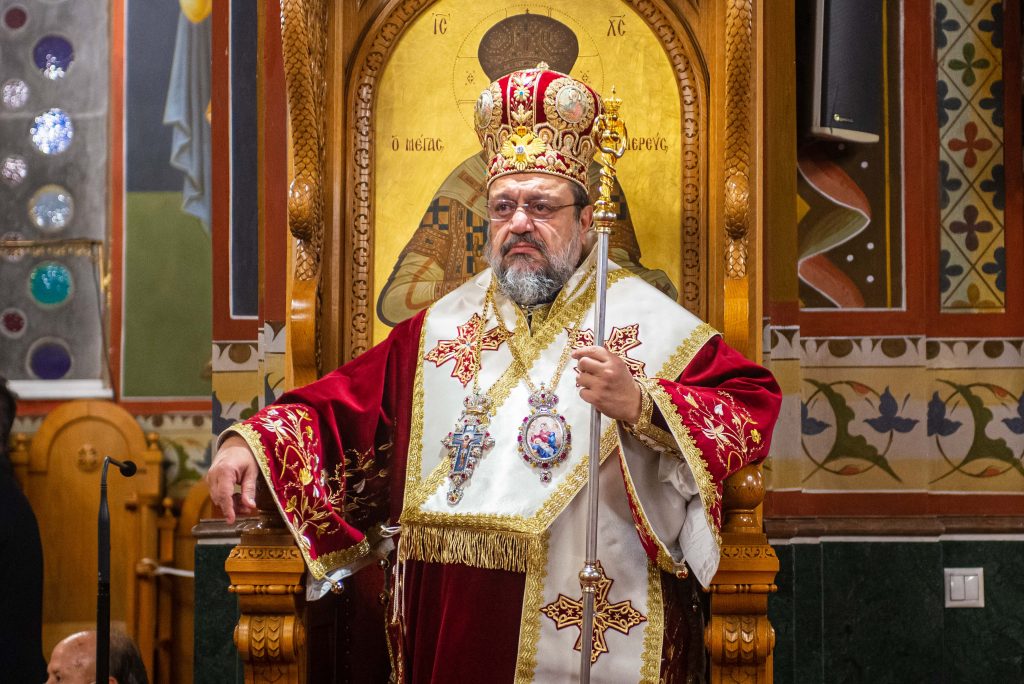
In this context, Metropolitan of Messenia, Chrysostomos, speaking to Parapolitika, explained that “this decision is a fair resolution of a request that has been pending since 2003 — when, for the first time, the salaries of bishops were aligned with those of senior judges.” According to him, “from 2003 until 2017, there was no adjustment to this pay scale whatsoever. There was a special salary structure in place — a position-based salary, with no allowances, no seniority bonuses, no other form of supplement. And then the financial crisis hit, which brought a complete pay freeze. In 2017, the pay structure changed. It was incorporated into the general unified civil service pay scale, resulting in our salaries being recalibrated according to the new pay regulations in force — specifically, in line with the position we hold, which corresponds to that of a ministry secretary-general. That is how this adjustment came about.”
When asked whether the increase actually reflects the real needs of bishops, the Metropolitan of Messenia replied: “Real needs are one thing; whether it corresponds to the pay grades and positions we hold as public officials is another. The latter applies.”
Metropolitan of Messenia: “The issue concerns pay alignment with positions of responsibility”
Addressing criticism over whether the raise contradicts the spirit of ecclesiastical austerity, he argued that the matter has nothing to do with austerity, but rather with aligning pay to the level of responsibility that metropolitans hold within the public sector. “This is not a matter of ecclesiastical austerity. It is a matter of the fact that in the Greek public sector, there exists a ratio between one’s position and the corresponding salary entitlement. We acknowledge that there may be financial hardship among people. But you should know that the Church contributes €117 million every year to meet the social, pastoral, and charitable needs of the people. When the additional cost of what they’re giving us amounts to €7.2 million, and the Church is already giving €117 million for its pastoral, social, and charitable work, you can see that we are comparing very unequal things. We are comparing unequal things. Our intention is not to come out and say all this publicly, but unfortunately we are forced to say things that we shouldn’t need to say. Nor should metropolitans be provoked into disclosing whether or not they donate part of their salary to help people in need,” he said pointedly.
“A matter for the state”
The Metropolitan of Messenia also responded to criticism from citizens who may themselves be facing financial difficulties: “The Church is not there to solve these problems. The Church helps address problems on a supplementary basis at every local level — that is, through the dioceses — and it never concerns itself with how financial, wage, or pension issues will be resolved. That is not its domain. But whenever it is called upon, it responds. I believe it is populism to make these kinds of comparisons. Just because some people are hungry doesn’t mean everyone should go hungry, and just because some people are wealthy doesn’t mean everyone should become wealthy. That’s not how it works.” For those who question the Church’s contribution to social support, Chrysostomos placed particular emphasis on the charitable work being carried out, arguing that it requires no public spotlight.
“The Church produces social good. We do this. But must I come out and declare how much of my own salary I give each month to help students or to support patients — mainly children? Must I announce this publicly? Is that my job? Or is my job simply to help them?” When asked whether he believes other professional sectors should receive comparable pay increases, he noted that this is a matter for the state. “I have no doubt that they should, but it is not our place to say so. That is a matter for the government and its economic team.” The debate sparked by the new pay legislation shows no sign of dying down with the passage of the law. On the contrary, it is expected to continue, as the differing perspectives surrounding the issue keep fuelling public discourse.
Published in Parapolitika