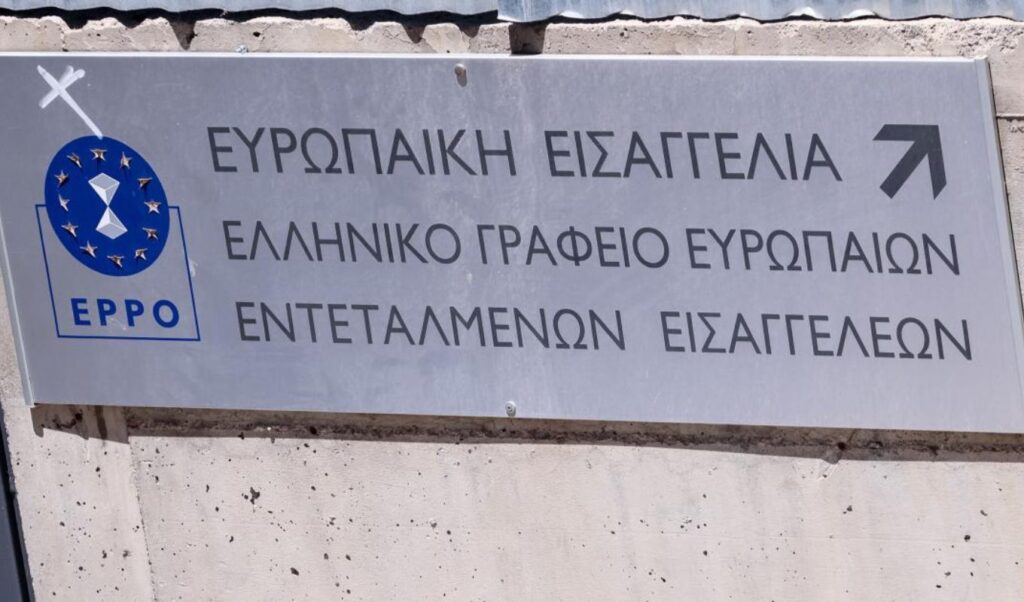
Details revealing the full scale of damage inflicted on both the Greek national budget and the European Union budget through unpaid VAT by an organized carousel fraud scheme have come to light. The European Public Prosecutor’s Office (EPPO) carried out searches of corporate premises and private residences across Attica and Kastoria, accompanied by a series of seizures. The fraud is linked to the trade of small electronic goods and suspected money laundering from criminal activities. The operation has proven to be European in scale, as it became clear over the past year that investigators were dealing with a complex network of companies operating across Greece, Bulgaria, Cyprus, and the Czech Republic. These companies appear to have been used to facilitate the movement of electronic goods throughout Greece and other EU member states. Evidence gathered so far indicates that losses amount to at least €46.9 million in unpaid VAT alone for the period 2021–2025, during which the network is alleged to have been active. An additional €24.2 million in VAT is also under scrutiny, with indications that it was either never remitted or was inaccurately declared to tax authorities.
Read more: Full Commission support for the European Public Prosecutor’s Office: “Public trust must not be undermined”
The modus operandi of the fraud network
Carousel fraud exploits the VAT exemption that applies to cross-border transactions between European Union member states. In this case, the suspects are alleged to have created a chain of companies, including so-called “missing traders” or shell companies. Through these entities, electronic goods were circulated between different companies and countries without the corresponding VAT ever being paid. In other instances, tax refund claims were reportedly submitted for VAT amounts that had never actually been remitted.
During the searches, investigators seized a large volume of documents, accounting records, and digital evidence. Authorities also discovered €99,000 in cash and confiscated three luxury vehicles. In addition, cryptocurrency holdings valued at approximately €900,000 were frozen, along with other digital assets totaling around €4.5 million. According to Greek authorities, this represents the largest digital asset freezing operation ever carried out in the country.
Freeze orders were also issued for 88 properties, estimated to be worth in excess of €4.5 million, as well as numerous bank accounts. The Anti-Money Laundering Authority played a key role in identifying and freezing accounts held in other EU member states. The operations were conducted by the Internal Affairs Service of the Security Corps, with support from the Digital Forensic Research and Analysis Subdivision. The investigation remains ongoing.