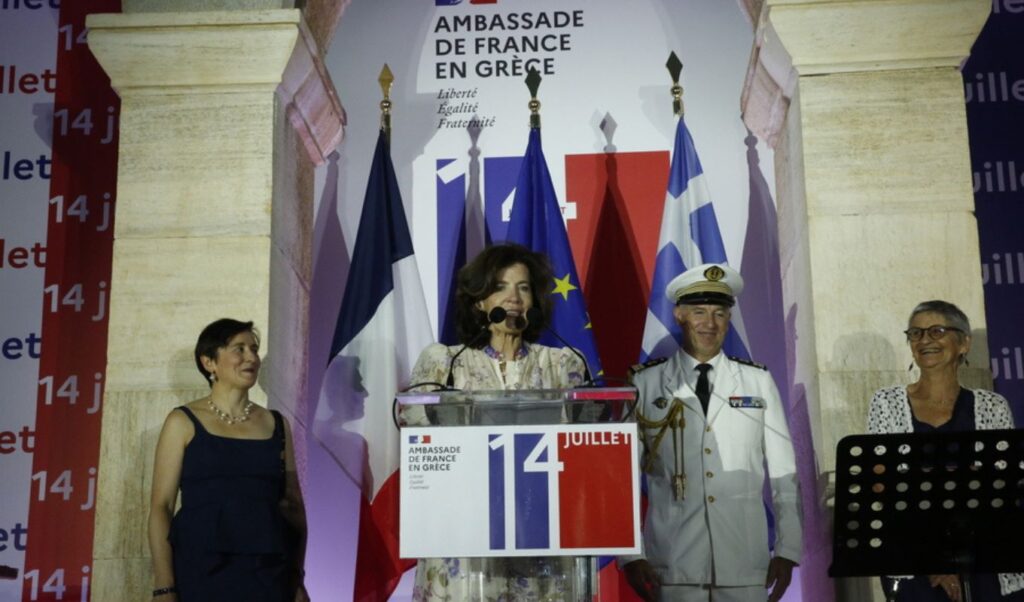
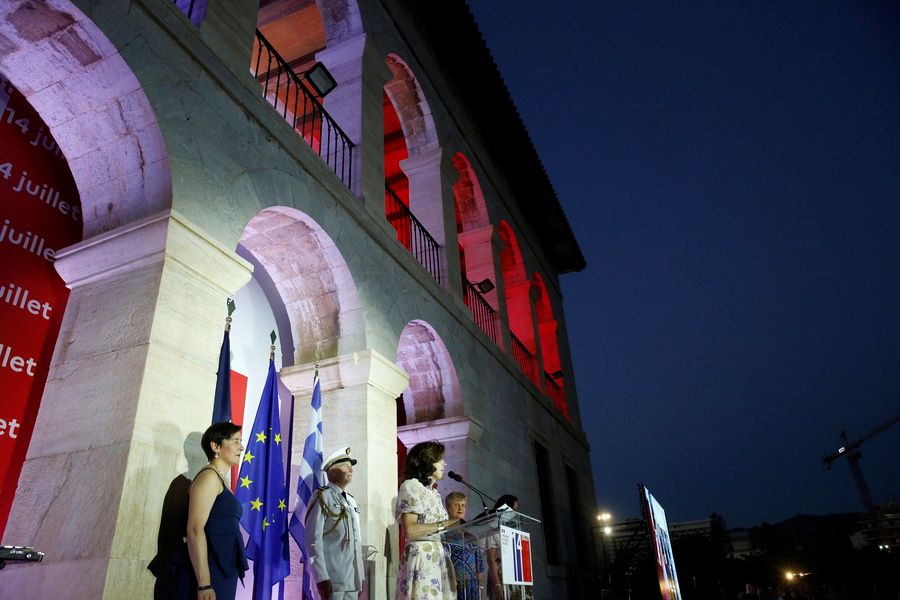
On the evening of July 14th, just before France’s semifinal against Spain in the 2026 World Cup, the Bastille Day celebration was held at the Byzantine Museum in Athens by the French Embassy. Minister of Shipping and Island Policy Vassilis Kikilias attended the event, along with several members of parliament and government officials. Laurence Auer, France’s outgoing Ambassador to Greece, was visibly moved. In her address — delivered in both French and Greek — she spoke of the deepening Greek-French strategic relationship. She also conveyed a message of continuity in bilateral cooperation, describing the strategic partnership between Greece and France as one that has taken on a multidimensional character, extending well beyond defense into the areas of economy, innovation, energy, civil protection, and European cooperation.
Read also: Macron shares photo with all leaders who attended the grand military parade for Bastille Day — including Zelensky and Mitsotakis
Laurence Auer: Joint military exercises
Ambassador Auer noted that defense cooperation remains the cornerstone of the strategic relationship, reflecting the shared commitment of both countries “to defend the European continent and their common values together.” In this context, she highlighted the joint military exercises “Iniohos” and “Orion 26”, the participation of Greek Rafale jets in the Champs-Élysées military parade, as well as the historic first participation of a Greek Army unit with Leopard tanks in the July 14th parade.
She made special mention of naval cooperation between the two countries, pointing to the arrival of the first Belharra frigate “Kimon” in Greece, joint operations in the Eastern Mediterranean, and collaboration on securing maritime navigation in the Strait of Hormuz. She also praised Greece’s role as commander of the European operation “Aspides,” noting that the country’s geographic position gives it a particularly significant role in protecting maritime trade routes.
Ambassador Auer further emphasized that the signing of the enhanced strategic partnership in April gave the bilateral relationship a new European and economic dimension, with a strong focus on innovation, technology, and industrial cooperation. As a prime example, she cited the letter of intent to cooperate in the field of nuclear energy, while noting that French companies continue to invest in Greece’s railway sector, infrastructure, services, and financial industry.
She also gave special attention to civil protection cooperation. The Ambassador referenced the deployment of French firefighters to Greece during the fire season, as well as the presence of Greek firefighters in southern France, calling these exchanges a model of European solidarity. She also welcomed the implementation of the agreement for the procurement of eight Airbus H225 search-and-rescue helicopters, which, she said, will enhance interoperability between the two countries.
In closing, Laurence Auer reflected on the historic ties between Greece and France, making special reference to Delacroix’s painting “Greece on the Ruins of Missolonghi,” which she described as a symbol of a friendship spanning two centuries — one rooted in a shared commitment to freedom and independence.
In a particularly heartfelt tone, she thanked the Greek authorities for their cooperation and support throughout her tenure, as well as her Embassy colleagues, noting that none of what was accomplished would have been possible without their collective effort. “Long live Greece, long live France, long live Greek-French friendship,” she concluded.
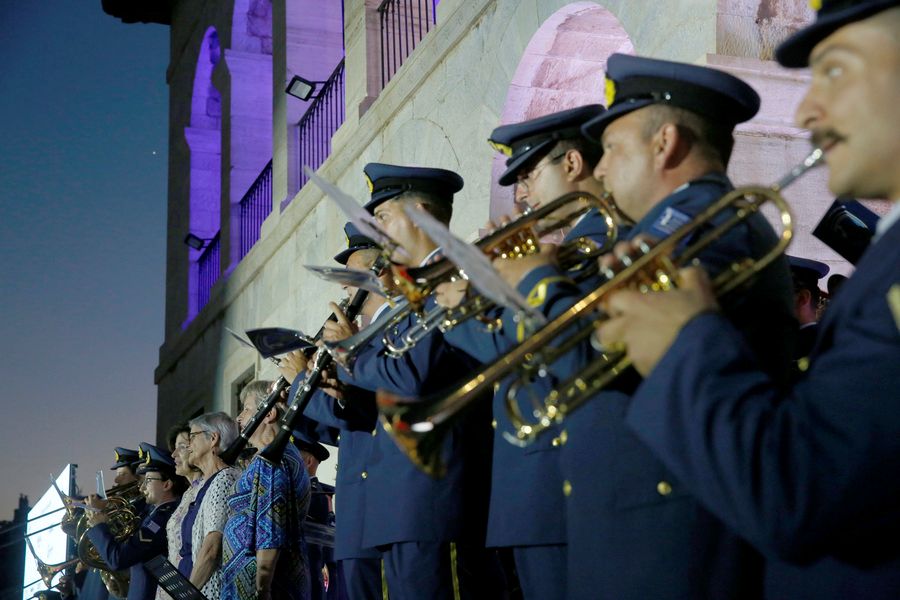
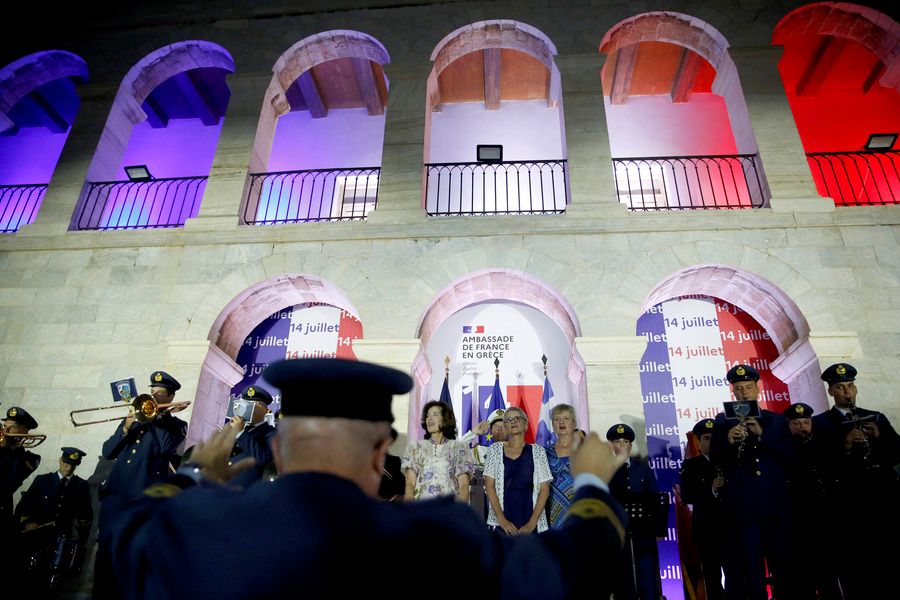
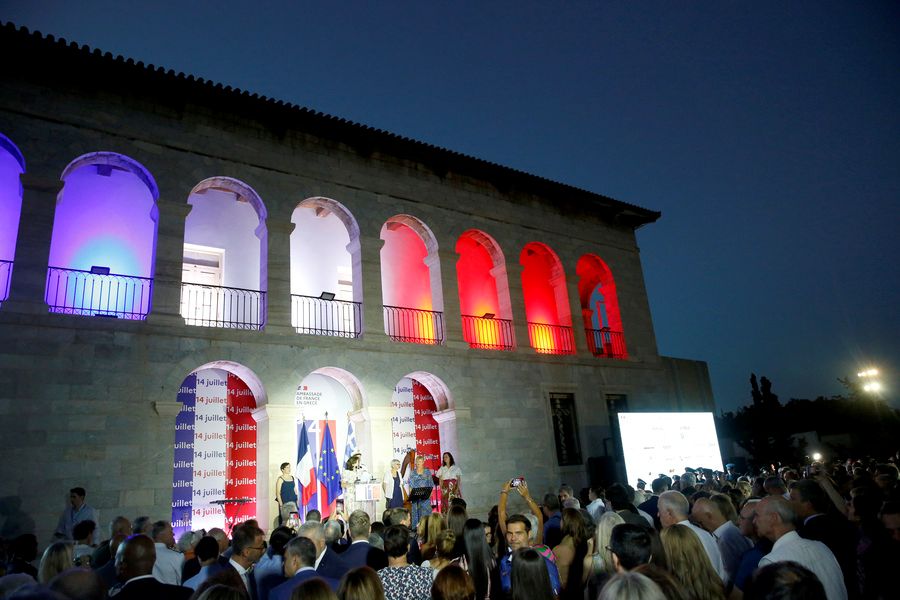
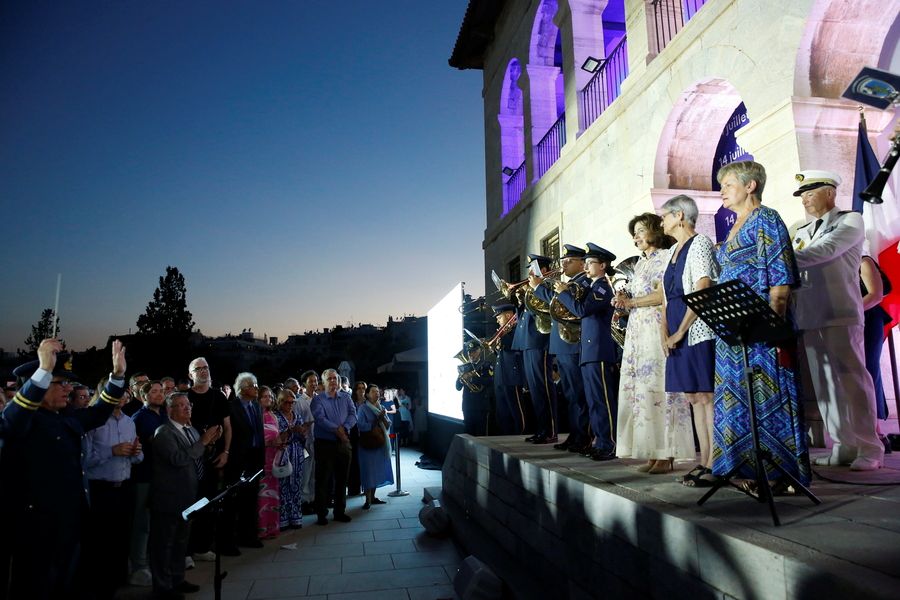
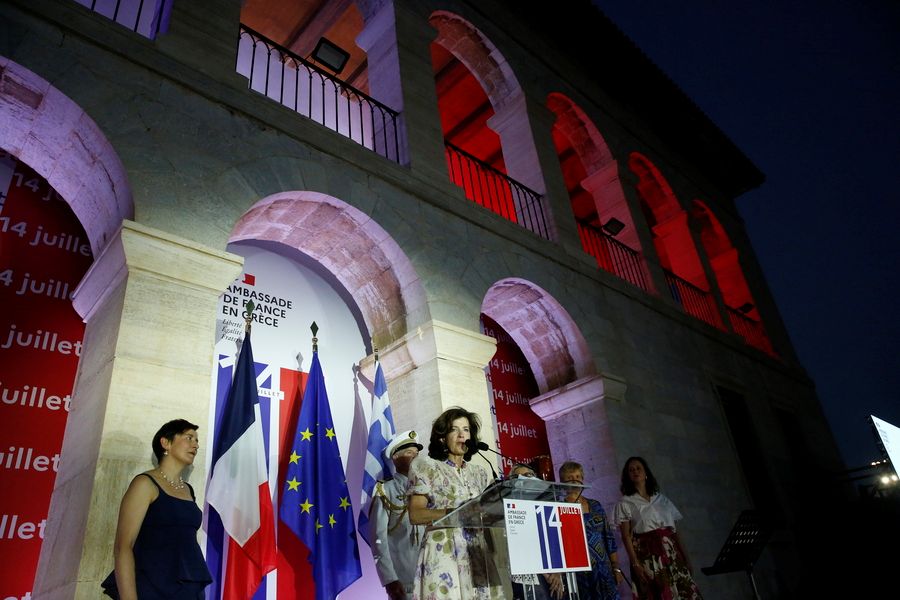
“A true friend of Greece”
Minister of Shipping and Island Policy Vassilis Kikilias, representing the government and Prime Minister Kyriakos Mitsotakis, paid tribute to the French Ambassador, calling her “a true friend of Greece” and “an outstanding diplomat.” Minister Kikilias emphasized that the bonds between Greece and France transcend governments and political circumstances, as they are grounded in the friendship between the two peoples and in shared historical values. He drew on the common chapters of their history — from the Enlightenment and the French Revolution to the Philhellenic movement and the contributions of figures such as Victor Hugo, Chateaubriand, Delacroix, and Pierre de Coubertin. He also underscored that the strategic relationship between the two countries is reflected in their defense cooperation, the Belharra frigates, the Rafale jets, and the close trilateral cooperation between Greece, France, and Cyprus — stressing that Europe must demonstrate its solidarity with member states through concrete action.
In closing, he personally thanked Laurence Auer for her contribution to Greek-French relations, stating that “it is people who make the difference” — and that she had truly done so during her tenure in Greece.