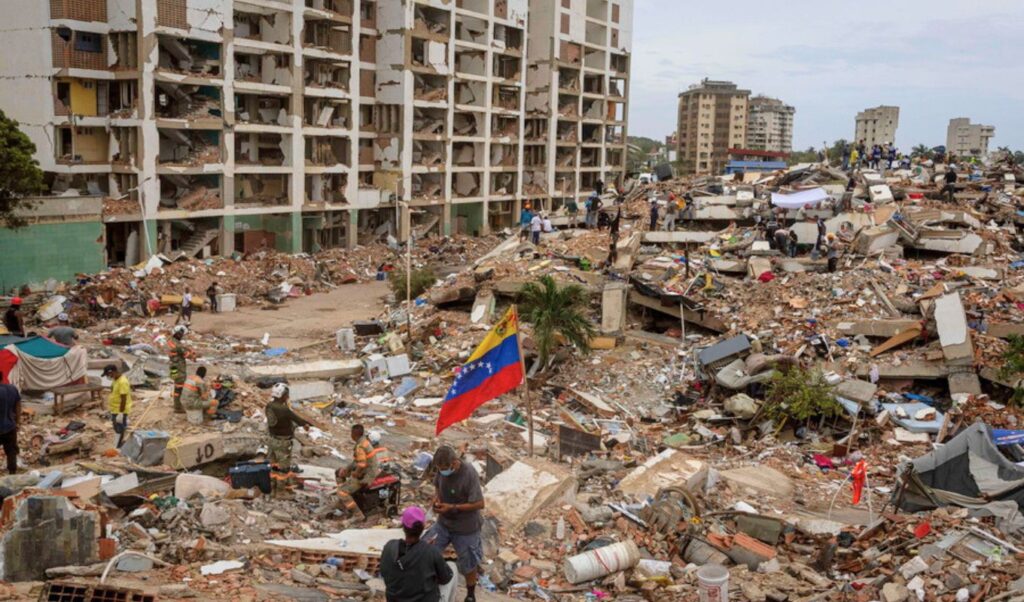
International search and rescue teams are gradually wrapping up their mission and preparing to withdraw from Venezuela, as heavy machinery continues to clear massive volumes of rubble left behind by the devastating earthquakes of June 24. For Raúl Alvarado, however, the search is far from over. His mother, father, and older sister remain buried beneath the ruins of the 16-story ELE 26 residential complex (“People’s Power Project”) in Caraballeda, one of the hardest-hit areas struck by the twin earthquakes measuring 7.2 and 7.5 on the Richter scale — the two powerful tremors separated by just 39 seconds.
Read also: Deadly earthquake in Venezuela: 12-year-old girl survived 32 hours trapped under rubble, eating ketchup and cheese (Video)
The family’s apartment on the third floor has been reduced to a shapeless mass of concrete and debris, now level with the ground. According to the still-provisional official death toll, more than 3,500 people have lost their lives, while tens of thousands remain missing.
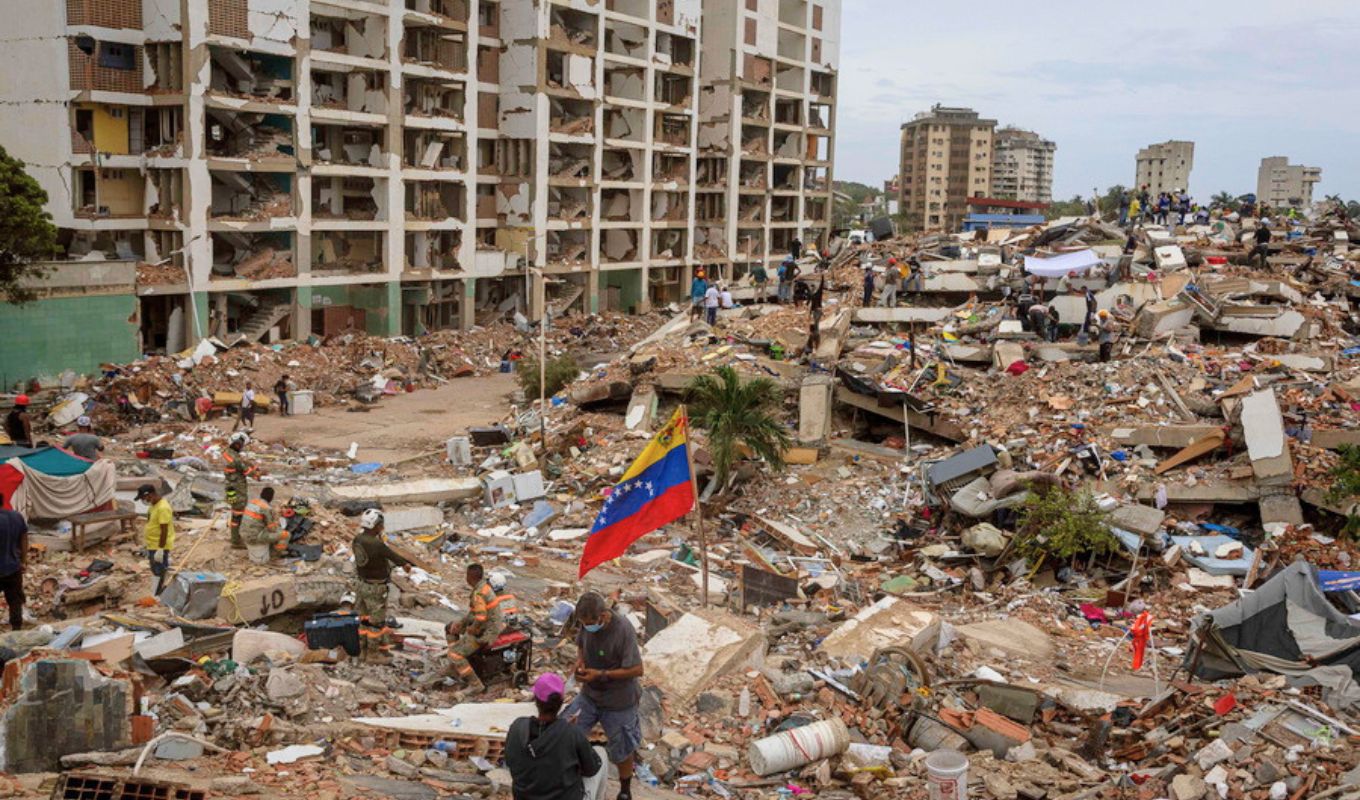
Twelve days after the tragedy, for many families — including Raúl’s — the search continues. Yet hope of finding survivors has all but vanished, and the only remaining prayer is to recover the bodies of their loved ones. Machinery has already cleared some sections of the ELE complex, with the ground shaking as volunteers and family members worked to move debris away by hand.
The last time Raúl Alvarado saw his family, from a neighboring apartment, “the three of them were together, holding each other,” after the first earthquake struck. The second — even more powerful — caused the building to collapse. The complex “was full of people. My neighbor had five young children — they’re all down there,” said Alvarado, 31, with bitter grief.
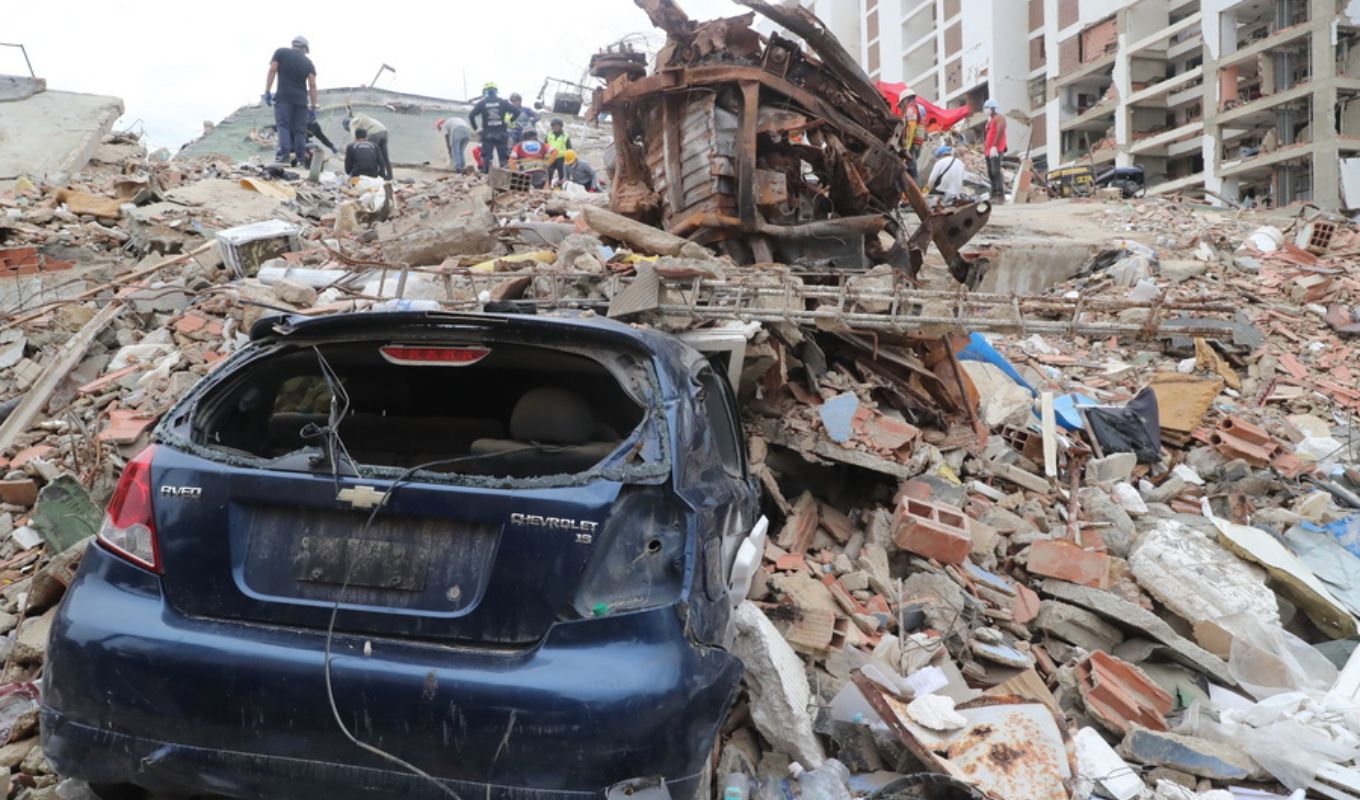
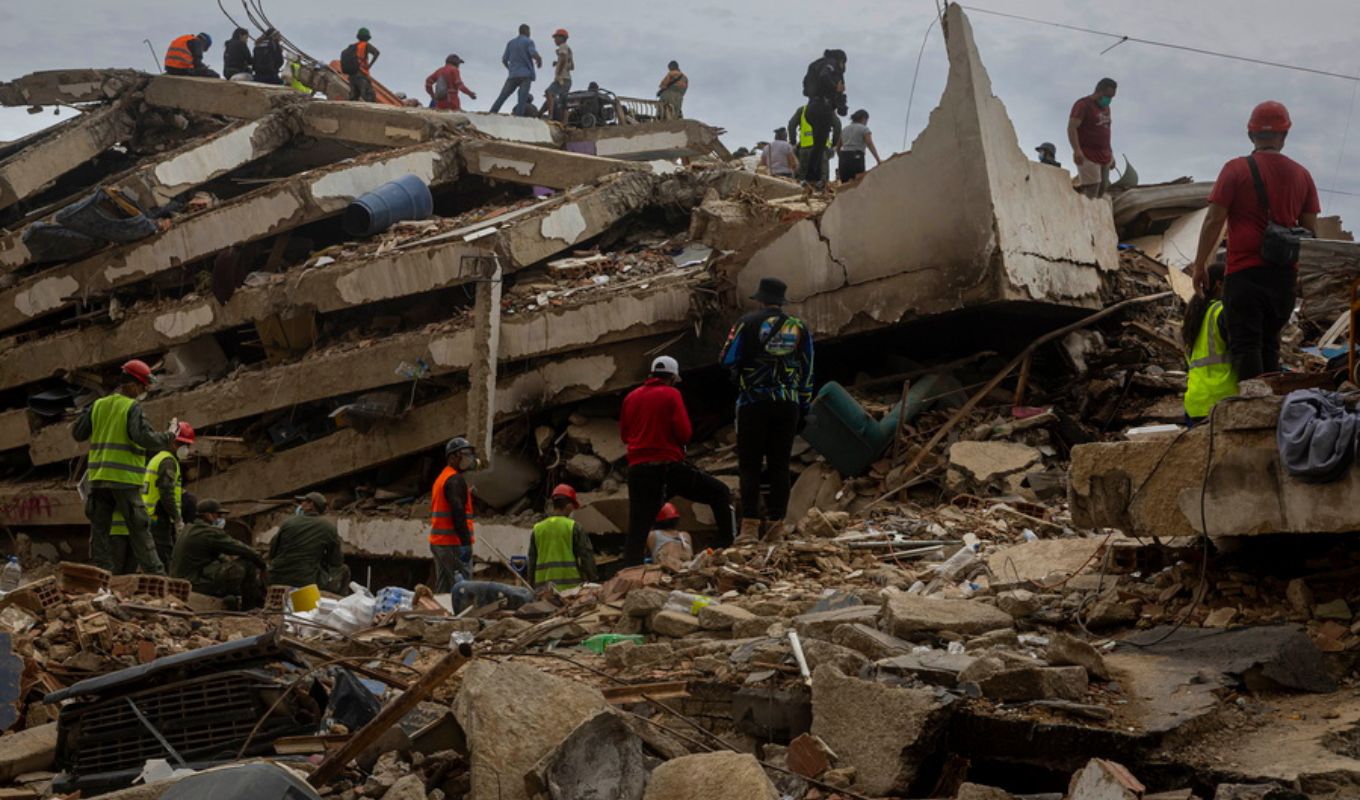
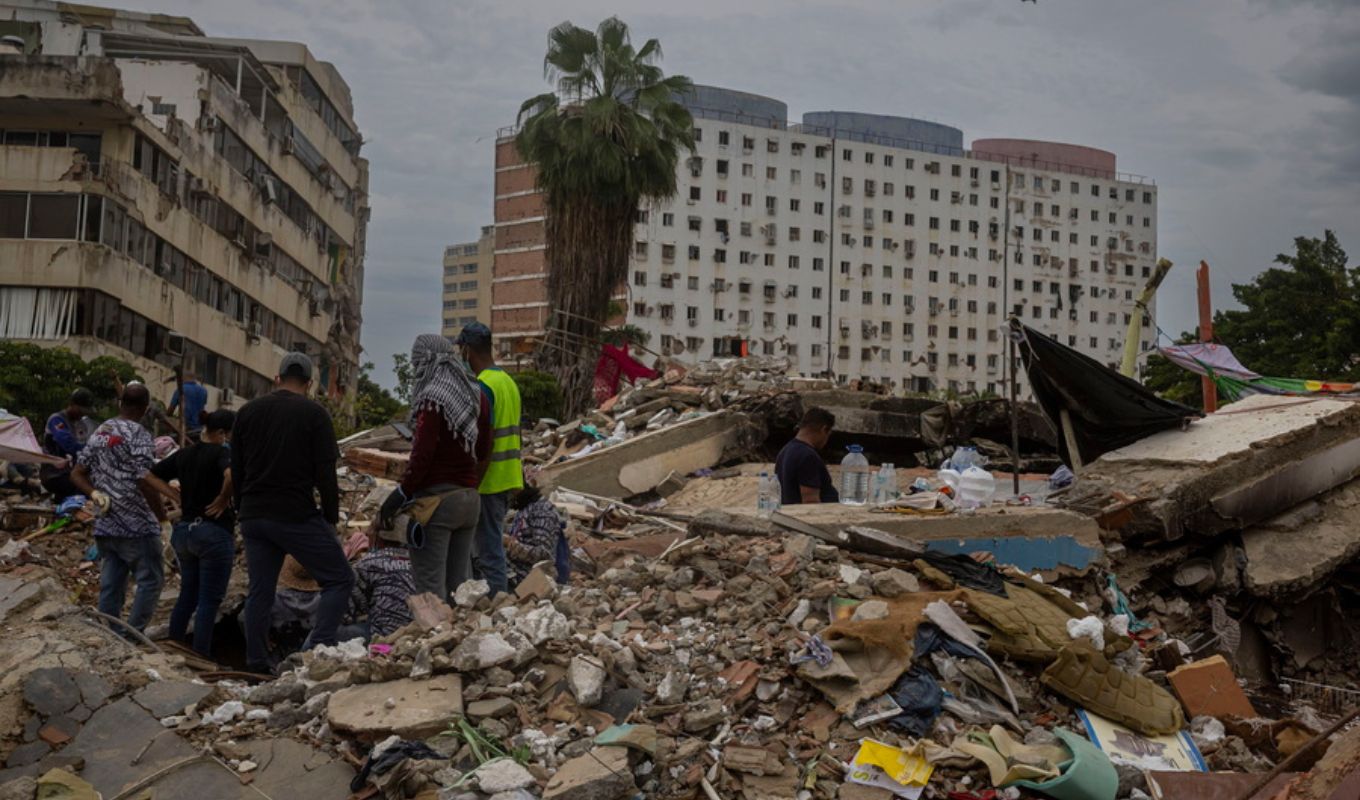
Among the rubble, a microwave oven, mattresses, and beer cans can be made out. Nearby, a large excavator noisily demolished the remains of another collapsed building.
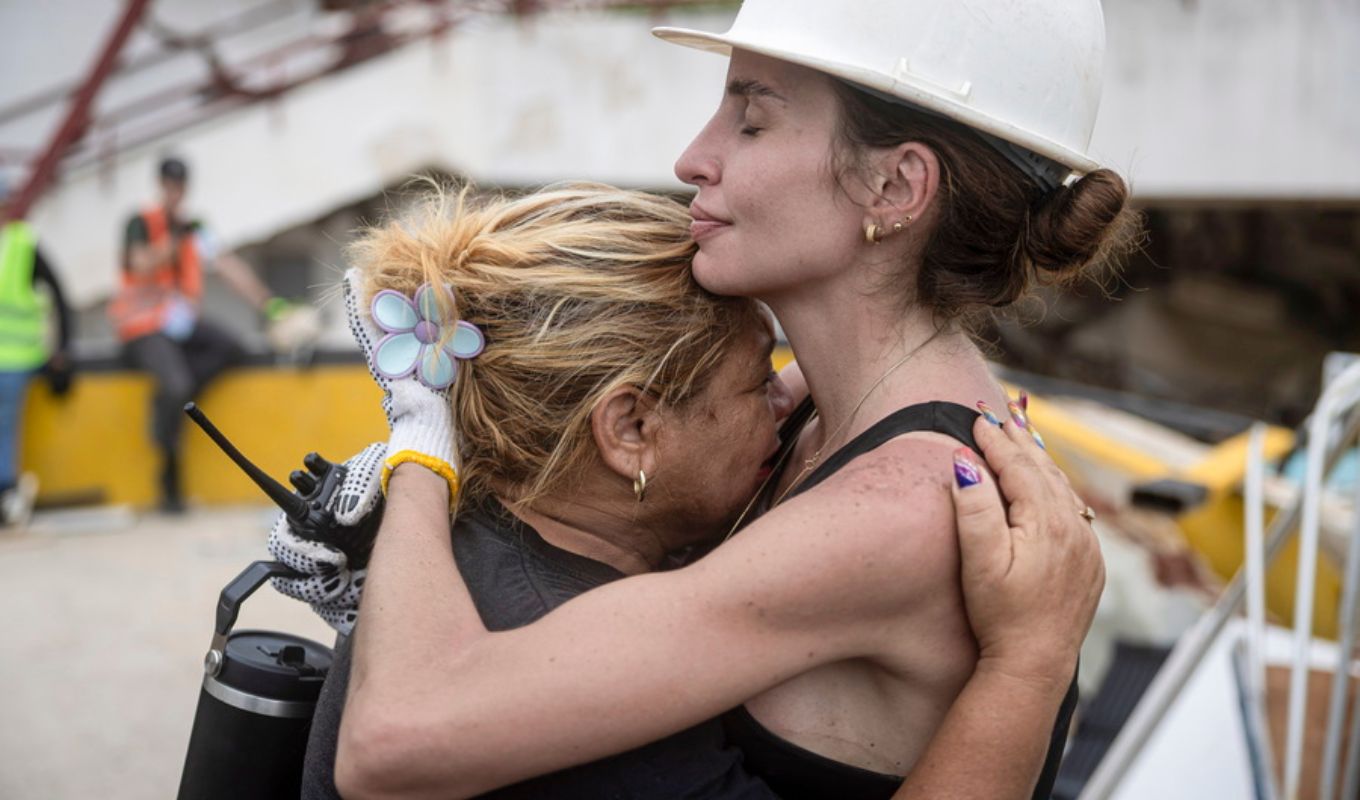
Tens of thousands missing after the deadly Venezuela earthquakes — families’ anguish remains
The UN estimated that as many as 50,000 people are missing following the disaster, one of the worst Latin America has ever seen. The caretaker government has refused to speculate on the number of missing persons.
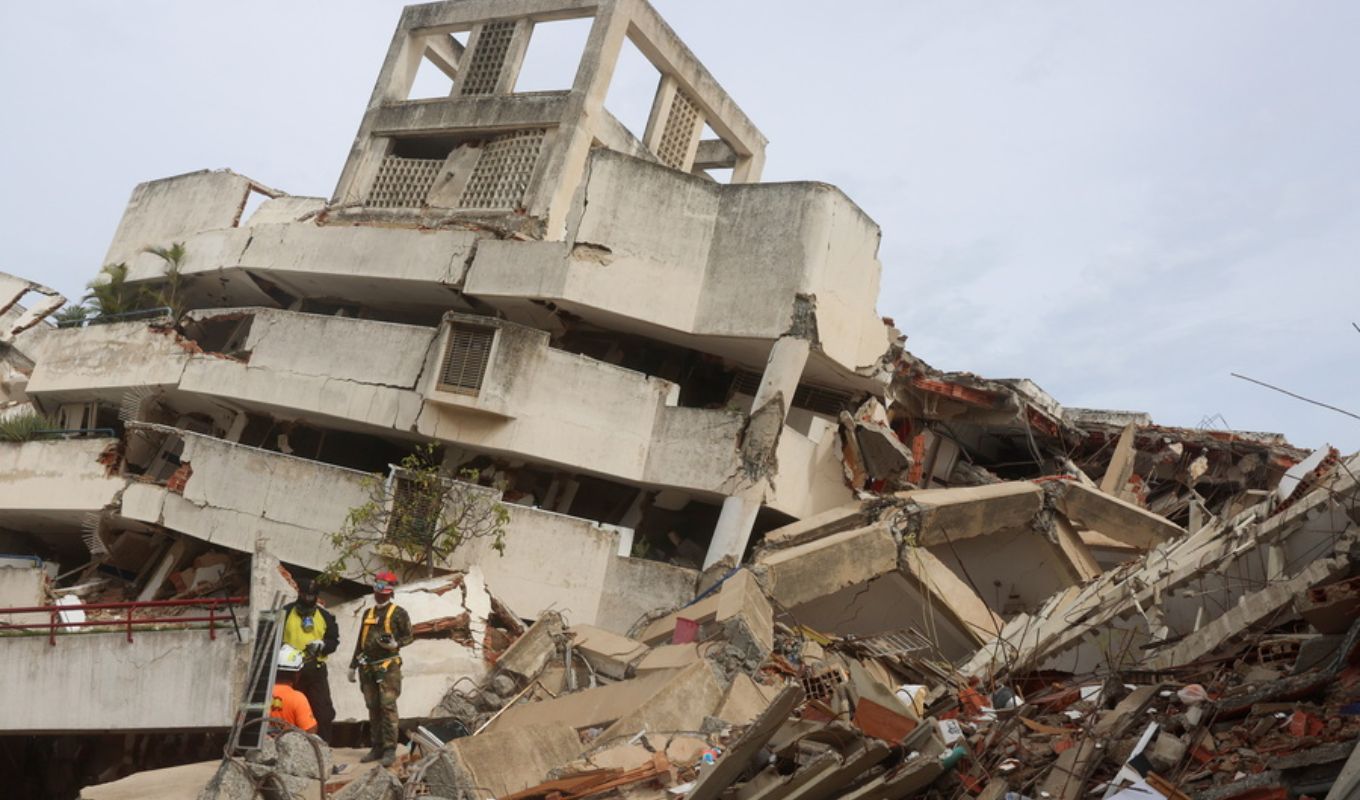
The ELE complex was among approximately 200 properties destroyed. Some residential buildings suffered only facade damage, while others collapsed entirely — some falling on top of one another, leaving nothing but mountains of rubble. Dozens of families of missing persons are still searching through the debris where their loved ones’ apartments once stood.
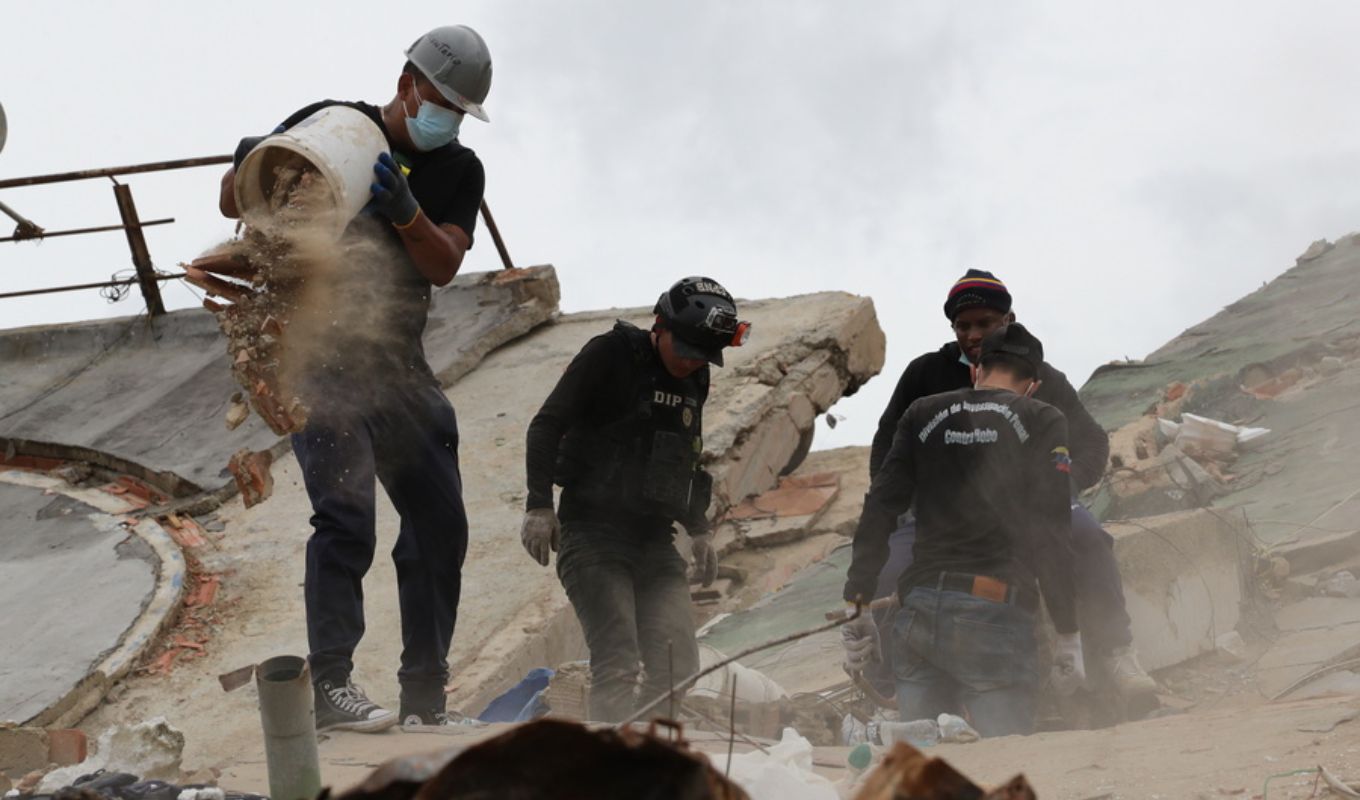
Volunteers and firefighters are digging, carving out small makeshift tunnels through concrete masses to reach lower-floor apartments. Some are using generator-powered drills. Others wait and watch, seated in improvised shelters. In one opening, the outline of a girl’s body can be seen, trapped in the debris — covered in dust, lime, and other materials.
Alni Pacheco, a volunteer working inside one of the makeshift tunnels, says he has taken part in recovering 12 bodies of people who were trapped. “Today we’re hoping to bring out our first survivor,” he adds — even though he knows the chances of finding anyone alive have now been virtually reduced to zero.
Following the earthquakes, online missing persons registries began to be compiled. One of them — titled “Venezuela Earthquake Missing” — contains more than 31,400 names. Another, called “Venezuela Is Looking for You,” lists 18,200 missing individuals and also includes 25,000 names of people who have been located — alive or dead.
The very high number of people reported missing on digital platforms is “credible,” and that is “terrifying,” said Jens Laerke, deputy spokesperson for the UN Office for the Coordination of Humanitarian Affairs (OCHA), speaking to AFP.
“That doesn’t mean they are all under rubble,” but it does reflect “the scale” of the disaster and “the desperation families are facing,” he added.
Parliamentary president Jorge Rodríguez stated that, based on drone imagery, registries, and family testimonies, it is known that approximately 30,000 people were in the city of La Guaira at the time of the disaster. Around 19,800 of them managed to save themselves or were rescued, he added.
Successive tremors and “pancake collapse” building failures hamper rescue operations
For Professor Katsu Goda of the Department of Earth Sciences at Western University in Canada, the combination of the exceptionally unusual double high-magnitude tremor and the potential vulnerability of reinforced concrete buildings may have played a role in the heavy death toll.
The first earthquake caused damage or weakened structural columns in many buildings, and the second — less than a minute later — triggered successive floor collapses from which occupants had no chance of escape, he explained. The destruction was maximized. And “when reinforced concrete buildings collapse, they often produce enormous debris fields that are extremely difficult and dangerous to search through,” Professor Goda told AFP.
“In some cases, successive ‘pancake-style’ collapses can trap occupants in compressed layers of debris” from floors and slabs, making rescue operations and victim identification nearly impossible, he stressed.
Daniela Álvarez, who is searching for her sister, nieces, and brother-in-law in one of the collapsed residential buildings, fears the site will be leveled and the rubble cleared before the victims have been recovered. “How can they even think about demolishing everything without knowing whether there are still people underneath? Our families will come out in pieces,” she cried out.
In front of the rubble of ELE 27, Clemente Canizales still hopes the bodies of his son and grandson will be found. “So many lives were lost here… How many people are still in there? We don’t know.”