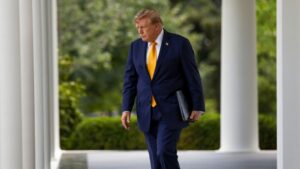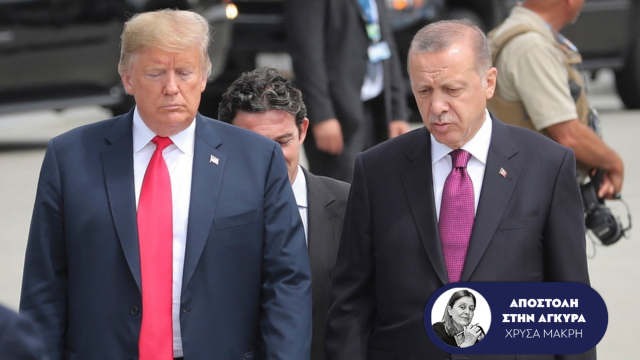
The NATO Summit opening today in Ankara is shaping up to be a true diplomatic Gordian knot. The presence of U.S. President Donald Trump — interpreted by both himself and the Turkish government as a vote of confidence and an endorsement of Turkey’s expanded geostrategic role — is raising serious concerns about the balance of power in the Eastern Mediterranean.
Read also: NATO Summit: Greece on the front line of collective defense — Kyriakos Mitsotakis to attend
NATO Summit in Ankara: Trump’s announcements and the U.S.-Israel-Turkey balancing act
Although the summit’s official agenda includes strengthening the Alliance’s defense capabilities and rearmament programs, as well as support for the Ukrainian front, Trump’s announcements regarding the sale of F110 engines for Turkey’s homegrown KAAN fighter jet — and the possibility of reinstating Turkey into the F-35 program — are threatening to upend the already fragile balance between the United States, Israel, and Turkey.
In a high-stakes move on the eve of the critical summit and the Trump-Erdoğan bilateral meeting, Israeli Prime Minister Benjamin Netanyahu called on the U.S. President not to proceed with the sale of F-35 fighter jets or F110 engines to Turkey. This intervention, made just before Trump’s arrival in the Turkish capital, lays bare the deep trust deficit between Jerusalem and Ankara, while simultaneously forcing Washington into a difficult choice about who its preferred ally in the southeastern Mediterranean will be.
Gerapetritis: “Turkey’s return to the F-35 program goes through Congress”
Meanwhile, Greek Foreign Minister Giorgos Gerapetritis addressed the F-35 issue in parliament one day before departing for Ankara to accompany the Greek Prime Minister to the Alliance summit. He argued that the matter does not fall within Trump’s executive authority, but rather within the purview of Congress. As he stated explicitly, “This issue is tied to the authority of the U.S. Congress. It is not an executive branch matter. The restrictions provided for under U.S. law remain in force, and lifting them requires a new Congressional decision. Therefore, at the present stage, there is no question of the restrictions being lifted.” He concluded by noting that “today Greece is a strong member of the international community, with a voice everywhere, with defense capabilities it has never had before — with F-35s and upgraded F-16s — while Turkey remains outside these programs.”
Erdoğan’s goals at the NATO Summit
For his part, Recep Tayyip Erdoğan is welcoming Trump to Ankara with sky-high expectations, openly framing the summit as a test of who Washington truly considers its partner in the Eastern Mediterranean. Turkish leadership is seeking recognition as the dominant regional player, pushing for an enhanced role both within NATO and in Europe’s ReArm Europe initiative. Just yesterday, Monday, Erdoğan declared that “European security is inconceivable without Turkey,” pressing for his country’s inclusion in EU defense programs such as the SAFE fund, worth €150 billion.
At the same time, NATO Secretary General Mark Rutte, in his press conference yesterday, promised new multi-billion-dollar contracts to boost the Alliance’s defense capabilities. Once again, he did not miss the opportunity to speak warmly about Turkey as the host nation, praising its defense industry. However, when pressed by journalists, he also touched on the rule of law in Turkey following the recent wave of arrests, remarking that “democracy is more than just elections.”
Trump’s key meetings in Ankara on the first day of the NATO Summit
Today, on the opening day of the summit, Donald Trump is set to be firmly at the center of the diplomatic storm. In addition to his bilateral meeting with Erdoğan and their joint press conference, his schedule includes talks with Ukrainian President Volodymyr Zelensky and Syrian President Al-Sharaa — a lineup that underscores just how far-reaching the decisions made in Ankara are likely to be in the days that follow.
Gerapetritis’ bilateral engagements
Greece is closely monitoring these developments and is actively seeking a role in shaping them. Foreign Minister Giorgos Gerapetritis will participate in the summit and in the meeting of NATO member foreign ministers with their counterparts from the Istanbul Cooperation Initiative partners (the United Arab Emirates, Qatar, Kuwait, and Bahrain). He will also attend a working dinner of the NATO-Ukraine Council, and is expected to hold a series of bilateral meetings with fellow foreign ministers on the sidelines of the summit.