Technical talks between the United States and Iran are expected to take place in Switzerland on Sunday under a heavy cloud of tension, as both sides work to implement a recently signed Memorandum of Understanding aimed at ending hostilities in the Middle East. Despite initial hopes for de-escalation, developments over recent days suggest the agreement is already being tested before it has even been fully implemented.
A key catalyst for the renewed tension is the continuation of Israeli military operations in southern Lebanon. Hezbollah is accusing Israel of violating the terms of the ceasefire, arguing that the ongoing strikes effectively constitute a continuation of the war. Tel Aviv, for its part, places the blame squarely on the Shiite organization, accusing it of continuing to target Israeli positions.
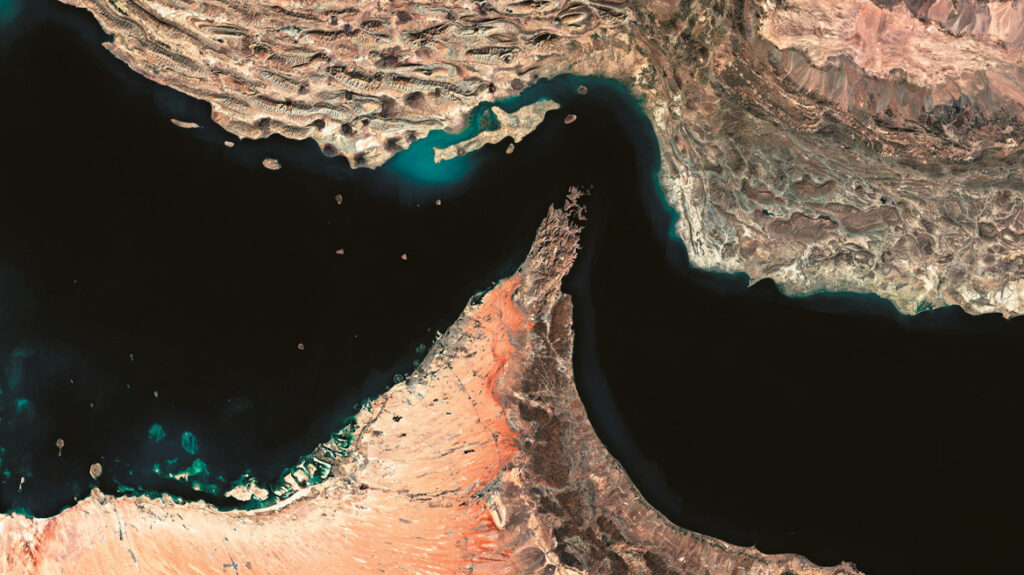
Against this backdrop, Tehran made a highly symbolic move by announcing the closure of the Strait of Hormuz — the strategic maritime chokepoint through which a significant share of the world’s oil supply passes. In an official statement, Iran’s Joint Chiefs of Staff described the measure as a “first response” to what it characterized as Israeli violations of the agreed terms, and warned that further actions would follow if military operations in Lebanon continued. The Islamic Revolutionary Guard Corps (IRGC) went further, broadcasting an audio message to vessels in the area declaring that the Strait of Hormuz remains closed and urging international shipping to avoid any passage through the waterway.
#BREAKING: Iran’s top joint military command says Strait of Hormuz is closed due to alleged US and Israeli violations of ceasefire MoU – Iranian media pic.twitter.com/SEJLDGXpeb
— TRT World (@trtworld) June 20, 2026
IRGC Navy 📻 : “The Strait of Hormuz is closed”pic.twitter.com/eoHBAAVdFO https://t.co/cKGUKMK4ot
— MenchOsint (@MenchOsint) June 20, 2026
The American denial
Washington’s response was swift. US Vice President JD Vance stated that there is no evidence the Strait of Hormuz has actually been blocked, emphasizing that shipping continues to flow normally through the waterway.
US Central Command (CENTCOM) echoed that position, announcing that 55 commercial vessels had transited the area during the course of the day, carrying more than 17 million barrels of oil. “Iran does not control the Strait of Hormuz,” CENTCOM spokesperson Captain Tim Hawkins said plainly, assuring that US forces are closely monitoring the situation.
Warnings from Tehran
Meanwhile, Iran’s Ministry of Foreign Affairs warned that the broader agreement with the United States is at risk of collapse if the agreed commitments are not implemented without delay. “The other side must take the necessary measures as soon as possible. Otherwise, the agreement protocol will be put entirely at risk,” said Iranian Foreign Ministry spokesperson Esmail Baghaei.
At the same time, Tehran confirmed that a delegation had departed for Switzerland, where technical-level talks are set to take place with representatives from the United States, Qatar, and Pakistan — the latter two serving as mediators.
Israel orders ceasefire ahead of talks
Amid the prevailing uncertainty, Israeli Prime Minister Benjamin Netanyahu ordered a ceasefire in southern Lebanon — though notably without any provision for the withdrawal of Israeli forces from areas where they remain deployed.
Diplomatic circles are interpreting the move as an attempt to prevent further escalation ahead of the critical talks in Switzerland. The outcome of those talks is expected to determine whether the fragile framework of understanding between Washington and Tehran can hold — or whether the region is heading toward a new cycle of instability.
Speaking this morning on FOX & Friends, U.S. Vice President JD Vance stated that President Trump’s son-in-law Jared Kushner and Special Envoy Steve Witkoff are currently on the ground in Switzerland for negotiations with Iran, and that talks are “going well,” adding that he will… pic.twitter.com/JTfyebQyxQ
— OSINTdefender (@sentdefender) June 20, 2026