US-Iran negotiations are on a knife’s edge regarding the launch of talks in Switzerland, with Lebanon remaining the major sticking point — even as Pakistan steps in once again, dispatching its Interior Minister to Tehran in a bid to inject fresh momentum into the diplomatic process.
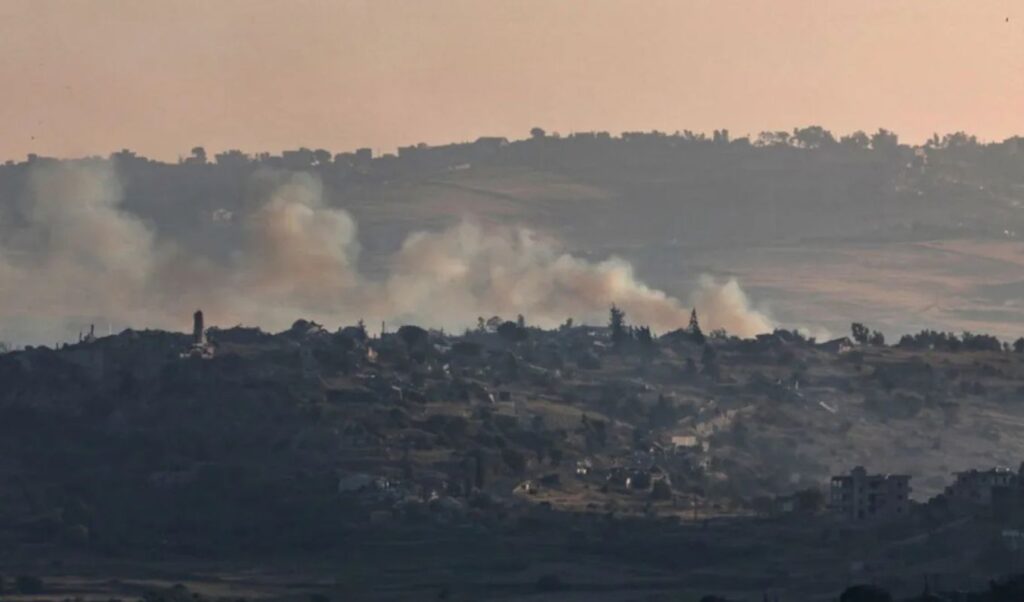
Notably, the Israeli military launched new strikes against Hezbollah positions in southern Lebanon, despite the previous day’s announcement of a ceasefire agreement.
In a statement, the Israeli military claimed that Hezbollah fired more than 50 projectiles at Israeli forces in southern Lebanon, and that the IDF responded by striking targets belonging to the Iran-backed organization. The Lebanese army announced the death of one Lebanese soldier in southern Lebanon as a result of an Israeli attack.
Hezbollah: We have the right to respond to Israeli attacks
Hezbollah MP Hassan Fadlallah stated that the organization reserves the right to respond to Israeli attacks. “There is a ceasefire. What matters to us is that the enemy fully and unconditionally respects the truce and does not attempt to attack our country and villages, nor seize new positions.” He added: “The resistance has every right to confront this enemy when it attacks us, because it is the aggressor and the occupier.”
What the Israeli military says
The Israeli military, for its part, announced that it remains committed to the ceasefire agreement, stressing that it will continue to act “against any threat to Israel or its forces.” The statement came amid an escalation along the border with Lebanon.
At least 16 killed in Israeli airstrikes on southern Lebanon
Lebanon’s Civil Defense agency reported that its personnel transported “16 dead and 12 wounded” to hospital, adding that they had been working “since the early morning hours” in the Nabatieh area in the south of the country, responding to “ongoing attacks targeting the region.” The state-run National News Agency (NNA) reported that Israeli military aircraft and drones carried out a series of strikes on the Nabatieh area overnight and into the early morning hours, destroying residential buildings and homes, while Israeli artillery bombarded Nabatieh and its surroundings before dawn.
Israeli strikes hit Gaza too — 5 killed
At the same time, at least five people, including a child, were killed by Israeli fire in the Gaza Strip, according to hospital sources.
Four Palestinians, including two women and a child, were killed in an Israeli strike on a residential complex in Gaza City. The attack, which targeted the Sabra neighborhood, destroyed an apartment and left multiple people wounded. In a separate incident, Israeli forces shot and killed a woman in Beit Lahiya, in the northern part of the Palestinian enclave.
The Israeli military has not commented on either incident. The ceasefire in place since October has halted large-scale Israeli operations in Gaza, but not individual Israeli military strikes, which the IDF says are aimed at preventing imminent attacks by Hamas and other armed groups. The health ministry of the Palestinian enclave announced that more than 1,010 Palestinians have been killed since the ceasefire took effect.
Renewed clashes despite the Israel-Hezbollah ceasefire
The resurgence of fighting in Lebanon came after a ceasefire agreement between Israel and Hezbollah had been confirmed by both a senior Israeli official and two sources within the Shiite organization. A US official had stated that the ceasefire entered into force at 16:00 Greek time on Friday.
Iran’s Revolutionary Guards threaten Israel: “You will face the flood of Gaza”
The commander of Iran’s Revolutionary Guards Quds Force, Brigadier General Esmail Qaani, sent a threatening message to Israel, warning of the possibility of new operations emanating from Gaza.
According to statements carried by Iran’s official news agency IRNA, Qaani first addressed the military capabilities of Lebanese Hezbollah, noting that Israel had underestimated them.
“When we said that Hezbollah has Mirsad drones, you paid no attention and you faced the consequences. Who will be held accountable for the 100 casualties?” he said pointedly.
The Iranian official then turned to Gaza, warning that Israel may face new and serious challenges from Palestinian fighters.
“There is also the flood of Gaza. If you act according to the wishes of your politicians, you will find yourselves in the middle of that flood. Be careful,” Qaani said, in yet another hardline statement from Tehran directed at Israel.
The spotlight turns to the Switzerland talks
Meanwhile, the US and Iran are attempting to get back on track with the technical negotiations that had been postponed due to the escalation of hostilities in Lebanon. That postponement had even led US Vice President JD Vance to cancel his planned trip to Switzerland.
Both sides are now trying to restart the process, as the renewed but extremely fragile ceasefire between Israel and Hezbollah continues to cast a shadow over the Washington-Tehran talks.
US special envoy Steve Witkoff is en route to Switzerland, according to a US official, and is expected to be accompanied by President Trump’s son-in-law, Jared Kushner. According to Axios, Kushner is already there. Both played a central role in previous contacts with the Iranian side that led to the initial memorandum of understanding. Axios also reports that Iranian Foreign Minister Araghchi could travel to Switzerland today.
Although the exact date for resuming talks has not yet been set, the Swiss mountain resort of Bürgenstock is considered the most likely venue. Switzerland’s Foreign Ministry confirmed that preparatory work is ongoing, with negotiators having a 60-day window to reach a final agreement.
Switzerland continues to provide “a discreet and reliable framework” at Bürgenstock to facilitate talks on the implementation of the memorandum of understanding between the US and Iran, the Swiss Foreign Ministry announced, adding that no further details regarding participants or the content of the discussions would be disclosed for reasons of confidentiality.
Diplomats from various countries are present and continuing their efforts to sustain the dialogue, according to the Swiss Foreign Ministry statement.
Pakistan steps in again — Interior Minister heads to Tehran
Against this complex backdrop, the visit of Pakistan’s Interior Minister Mohsin Naqvi to Tehran takes on particular significance, as Islamabad appears to be positioning itself as a mediator at one of the most critical junctures in the negotiations between Tehran and Washington.
According to Iran’s state news agency IRNA, Mohsin Naqvi departed for Tehran to hold meetings with senior Iranian officials. The talks are expected to focus on the state of the Iran-US negotiations, though no further details on the substance of the consultations have been provided.
The move comes at a time when efforts to restart or stabilize the diplomatic process remain extremely fragile. Pakistan, which maintains channels with both Tehran and the West, is seeking to leverage its role as a country with significant weight in the Muslim world, as well as a neighbor of Iran with a direct stake in regional stability.
Israel and the fragile Lebanon ceasefire — tensions within Netanyahu’s government
The memorandum of understanding that led to the Lebanon ceasefire was forged in an extremely tense environment, following weeks of escalation on the Israel-Hezbollah front. Within Israel, Prime Minister Benjamin Netanyahu is reported to have faced strong pressure from members of his government and political allies to continue operations against Hezbollah, despite international calls for de-escalation.
In this climate, National Security Minister Itamar Ben Gvir had adopted particularly hardline rhetoric, stating the day before the ceasefire announcement that “Lebanon must burn” and that “for every tear shed by an Israeli mother, 1,000 Lebanese mothers must cry” — remarks that further inflamed tensions surrounding Israel’s military strategy.
Meanwhile, Washington has been actively engaged in the diplomatic process, with US President Donald Trump publicly pressing Israeli leadership to exercise restraint.
In a television interview with NBC News, Trump said he had urged the Israeli side to agree to a ceasefire, remarking characteristically: “You just have to calm down sometimes and think rationally.”
It remains unclear whether he had direct communication with Netanyahu as part of these contacts, leaving open questions about the extent of his personal involvement in the negotiations.