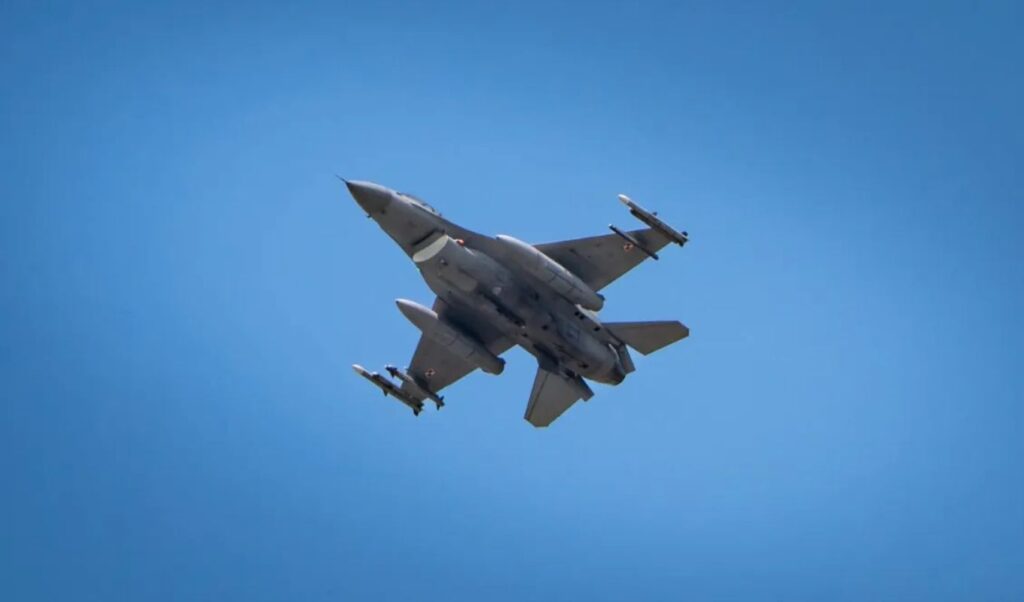
Following U.S. President Donald Trump’s visit to Ankara for the NATO Summit and his statements regarding the lifting of CAATSA sanctions, the issue of F-35 fighter jets is causing significant unrest in Israel. Despite Moscow’s apparently favorable stance — which would free Recep Tayyip Erdogan’s hands to transfer the weapons system to a Gulf state — yet another major obstacle has emerged in Turkey’s bid to acquire the aircraft. That obstacle is Israel’s potential invocation of U.S. law concerning the Qualitative Military Edge (QME). The QME represents a foundational doctrine of American foreign and defense policy, centered on preserving Israel’s ability to maintain military superiority over threats across the Middle East.
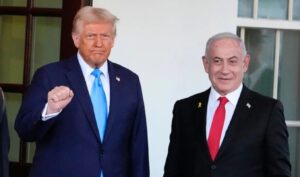
Israeli Prime Minister Benjamin Netanyahu has voiced his opposition in the strongest possible terms, arguing that Turkey’s inclusion in the F-35 program would fundamentally upset the balance of power in the Middle East. In his view, placing advanced F-35 jets in the arsenal of a country with expansionist ambitions would directly endanger Israel’s security. The invocation of the QME is currently being widely discussed in the Turkish capital, with Ankara fearing that Jerusalem — backed by the powerful pro-Israel lobby in the United States — will use it as a legal mechanism to block the six F-35s earmarked for Turkey. For Israel, the prospect of Turkey acquiring stealth aircraft carries near-existential implications. The presence of F-35s in a country with regional ambitions and revisionist geopolitical goals would erode the strategic advantage currently enjoyed by the Israeli Air Force, which remains the only air force in the region operating these fifth-generation fighters.
As Israeli Foreign Minister Gideon Sa’ar stated plainly, “maintaining the QME is critical, and Israel’s opposition to any potential sale remains absolute.” Washington — and specifically the White House and President Donald Trump personally — is currently attempting to walk a careful line. Trump is keen to upgrade the U.S.-Turkey relationship, viewing Ankara as a vital NATO ally. On the other side, Congress — under sustained pressure from both the pro-Israel and Greek lobbies — insists that allowing Turkey to acquire fifth-generation fighters would automatically threaten regional stability across the southeastern Mediterranean and the broader Middle East.
The QME is far more than a military calculation — it is the cornerstone of America’s security architecture in the Middle East, dating back to the 1960s. At least, that has been the case until the current Trump era. Any deviation from this doctrine would signal the dawn of a new geopolitical era for the region. It is worth noting that the U.S. commitment to maintaining Israel’s Qualitative Military Edge was enshrined in law during the Lyndon B. Johnson administration and has since shaped every American arms sale to Middle Eastern nations. The doctrine rests on the principle that, given its small size and geographic position, Israel lacks the strategic depth to sustain a prolonged, large-scale war. Consequently, in order to deter attacks and ensure its survival, Israel must have access to advanced weapons systems capable of defeating threats while minimizing casualties.