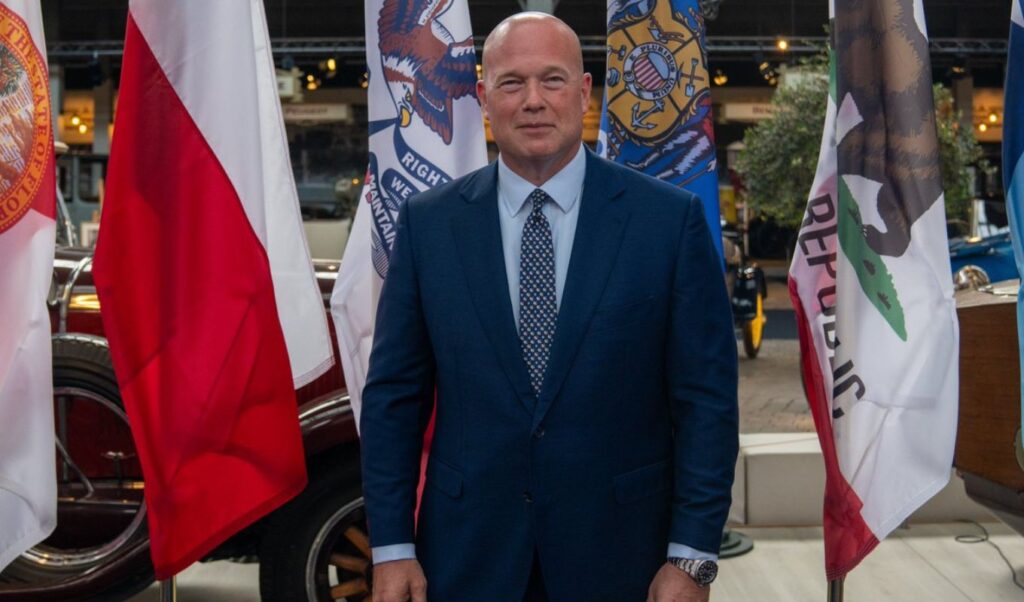
“We expect all allies to honor the commitments they made at The Hague” and follow a “credible path” toward defense spending of 5% of GDP, U.S. Ambassador to NATO Matthew Whitaker stated on Wednesday, July 1, during a press briefing ahead of the Summit taking place in Ankara on July 7-8. “President Trump fully expects all allies to step up immediately, get on the path to 5%, and do so with a sense of urgency,” the American ambassador said, noting that some allies continue to fall short on spending or lack a credible plan to reach the 5% target.
Discussion on operational capabilities
Whitaker noted that this year’s Summit will serve as a “progress check” on the implementation of decisions made at The Hague, clarifying that the assessment will focus not only on the level of defense spending but primarily on the operational capabilities that result from it. He stated that since the Hague Summit in June 2025, allies have committed nearly $120 billion to defense, with roughly half of that directed toward American defense equipment.
According to the American official, countries such as Poland, the Scandinavian nations, the Baltic states, Germany, and others are leading the way in meeting the new targets, while other allies continue to lag behind either in spending or in developing a credible roadmap to achieve the 5% goal. He also emphasized the need to accelerate defense industrial production and innovation on both sides of the Atlantic, with the aim of rapidly developing both conventional and next-generation defense systems. “I fully expect all allies to demonstrate meaningful upward trajectories, both quantitatively and qualitatively in defense spending, so that we achieve a fairer sharing of the burden,” the U.S. Ambassador said, adding: “The goal is clear: to continue shifting the responsibility for Europe’s conventional defense to our NATO allies.”
“A more leading role”
Whitaker further argued that Washington believes certain European allies should take on a greater leadership role within NATO, as the United States cannot remain indefinitely as the alliance’s sole pillar. He made clear, however, that this does not exempt anyone from their obligations, and added that countries that contribute more could enjoy specific benefits, such as greater access to political leadership or priority in arms programs and procurement. “NATO’s strength is ultimately what guarantees peace. More is more,” he said.
Turning to Ukraine, the American official previewed that the Summit will feature “substantial announcements” from the U.S. and allies regarding continued support for Kyiv. He argued that the United States has provided more assistance than any other country to date, noting that through the PURL (Priority Ukraine Requirements List) program, American weapons systems worth over $6 billion have already been sold — including Patriot air defense systems and PAC-3 missiles — through NATO allies to Ukraine. He also stressed that “the European side must take on a greater share of the burden,” as “this is a war being fought on European soil,” while assuring that the United States “will not walk away” and will continue to support Kyiv.
As he noted, “long-term commitments to support Ukraine should be expected,” enabling the country to continue its defense while simultaneously sending a clear message to Russia that the war must end. He also argued that President Donald Trump is seeking to end the war and reach a peace agreement, noting however that “it takes both sides to make a deal” and that, at present, neither Moscow nor Kyiv appears to accept the same terms. “We will continue to push and engage, but we are not there yet,” he concluded.