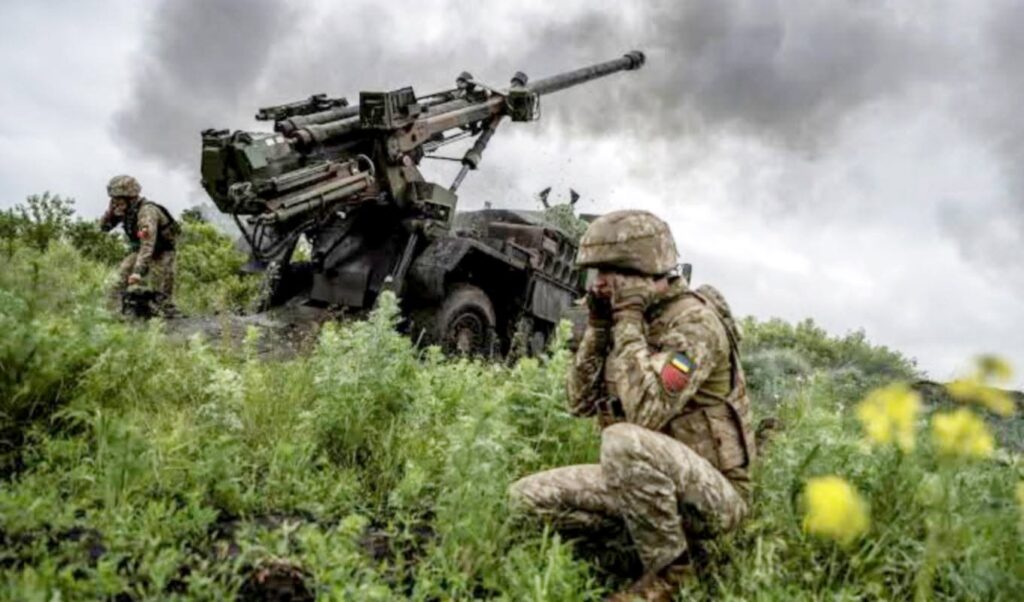
More than four years after the start of the Russian invasion of Ukraine, the war continues to inflict devastating human losses. According to a new study by the Center for Strategic and International Studies (CSIS), cited by The New York Times, more than two million Russian and Ukrainian soldiers have been killed or wounded since February 2022.
Read: Zelensky: Ukraine struck a Russian oil refinery and a missile components factory
The report states that Russia has suffered the heaviest losses, with approximately 1.4 million killed and wounded. Of these, around 450,000 are estimated to have lost their lives — a figure that, according to the study, is four times greater than the total number of American soldiers killed in all U.S. military conflicts since World War II.
On the Ukrainian side, total military casualties are estimated at between 525,000 and 625,000, with deaths estimated at between 125,000 and 150,000.
The study’s authors note that the true figures remain difficult to verify, as Moscow is accused of systematically underreporting its human losses, while Kyiv does not officially publish data on its military casualties. Analysts based their estimates on intelligence from American and British agencies, as well as other independent sources.
Slow advances at an enormous cost
Despite the staggering losses, the advance of Russian forces remains extremely slow. According to the study, on some fronts Russian forces are advancing at a rate of less than 50 meters per day. Notably, in February 2026, Ukraine recorded its first net territorial gains since 2023, achieving more ground than it lost by conducting offensive operations primarily on the southern front.
Analysts point out that Russia’s territorial foothold in Ukraine shrank in the spring of 2026, as Russian forces lost more territory than they captured in both April and May, recording a net loss of approximately 400 square kilometers. These mark Russia’s first monthly net territorial losses since August 2024.
Russia’s numerical advantage over Ukraine
Despite these setbacks, Russia continues to hold a significant numerical advantage on the battlefield. Estimates indicate more than 400,000 Russian soldiers on the front lines, compared to approximately 250,000 Ukrainians.
Moscow has managed to maintain its military strength through conscription, financial incentives for new volunteers, and the recruitment of prisoners and civilians facing criminal or financial liabilities.
The report also notes that during 2024 and 2025, more than 10,000 North Korean soldiers were deployed to reinforce Russian operations in the Kursk region.
However, according to analysts, by 2026 Russia’s monthly casualties — estimated at between 30,000 and 34,000 soldiers — exceeded the rate of new recruits for the first time, which is estimated at approximately 27,000 per month.
The US stance
The release of the study coincides with a period in which President Donald Trump’s administration appears less actively engaged on the Ukraine issue.
During a recent summit in France, the American president stated that the war is no longer a top priority for the United States, arguing that American involvement is largely limited to the supply of weapons systems to Ukraine.
These statements have deepened the concerns of several European allies, who believe that the continuation of Western support is critically important both for Ukraine’s defense and for deterring potential future Russian moves against NATO member states.
The Ukraine issue is expected to be a central topic of discussion at the next NATO Summit as well.
The game-changer: drone warfare
The study also documents Ukraine’s growing capability to strike deep inside Russian territory through drone attacks and missile systems. Last month saw the largest Ukrainian drone attack on Moscow since the war began, while strikes continued on both the Russian capital and Russian-annexed Crimea. According to Russia’s Ministry of Defense, a total of 419 Ukrainian drones were intercepted and shot down.
The report’s authors assess that Russia may be going through the most difficult period of the war since 2022, as the conflict is now directly affecting the daily lives of Russian civilians. Economic slowdown, rising inflation, mounting human losses, and strikes on Russian soil together paint an increasingly difficult picture for the Kremlin, according to analysts.
Despite the significant losses on both sides, the report concludes that without stronger diplomatic and economic pressure from the United States and Europe on Russia, there is no immediate end to the conflict in sight — a conflict that continues to represent the largest war crisis on the European continent since World War II.