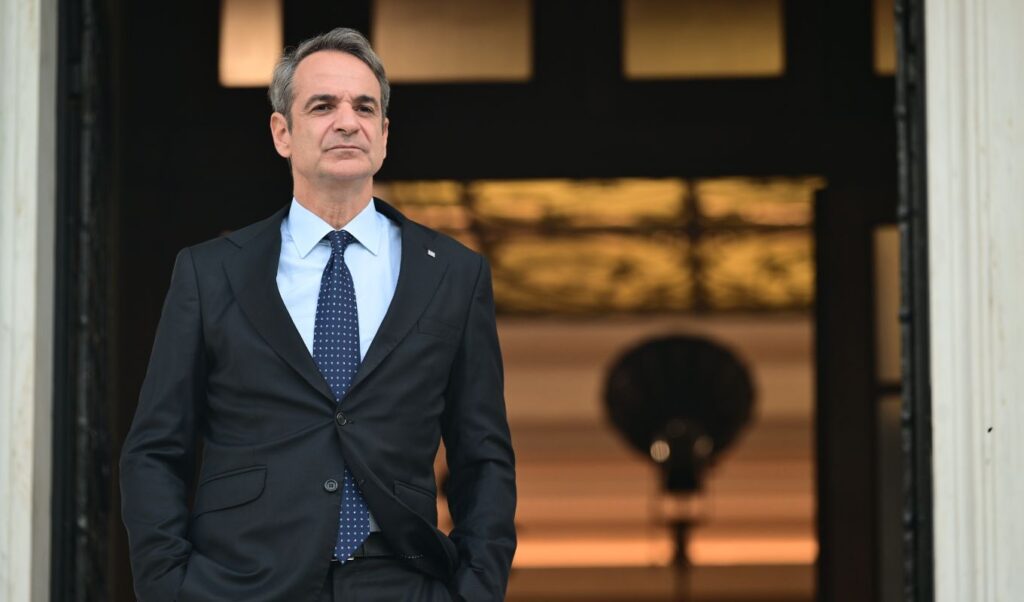
A political catalyst capable of overcoming the wear and tear caused by recent circumstances appears to be what the government and the Maximos Mansion are seeking. Developments around OPEKEPE, combined with the upcoming parliamentary confrontation over the rule of law, create a demanding scenario in which the Maximos Mansion must balance between defense and initiatives.
At the same time, tensions are being recorded within New Democracy that create conditions of introversion. The discussion on the incompatibility of ministerial and parliamentary office, criticism about a “clientelist state,” and the handling of the OPEKEPE case are creating a heavy political climate. Many MPs are reviving scenarios of early elections, estimating that continuing scandals constantly undermine the government’s image.
Officials who favor elections argue that autumn could constitute an “outlet for tension relief,” especially amid the OPEKEPE proceedings and developments in the wiretapping case. However, Prime Minister Kyriakos Mitsotakis categorically rejects this possibility, insisting on institutional consistency and political stability, while also citing international instability, particularly the war in the Middle East.
The coming Thursday promises to be critical for the government, as Parliament will hold a discussion on the rule of law following a request by Nikos Androulakis, with the wiretapping case returning to the forefront. Meanwhile, the Plenary is expected to address the lifting of immunity for eleven “blue” MPs regarding the OPEKEPE case, while a request for establishing a Preliminary Investigation Committee concerning Spilios Livanos and Fotini Arabatzis cannot be ruled out.
Within New Democracy’s Parliamentary Group, complaints are intensifying, mainly due to the sense that there is “horizontal targeting” of MPs mentioned in new OPEKEPE proceedings. Government sources acknowledge that not all cases have the same gravity, attempting to disconnect individuals from generalized impressions. However, several MPs remain critical of certain Maximos Mansion handling.
In the same context, the incompatibility proposal failed to calm reactions; instead, it reignited the discussion about the role and value of MPs. As majority officials note, politics is not exhausted by technocratic solutions but requires continuous contact with society and understanding of its needs.
Facing this environment, the government attempts to highlight its reformist footprint, promoting interventions aimed at limiting clientelist practices: from accelerating pension distribution and digitizing public administration to automating procedures and other institutional changes.
Meanwhile, a broader plan for institutional interventions is on the table. Among these, changes to the electoral system are being considered, establishing limits on parliamentary terms, and instituting a stable four-year electoral cycle that would exclude – except in exceptional circumstances – early elections. Final decisions are expected to be included in the constitutional revision proposal, with a summer timeline, while an announcement of intentions may come as early as the New Democracy congress in May.
In any case, the coming period appears critical, with the government called upon to prove it can regain political initiative in an environment of increased pressures and multiple open fronts.