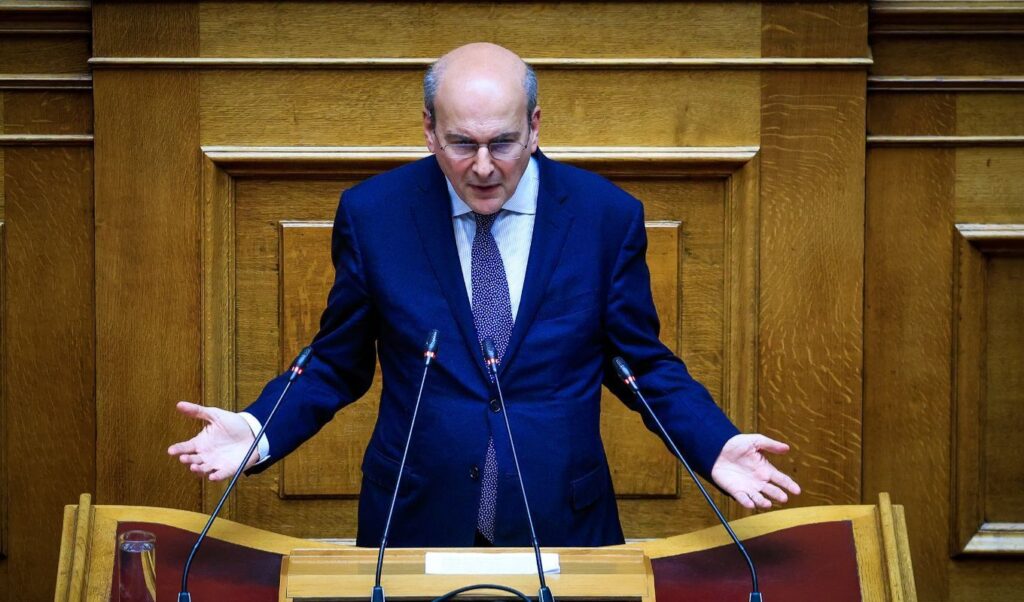
On SKAI radio discussing the Constitutional Revision, Kostis Hatzidakis spoke about a process that will leave a long-term mark on the country. The deputy prime minister outlined reforms covering fiscal matters, civil service permanency, public sector evaluation, and justice system reforms. He emphasized that justice system disputes recur regularly, making it essential to ensure transparency in leadership selection and judicial independence. Hatzidakis stressed that fiscal moderation is the only path forward, noting that constitutional revision concerns more than just the New Democracy government.
Read: Union of Judges and Prosecutors: Meetings begin on Constitutional Revision
Kostis Hatzidakis: Appeal to PASOK on fiscal matters
Regarding fiscal policy, he emphasized his proposal to constitutionally enshrine “the obligation of all governments not to increase deficits and debt while passing costs to future generations,” adding this is essential for the country to “stand on its feet without the risk of Sisyphean repetition.” He made special reference to PASOK, stating that given its contribution to fiscal stabilization during the Samaras-Venizelos period, “it should help in this direction.” He also raised issues of civil service permanency and evaluation, calling it a critical reform and asking: “Do we want to proceed with such a decisive change?” As a third priority, he highlighted justice system leadership selection, emphasizing the need to find “the best approach” based on practices in other European countries.
The deputy prime minister noted that New Democracy’s proposal will be submitted after parliamentary group dialogue, noting that 50 MPs have already submitted related proposals following the prime minister’s invitation. “We have this serious obligation to Greek citizens and are determined to proceed responsibly, seriously, and institutionally,” he said, adding that the Constitution should be viewed “as a tool for implementing all reforms” that will make the state more citizen-friendly and the political system more credible.
He criticized the opposition, implying divisive tendencies, stating that “beyond accusations and prosecutorial statements by some, we must all realize that above all we are Greeks and must find common ground.” He argued that for an opposition criticizing the government over rule of law issues, “it’s even more important to see the Constitution as a tool for addressing institutional problems.”
More pointedly, Kostis Hatzidakis noted that “New Democracy, which faces these accusations, proposes reforms in Justice, Parliament operations, and the political system. And the opposition essentially abstains.” He concluded meaningfully: “Abstention from Constitutional revision, abstention from problems, abstention from the future.”
Comments on pre-agenda debate
Regarding the pre-agenda debate on wiretapping and rule of law scheduled for Thursday, April 16, the deputy prime minister argued that attempts are being made to create an image that doesn’t reflect reality. “The impression some opposition circles try to create is that Greece is practically half a dictatorship. This has no relation to reality,” he said, citing both public dialogue and assessments by international organizations like Transparency International, OECD and the Commission.
He maintained there has been improvement in institutional functioning, particularly noting progress in parliamentary procedures, cabinet meeting frequency, and judicial and parliamentary participation in justice system leadership selection. “All these have happened under the Mitsotakis government,” he stated.
Additionally, Kostis Hatzidakis discussed OPEKEPE. He claimed that after immunity lifting, explanations will be given to prosecutors, who will judge case by case. However, he noted that “from simply reading the case files, I understand there are several cases I would personally doubt could stand,” while assuring that the government doesn’t seek to cover anything up, as “if we try to hide things, we’ll find them confronting us politically.” He simultaneously requested the European Prosecutor’s Office to move quickly, as the case “affects the country’s political life.”
Moderation in new support measures
Regarding potential new support measures for energy costs, Kostis Hatzidakis reminded that two intervention packages have already been implemented and estimated that impacts on growth and inflation will be real but milder compared to the pandemic period. However, he emphasized the government must move with great caution.
“We must be doubly careful,” he said, explaining that on one side are pressures citizens face and on the other are international markets, investors, and the need for the country to continue projecting stability. As he noted, the government didn’t yield to “give everything” logic and has maintained fiscal margins precisely for difficult times, “without destabilizing the economy.” “We’re here to see how things develop,” he concluded.