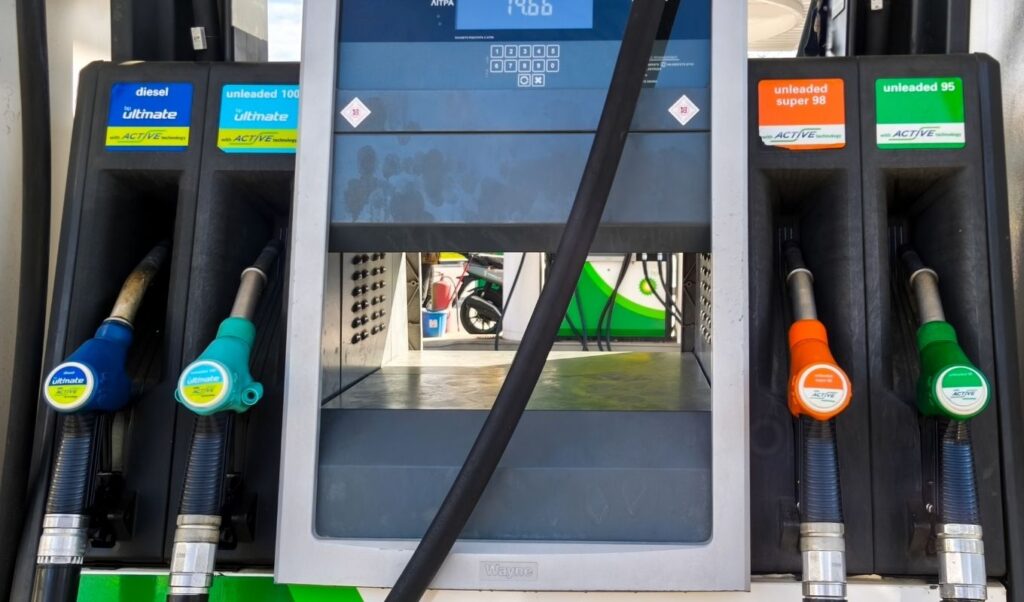
Rising fuel prices are expected to hit the market if international market conditions remain unchanged, according to Themis Kiourtzis, president of the Panhellenic Federation of Fuel Retailers (POPEK). Speaking to ERT 3, he noted that the average price of unleaded petrol in Thessaloniki currently stands at €2.07 per litre, while diesel sits slightly lower at €2.00. However, he warned that upward trends in international markets are likely to drag prices higher in Greece as well. “The discount being offered is a good one,” he said, but stressed that “it is important for this price increase to stop, as it is not something our domestic market can control.”
Read also: Fuel prices: Petrol soars as diesel subsidy gets extended
Fuel subsidies: The cost of government support
According to an announcement by the Ministry of Finance, since the subsidy scheme was first introduced in April, the total fiscal cost of keeping diesel prices in check has reached €211 million. “As international fuel prices remain at elevated levels, the government is continuing its targeted intervention for one more month, limiting the burden on citizens and businesses and, above all, curbing the indirect effects of higher costs on the supply chain and consumer prices,” the ministry stated.
In the domestic market, the national average price of unleaded petrol followed a consistently upward trajectory throughout August. Starting at €1.99 per litre in the first week of the month, it climbed to €2.04 by the final week — despite refineries maintaining a 10-cent-per-litre discount. At the same time, diesel prices moved on a rollercoaster ride, reaching €2.033 per litre by 30 August.
How the fuel subsidies work in practice
With the latest extension, the relief measures at the pump are structured as follows:
- Unleaded petrol: €0.10/litre discount (applied directly by refineries).
- Diesel: Total reduction of €0.15/litre (€0.05/litre from refineries and €0.10/litre from the state subsidy).
In practical terms, these measures save consumers approximately €5 on a standard 50-litre fill-up of petrol and €7.50 on diesel. Fuel retailer representatives have warned that maintaining the scheme was essential, as withdrawing it at the start of the month would have triggered an immediate price shock — one that would have quickly fed through into production costs and the prices of everyday consumer goods.