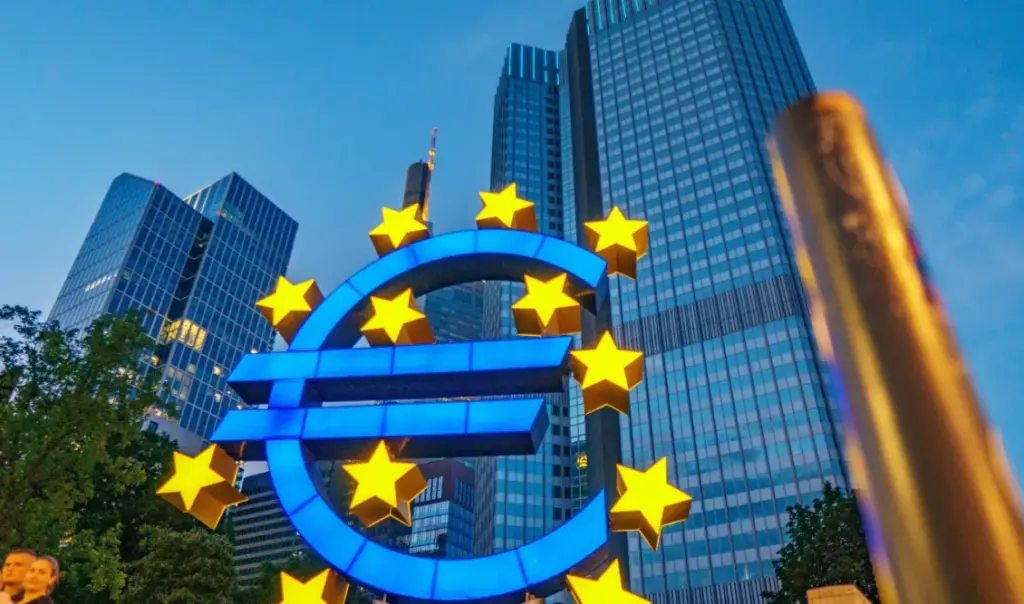
The European Central Bank is expected to keep its key interest rates unchanged this coming Thursday (23/7), as renewed escalation of hostilities in the Middle East and rising oil prices are fueling uncertainty over its policy decisions from September onward.
Following its 25 basis point rate hike on June 11 aimed at curbing inflation, the ECB kept its options open going forward, reaffirming its data-dependent approach of deciding policy at each individual meeting. ECB President Christine Lagarde noted at the post-meeting press conference that the move did not signal the start of a new rate-hiking cycle.
ECB to hold rates unchanged this Thursday
Future policy decisions, as had been emphasized, were tied primarily to the trajectory of the war in Iran and how long the Strait of Hormuz would remain closed. Just days after the ECB’s meeting, the US and Iran announced a temporary two-month ceasefire agreement, which also included provisions for the gradual reopening of the Strait of Hormuz to shipping. Ship transits through the strategically vital waterway subsequently increased significantly, causing Brent crude prices to tumble from above $90 per barrel before the agreement to $72 — close to the levels seen before the war broke out on February 27.
Had the temporary agreement held and had the planned US-Iran negotiations led to a more durable peace in the region — something that was considered highly uncertain from the outset — the path toward bringing inflation back to the 2% target would have been greatly facilitated, and the ECB could have limited itself to one small additional rate increase or even avoided any further hikes altogether.
Brent crude back at $85
However, the memorandum of understanding signed by US President Donald Trump and his Iranian counterpart Masoud Pezeshkian has since collapsed, following Tehran’s attacks on vessels transiting the Strait of Hormuz and the subsequent US bombing of Iranian targets. Brent crude prices have surged in recent days to $85 per barrel, approximately 20% higher than at the start of July.
The ECB will be monitoring how energy prices evolve and how they feed through into broader inflation via their pass-through effect on the prices of other goods and services, before making its policy decisions.
The IMF’s warning
Particularly concerning in this context is the IMF’s warning that the factors which previously prevented a larger oil price spike are becoming exhausted — including large-scale drawdowns of strategic reserves, increased production from countries outside the Persian Gulf, and subdued demand from China.
In any case, the July inflation figures to be released by Eurostat at the end of the month will be critical, as will the August inflation data expected on September 1 — just days before the ECB’s policy meeting on September 10. The ECB will also take into account the preliminary Eurozone GDP figures for the second quarter, due to be released on July 30, which are always weighed in interest rate decisions. Eurozone GDP had contracted by 0.2% in the first quarter compared to the fourth quarter of 2025, largely due to a sharp contraction recorded in Ireland (excluding Ireland, GDP grew by 0.1%).
On high alert
Frankfurt is on high alert, with the tone set by Bundesbank President Joachim Nagel last Wednesday. While he hinted that a new rate hike is not needed this month, describing current rates as “at an appropriate level,” he added: “The renewed outbreak of military conflict in the Middle East and the fresh rise in oil prices underscore that the situation remains extremely volatile and uncertainty is correspondingly high. It remains appropriate to react with caution, but to act decisively if necessary… Energy price developments are a decisive factor in shaping the inflation outlook. Monetary policy will maintain its stance of vigilance.”
Source: ANA-MPA