The scenario of a Turkey-Egypt rapprochement potentially leading to the signing of an Exclusive Economic Zone (EEZ) agreement is raising serious alarm in Athens. This scenario emerged from a report published by the pro-government Turkish newspaper Milliyet, which, referencing the military cooperation and defense industry agreements signed last Monday in Ankara between Turkish Defense Minister Yaşar Güler and his Egyptian counterpart Ashraf Salem Zahr, claimed that the two countries are aiming to sign a maritime zones delimitation agreement. Particularly significant is the fact that the Egyptian Defense Minister’s visit to Turkey was the first of its kind to take place since 2013.
Athens is closely monitoring the warming of Turkish-Egyptian relations after 13 years of outright hostility between Tayyip Erdoğan and Abdel Fattah el-Sisi — who overthrew the Muslim Brotherhood government and imprisoned Mohamed Morsi, Turkey’s close ally and Ankara’s long arm in Cairo. The Erdoğan-Sisi rivalry intensified further over the Libya conflict, where the two leaders ended up in opposing camps: Turkey backed Abdul Hamid Dbeibeh, the head of the internationally recognized Government of National Unity in Tripoli, while the Egyptian president threw his support behind Field Marshal Khalifa Haftar in Benghazi. Even today, el-Sisi continues to back Haftar and — aligning himself with Athens — consistently rejects the Turkey-Libya maritime memorandum.
Having emerged from a period of sharp confrontation, Turkish-Egyptian relations are now entering what appears to be a deeply concerning era of military and diplomatic rapprochement — and this is unfolding at a moment of intense regional realignment.
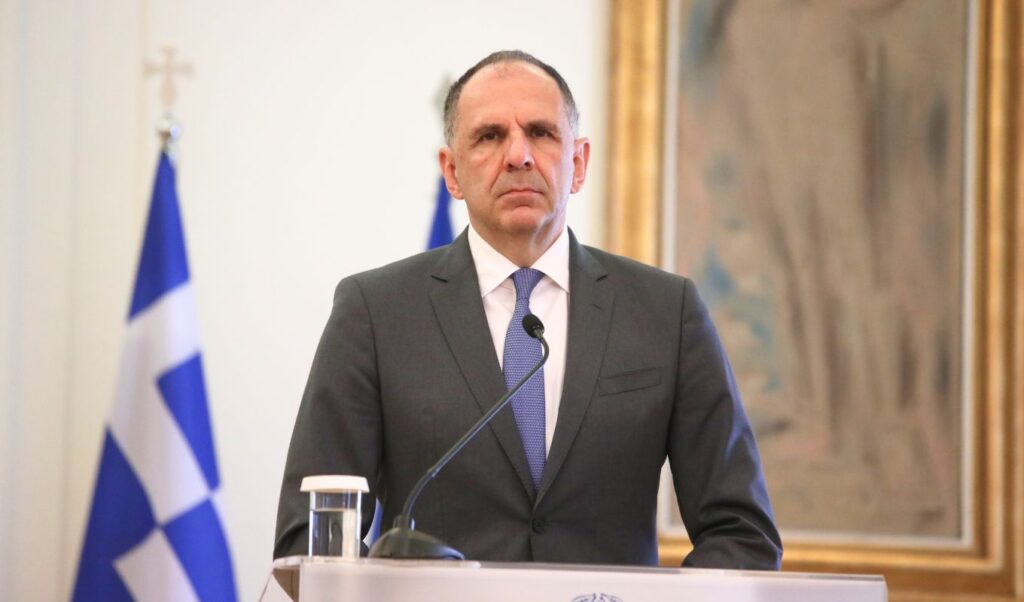
Athens is watching this shift closely. Foreign Minister Giorgos Gerapetritis has been maintaining continuous contact with his Egyptian counterpart Badr Abdelatty. When asked about the developments, government spokesperson Pavlos Marinakis stated that the government is monitoring all developments and assessing all available data, but added: “We do not allow others to define our policy — our only concern is to strengthen our country.”
Turkey and Egypt enter a “new era” — “A worrying development,” says Angelos Syrigos to parapolitika.gr
International Law Professor Angelos Syrigos, speaking to parapolitika.gr, described the Turkey-Egypt rapprochement as a “worrying development.” As he put it: “We are monitoring the situation. But Egypt is a very serious state. It will not enter the Greece-Turkey dispute by signing a maritime delimitation agreement with Ankara.” Professor Syrigos pointed out that the partial EEZ delimitation between Greece and Egypt in 2020 is binding on Cairo, and explained that “the reason Egypt proceeded with EEZ delimitation with Greece was twofold. On one hand, it believed that the section delimited with Athens did not raise any issue with Turkey. The second and more significant reason is that Greece offered Egypt a very substantial concession at the expense of Crete and Rhodes. Beyond that point — east of the 38th meridian — Egypt will not move toward any delimitation, because it is waiting for Greece and Turkey to resolve between themselves what belongs to whom, and only then will it proceed with delimitation with the respective country.” As for the Cyprus-Egypt EEZ delimitation of 2003, which Turkey had objected to, Syrigos believes the matter has been effectively settled, given that exploitation blocks have already been delineated and foreign companies have entered the area.
Nevertheless, the professor told parapolitika.gr that the Turkey-Egypt rapprochement is a source of real concern for Athens, stating: “These are definitely worrying developments, because one of the issues on the table is defense cooperation. A second issue is relations with Libya. Everything is being put on the table right now.”
Athens’ anxiety is further heightened by Egypt’s participation in Turkish military exercises, such as “EFES-2026,” which included amphibious assault scenarios and island seizure operations under Turkey’s “Aegean Army” command. Moreover, Egypt had been a central pillar of Greece’s trilateral diplomatic framework alongside Cyprus and Israel, aimed at balancing the Turkish threat. The partial Greek-Egyptian EEZ delimitation in 2020 was regarded as a diplomatic achievement that effectively nullified the Turkey-Libya maritime memorandum in practice. However, Cairo’s more recent posture — including a 2025 verbal note challenging the potential boundaries of the Greek continental shelf as outlined in Greece’s Maritime Spatial Planning framework — is raising questions about the durability of this relationship.
Turkish analysts, for their part, assess that the Turkey-Egypt cooperation is aimed at neutralizing the Greece-Cyprus-Israel axis, which Ankara views as an attempt at strategic encirclement. Furthermore, Cairo and Ankara are finding common ground in their shared frustration over Israeli policy, as well as in their mutual interest in achieving political stabilization in Libya.