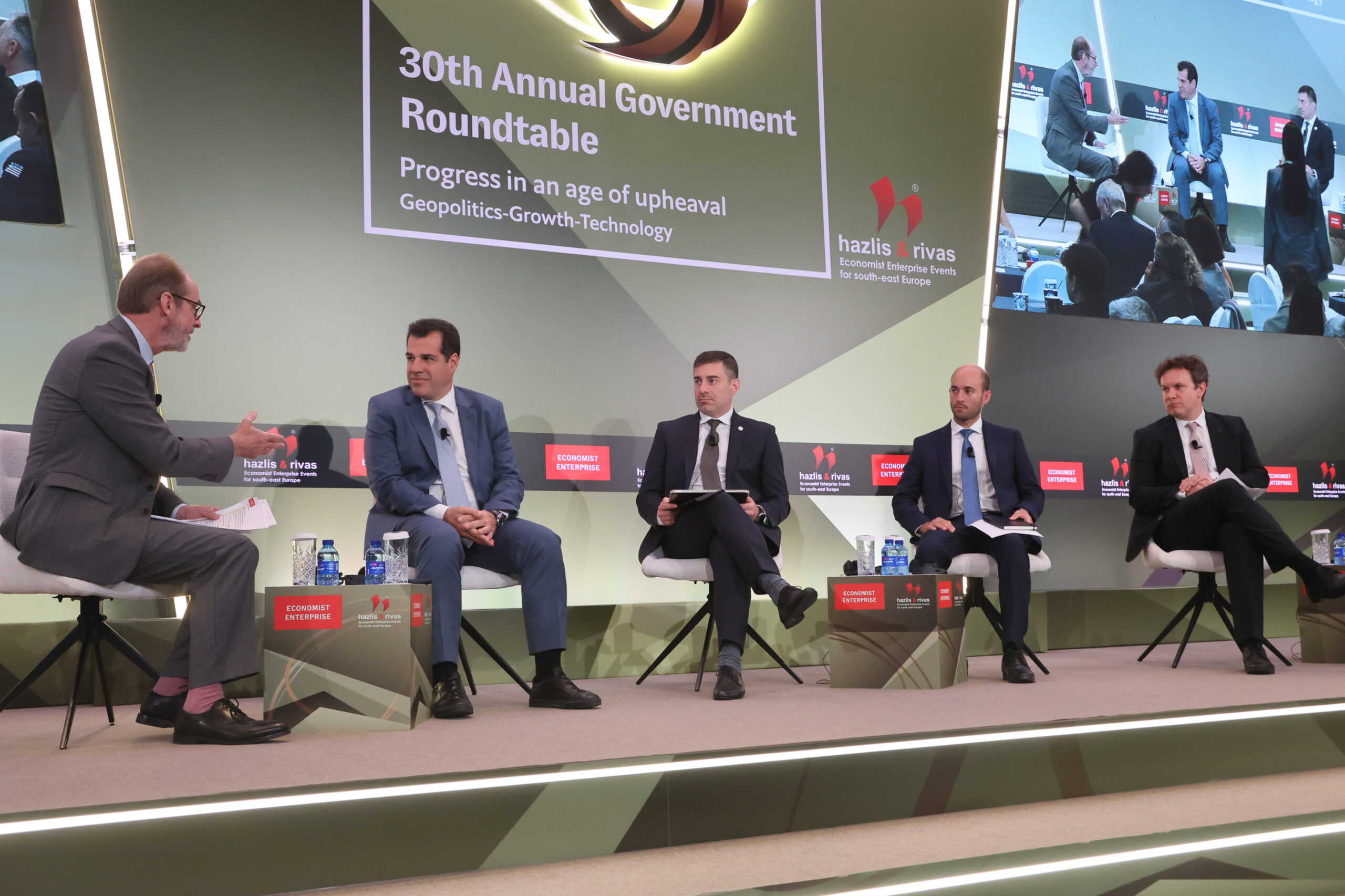
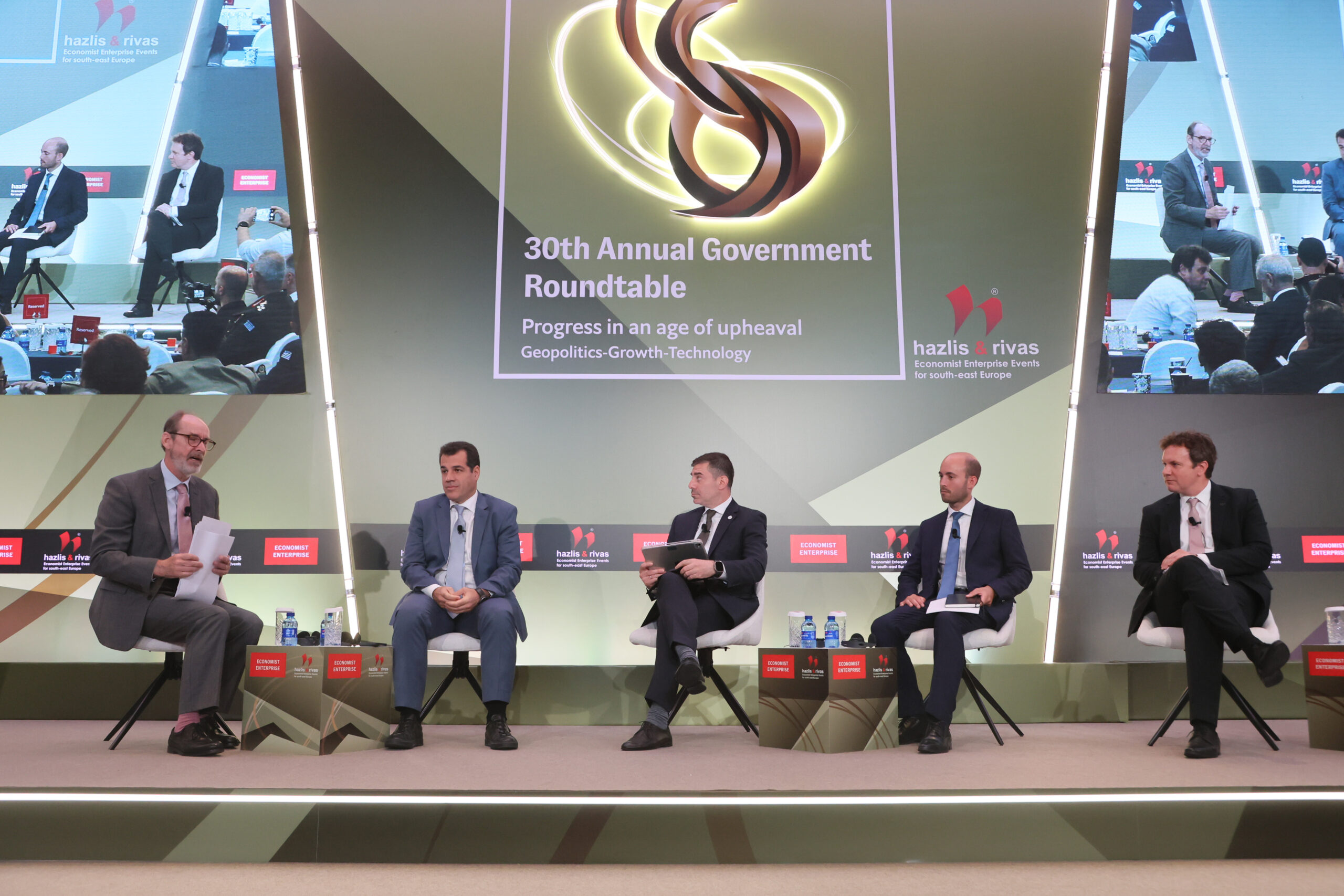
There were many fascinating and thought-provoking contributions during the 30th Round Table Discussion with the Greek Government, titled “Progress in an Age of Turbulence,” as part of the 2nd day of the annual Economist conference. Thursday’s (09/07) proceedings centered on issues such as strengthening Europe’s sovereignty and competitiveness, addressing the migration challenge, and discussions on the latest developments in the wars in the Middle East and Ukraine, as well as the current state of energy markets.
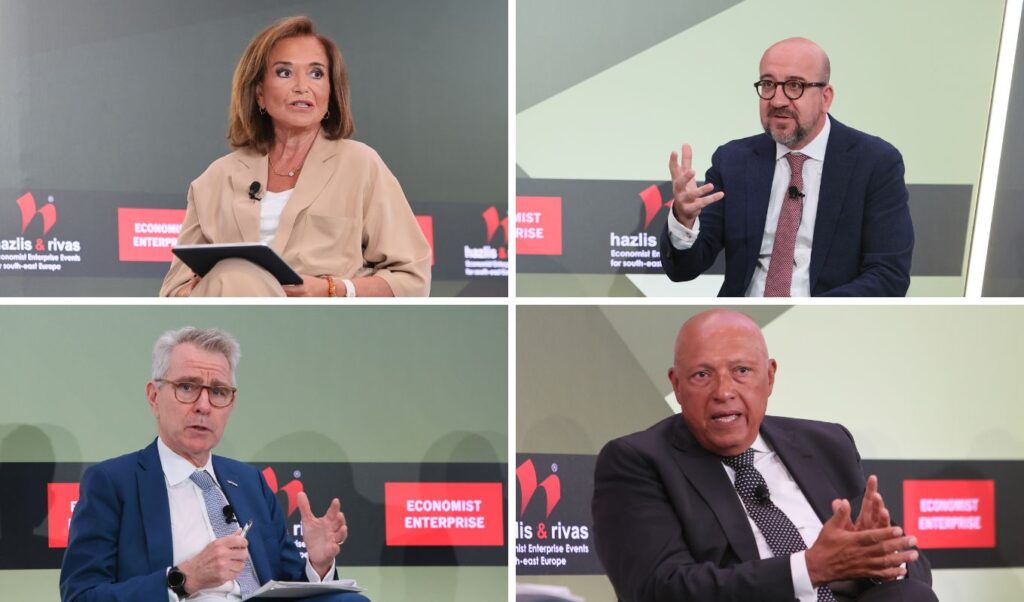
Participants in the 2nd day of the conference included — among others — Abdullah Gül (former President of the Republic of Turkey), Charles Michel (former Prime Minister of Belgium and former President of the European Council), Dora Bakoyannis (Member of Parliament and Chair of the Standing Parliamentary Committee on National Defence and Foreign Affairs), Thanos Plevris (Minister of Migration and Asylum), Dmytro Lubinets (Human Rights Commissioner of the Ukrainian Parliament), John Dautzenberg (former White House official, founder of JPD Global Advisors), Stefan Kraus (Chief Operating Officer, Henley & Partners), Geoffrey Pyatt (Senior Managing Director, McLarty Associates, former US Assistant Secretary of State for Energy Resources, former US Ambassador to Ukraine and Greece), Sameh Shoukry (former Foreign Minister of Egypt), Hryhoriy Nemyria (First Deputy Chair, Foreign Affairs Committee, Ukrainian Parliament, and former Deputy Prime Minister of Ukraine), and Domagoj Juričić (former Director of the Office of the President of the Republic of Croatia, Senior Political Risk Management Adviser, MKPS, Croatia).
Abdullah Gül, former President of the Republic of Turkey
Full Turkish membership in the European Union is “no longer a realistic goal,” and the time has come to explore a new model of cooperation, argued former Turkish President Abdullah Gül, noting that relations between Ankara and Brussels are at a critical crossroads. Reflecting on Turkey’s path toward Europe, he recalled that “twenty years ago, both as prime minister and as foreign minister, I actively pushed for Turkey’s accession to the EU,” and that “the European Commission announced that Turkey had met the criteria” before accession negotiations began in 2005.
Gül acknowledged that relations have deteriorated since then, noting that “ties have become more difficult — mistakes have been made on both sides.” As he put it, “today, looking at the current situation, I believe that the discussion of full membership is not realistic,” proposing instead that a “new model of relationship — perhaps similar to that of Norway” be explored, with Turkey operating “under the same umbrella” without being a full member.
He also stressed the need to upgrade the customs union, arguing that “third countries benefit from Turkey’s trade relations with the EU, while Turkey itself gains no advantage.” In closing, Gül underlined that Turkey’s importance for EU defence and security is self-evident, emphasizing the need to build a robust European security architecture.
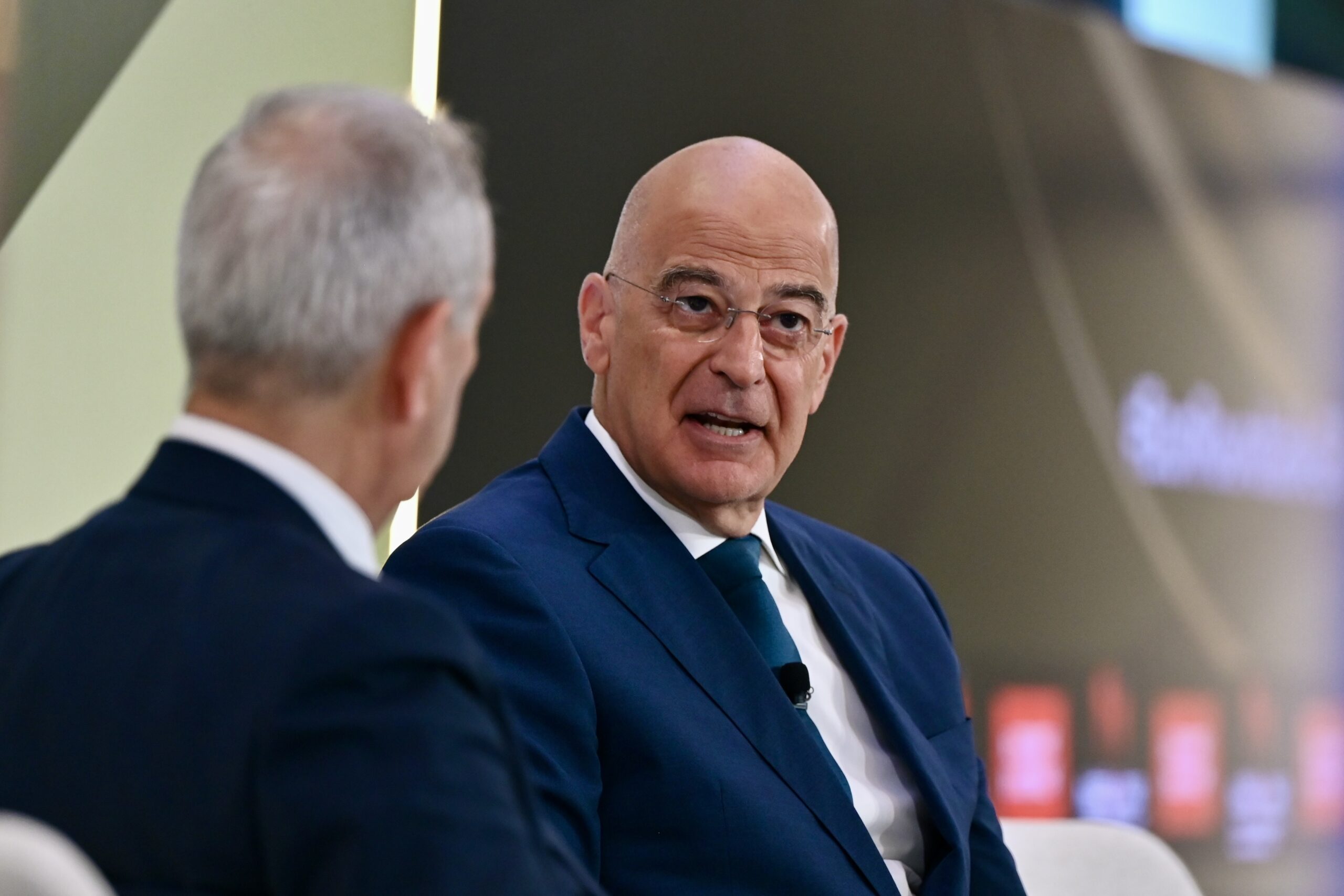
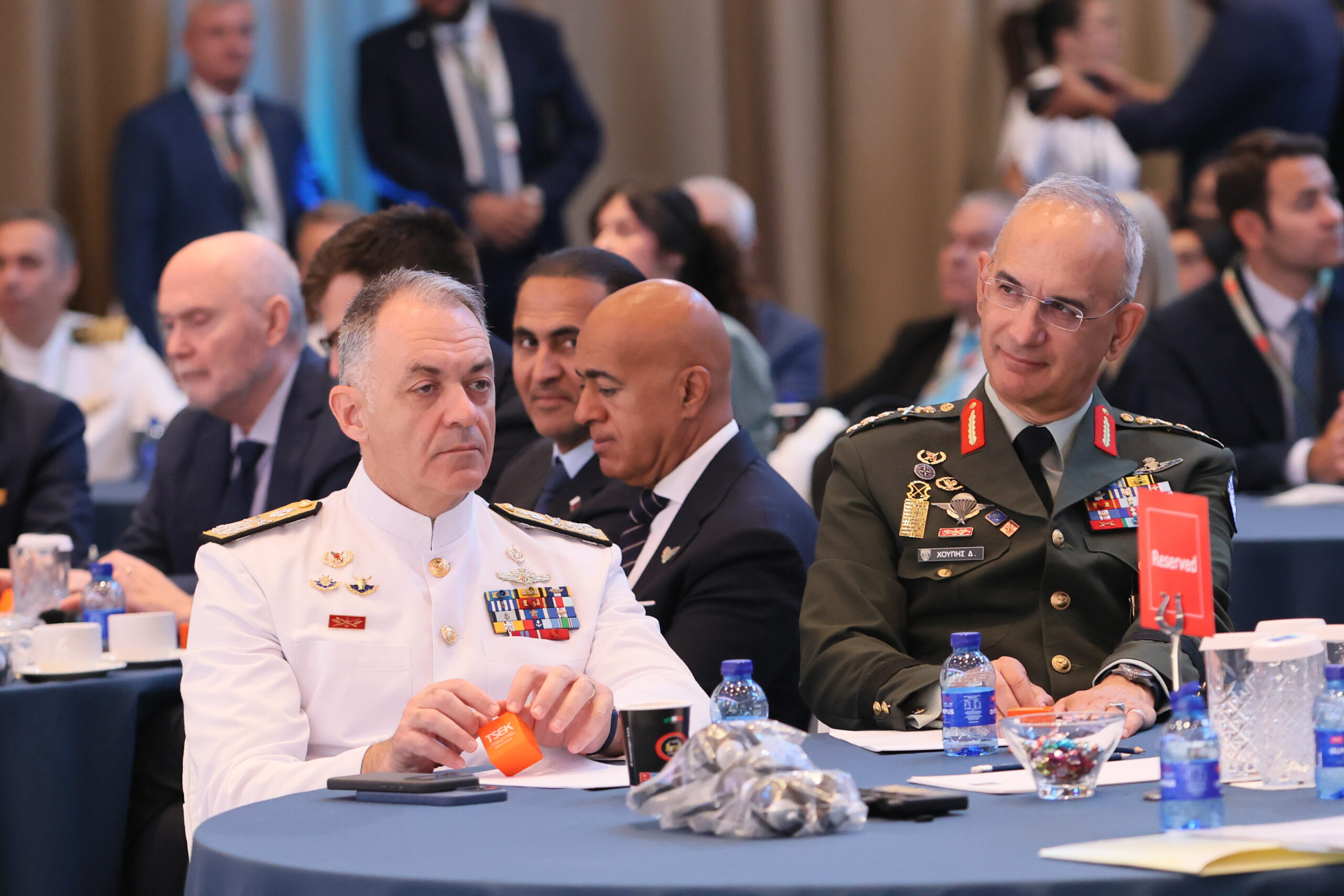
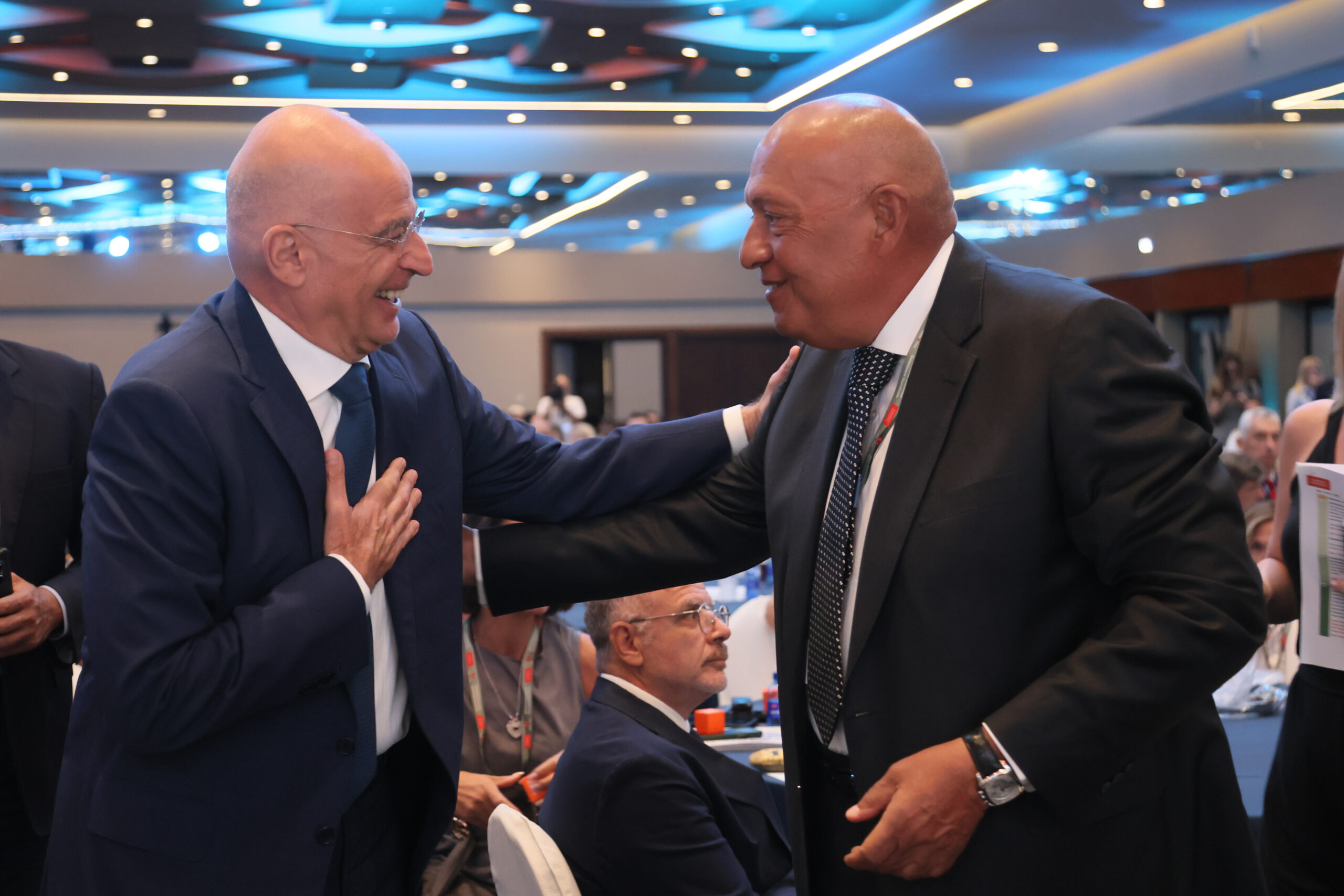
Charles Michel, former Prime Minister of Belgium and former President of the European Council
Strengthening Europe’s sovereignty and competitiveness in the face of sweeping geopolitical shifts must be an “absolute priority,” argued former Belgian Prime Minister and former President of the European Council Charles Michel, who outlined four key factors reshaping the new global architecture. He noted that “the fierce US-China rivalry is affecting everyone,” while “there are more and more military conflicts at this moment.” He also pointed out that new arenas of competition — including “natural resources, land, AI and data” — are transforming the nature of threats, even as the role of middle powers continues to grow.
Michel stressed that “European sovereignty must be the priority” and that the EU’s competitiveness must be reinforced to meet these new challenges. He further argued that the mounting pressure on the international rules-based order does not diminish the need for multilateral cooperation, stating that “the challenge is not to preserve yesterday’s institutions unchanged, but to adapt them to the realities of a more multipolar and interdependent world.” On EU-Turkey relations, he underscored their strategic importance in an increasingly volatile regional environment. “It is feasible to develop an ambitious framework,” he said, adding: “I do not put Russia and Turkey in the same basket.” He emphasized that in this new, uncertain environment, “we must responsibly manage our differences” and “figure out what a good deal actually means.”
Dora Bakoyannis, Member of Parliament and Chair of the Standing Parliamentary Committee on National Defence and Foreign Affairs
“Europe must not repeat with Turkey the same mistakes it made with Russia,” warned Member of Parliament and Chair of the Standing Parliamentary Committee on National Defence and Foreign Affairs Dora Bakoyannis, arguing that the shifting geopolitical reality demands a new, more realistic approach to EU-Turkey relations. As she noted, “the US has been pulling back from Europe in recent years,” forcing Europeans to fill the security vacuum at a time when “Russia is threatening the sovereignty of European nations.”
Bakoyannis observed that “historically, Europeans have treated Turkey as a necessary evil,” recalling that Europe once adopted a similar stance toward Russia — relying on it for “cheap energy,” while looking to Turkey for “cheap security.” “If Europe makes the same mistake with Turkey as it did with Russia, the price will be extraordinarily high,” she warned, reminding the audience that unresolved issues such as Cyprus and the threat of war against Greece remain very much alive. She concluded by saying that “Europe must send a clear message to Turkey” and that European policy cannot afford to ignore the sensitivities of Greece and Cyprus. “For me, revisionism is a clear position of Turkey — and we would like that to change. Then the whole atmosphere would be different,” Bakoyannis said.
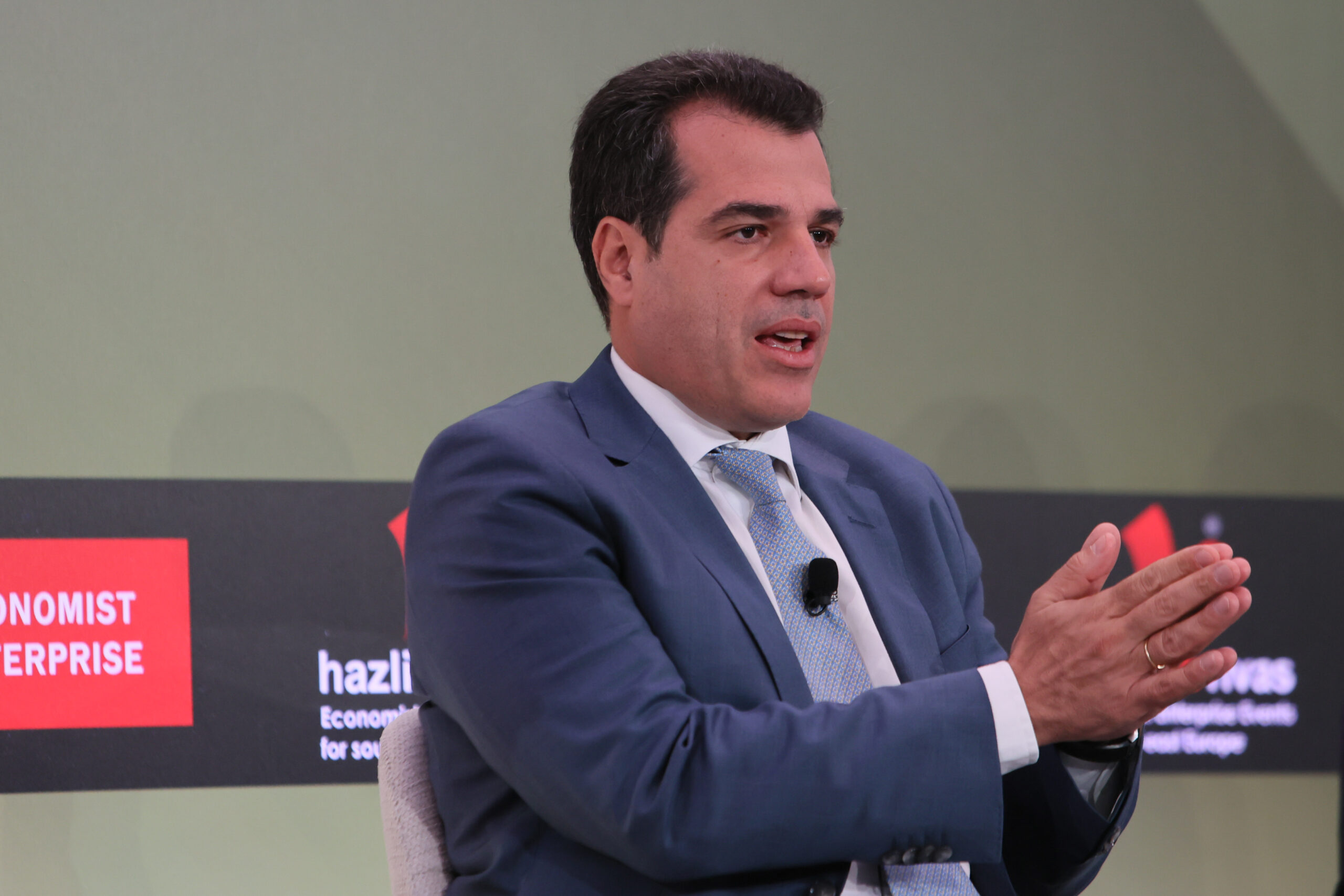
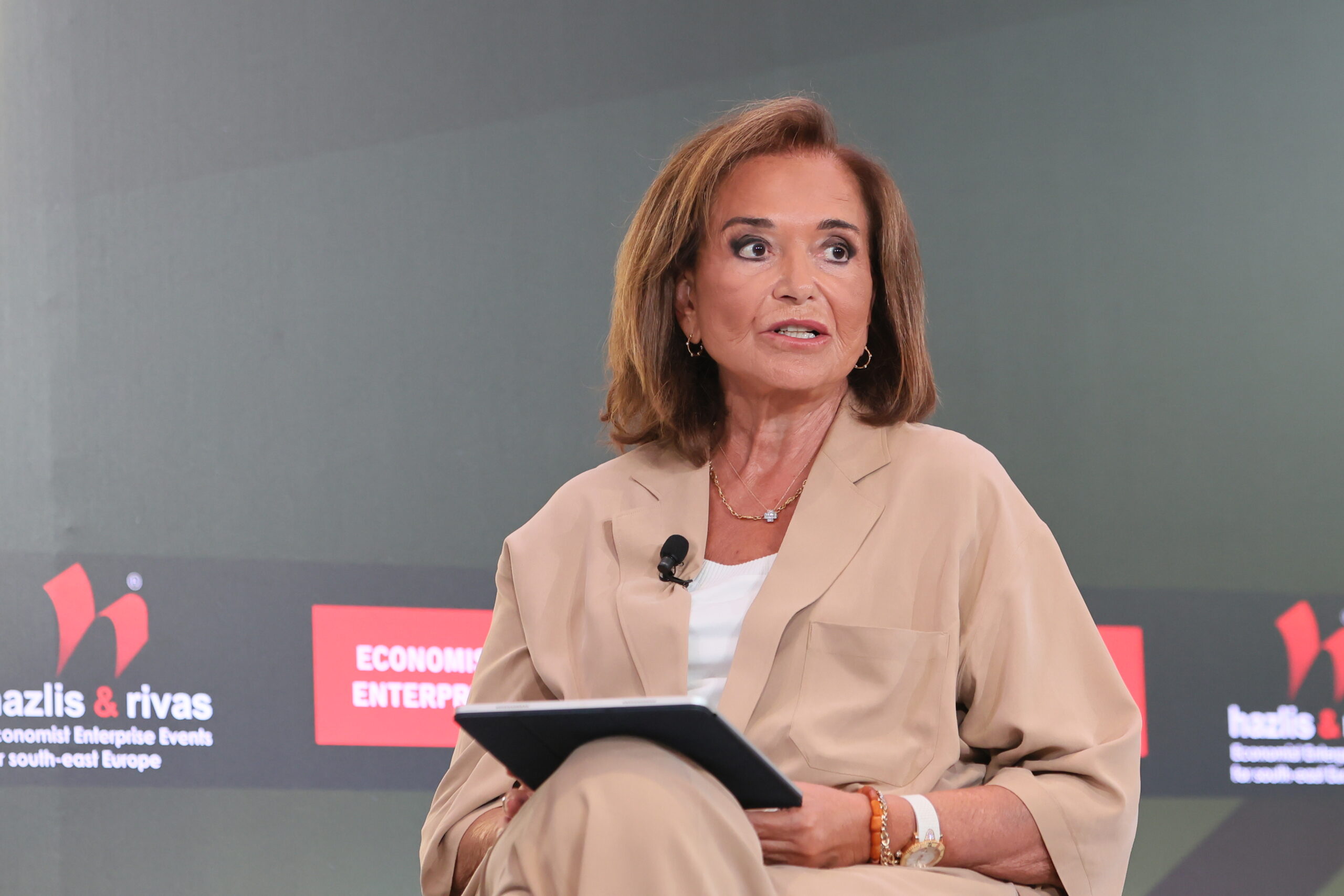
Thanos Plevris, Minister of Migration and Asylum
“In the first half of this year, Europe recorded 50,000 illegal migrant arrivals, compared to 85,000 during the same period last year — and this shows that a stricter migration policy is beginning to deliver results,” said Minister of Migration and Asylum Thanos Plevris from the podium of the Economist’s annual conference in Athens. He added that cooperation with Turkey has reduced flows across the Aegean by 65%, while total sea arrivals to Greece have fallen by 30%. This trend is being seen across Europe as a whole, he stressed, because policy has changed. We want legal migration — there are labour shortages in various sectors — but we do not want criminal networks dictating migratory flows into Europe, he emphasized. Plevris further noted that the EU Pact on Migration and Asylum is producing results in reducing illegal flows, and that returns will also increase once the relevant regulation comes into force — a regulation that also provides for the creation of return hubs in countries outside the EU. In Greece, we have seen a 40% increase in forced returns and 20% in voluntary ones, he added. It has become clear that Europe cannot absorb unlimited migration flows — particularly from those migrants who had no intention of integrating but sought instead to transplant their own way of life here, he observed. Legal migration, governed by clear rules, is beneficial — especially from countries that share common values and principles with Europe, Plevris concluded.
Dmytro Lubinets, Human Rights Commissioner of the Ukrainian Parliament
More than 8 million Ukrainians are currently outside Ukraine, of whom 6.2 million are in EU member states, noted Human Rights Commissioner of the Ukrainian Parliament Dmytro Lubinets, adding that this represents the largest displacement of people in Europe since the end of World War II. He pointed out that EU countries are supporting Ukrainian refugees, but stressed that this is not merely a matter of charity — studies show, for example, that Ukrainian refugees in Poland are contributing to GDP growth. In the past month alone, Russians killed 170 civilians in Kyiv and its surrounding areas, he reported. Lubinets underlined that humanitarian law must apply to everyone and that Russia must be pressured to negotiate, having violated every international treaty it has signed.
John Dautzenberg, former White House official, founder, JPD Global Advisors
Former White House official and JPD Global Advisors founder John Dautzenberg focused on the migration policy currently being pursued by the United States, noting that the goal is to strike agreements with migrants’ countries of origin in order to prevent flows in the first place. In this context, he stressed that what matters most is the political will to understand and address the root causes driving migration. He placed particular emphasis on education, calling it the key weapon against radicalization and hatred. He noted that Europe is now adopting a similar approach to the US, but that — unlike the US — it is also trying to address the underlying causes of migration. He argued that migrants themselves must be heard, so that positive conditions can be created in their home countries. If the resources currently spent on deterring migration were instead invested in tackling its root causes and integrating migrants, outcomes would be far better, Dautzenberg concluded.
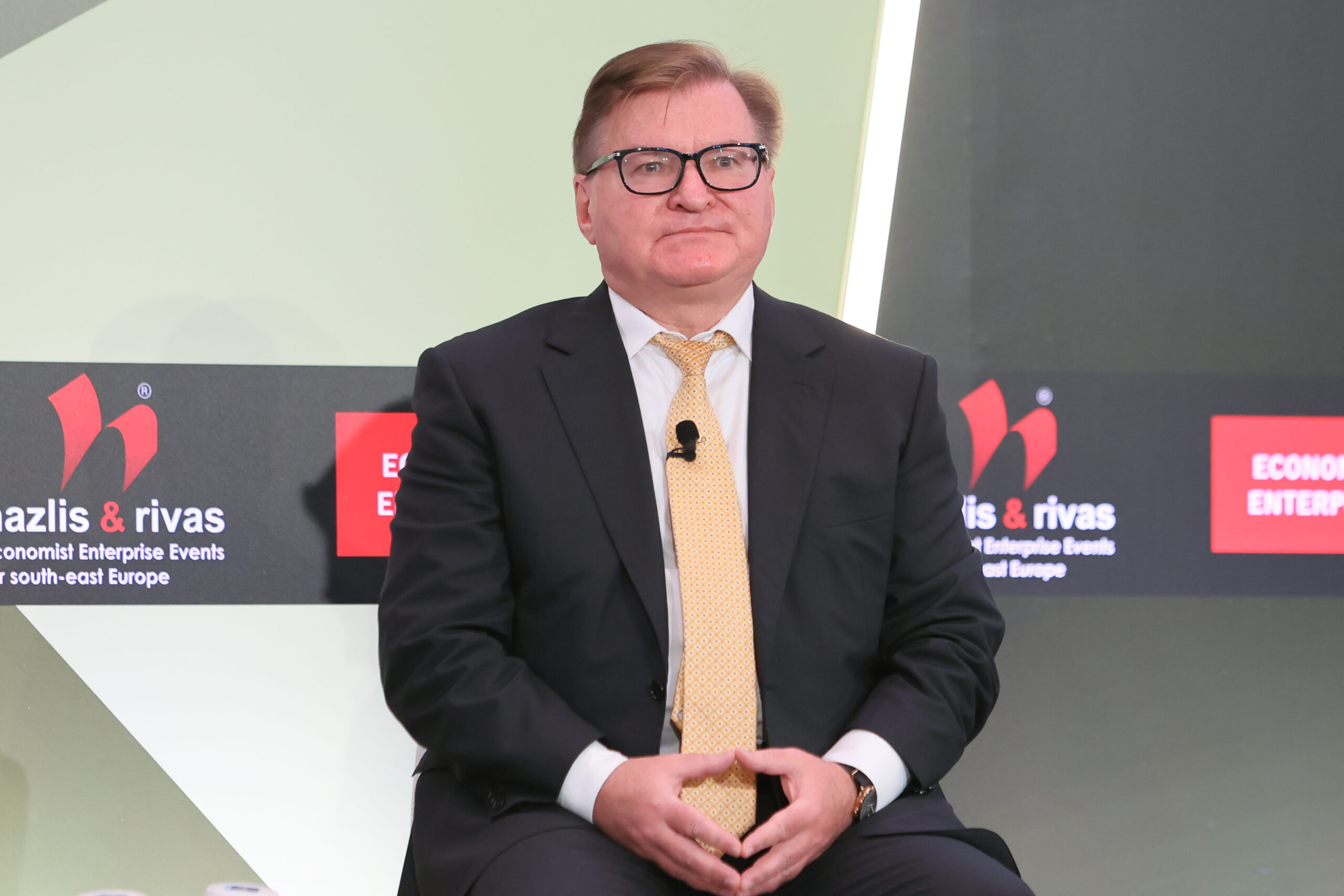
Stefan Kraus, chief operating officer, Henley & Partners
Henley & Partners Chief Operating Officer Stefan Kraus focused on the migration of educated and high-net-worth individuals from third countries to Europe. He spoke about programs designed to attract investors and residents, and described Greece as a standout case study in this area. In particular, Kraus highlighted the Golden Visa program, noting that it has generated significant revenue for Greece — amounting to hundreds of millions of euros. He also touched on talent attraction programs and incentive schemes. On the issue of irregular migration, he remarked that Greece has led the way in setting stricter criteria for prospective migrants, while also stressing the importance of creating meaningful incentives for legal migration pathways.
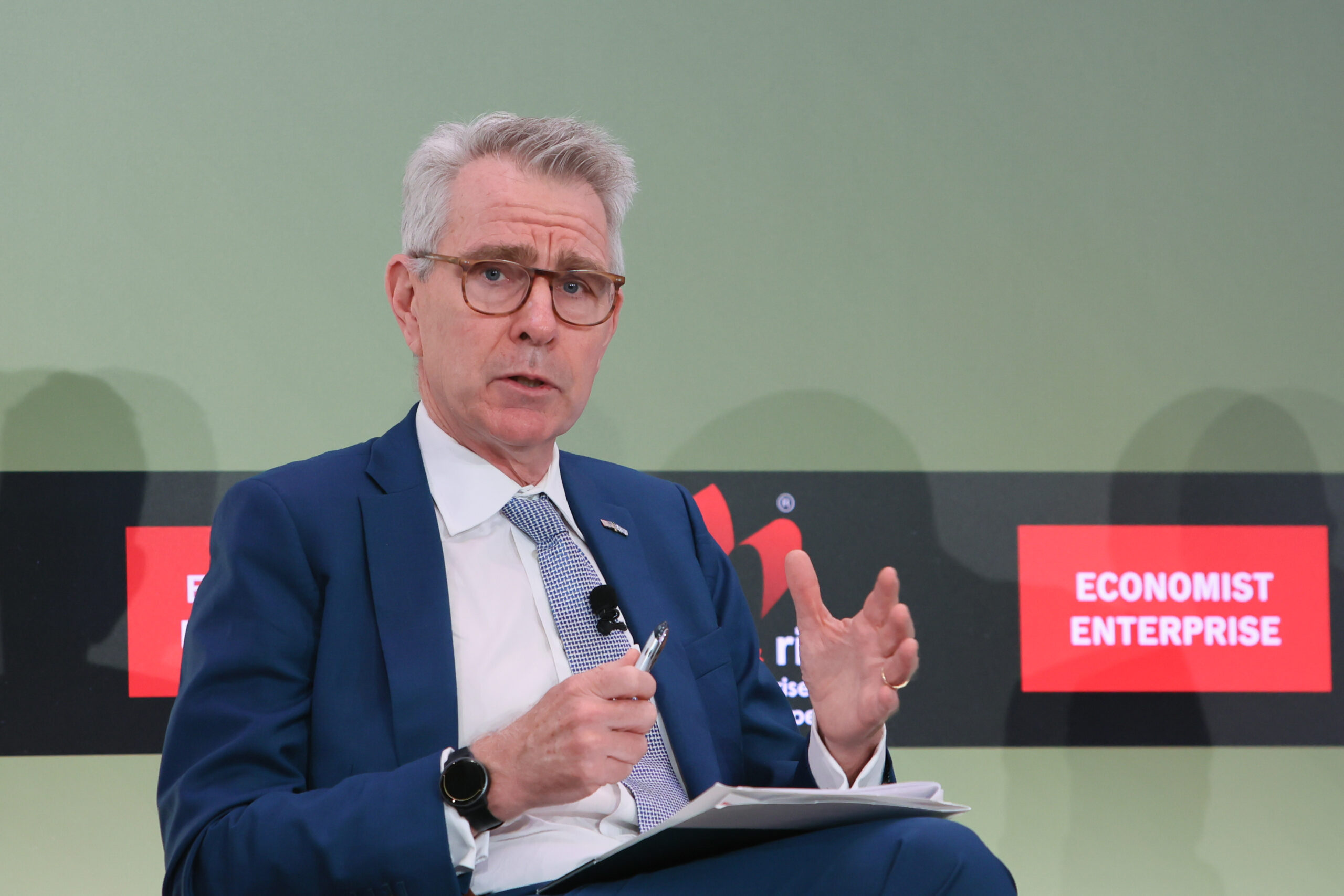
Geoffrey Pyatt, Senior Managing Director, McLarty Associates, former US Assistant Secretary of State for Energy Resources, former US Ambassador to Ukraine and Greece
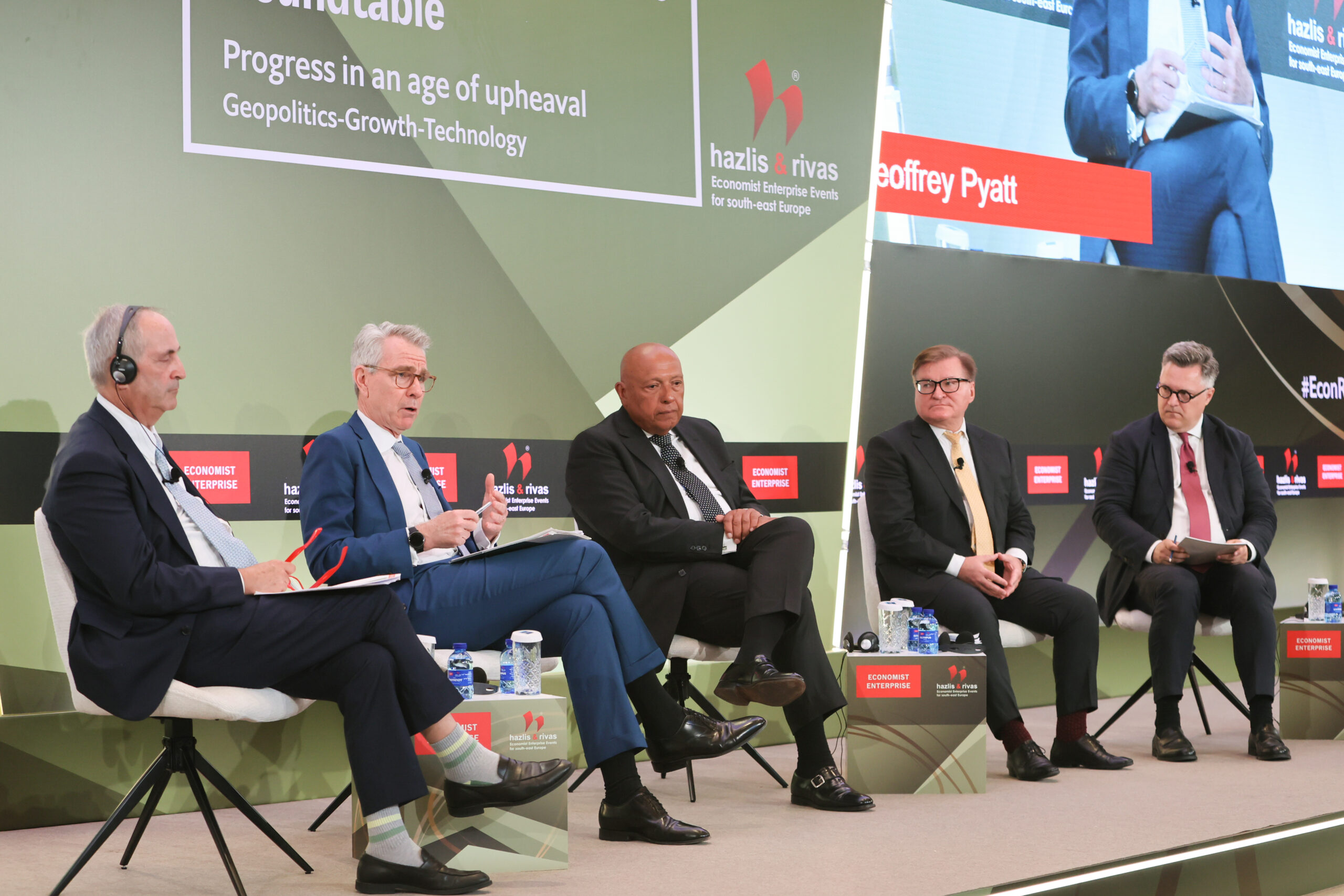
Energy uncertainty has become “the new normal,” argued Senior Managing Director of McLarty Associates and former US Assistant Secretary of State for Energy Resources Geoffrey Pyatt, stressing that recent geopolitical developments are fundamentally reshaping the energy landscape. “We are living through the greatest disruption in the energy sector,” he said, though he acknowledged that markets have shown resilience and the shock has been less severe than many had anticipated. He warned, however, that the level of uncertainty we are experiencing is the new normal, and noted that the war in the Gulf gave Iran “a tool it didn’t know it had — control of the Strait of Hormuz.” Pyatt also turned to Greece’s role in this landscape, congratulating the government on its energy agreements and noting that the country has contributed both to developments in the Middle East and to the advancement of the Vertical Corridor. He also projected that once the war in Ukraine ends, demand for energy will increase significantly. In closing, he underlined that Greece is an outward-looking country whose companies have grown stronger through these crises, expressing optimism about their position in the emerging energy environment.
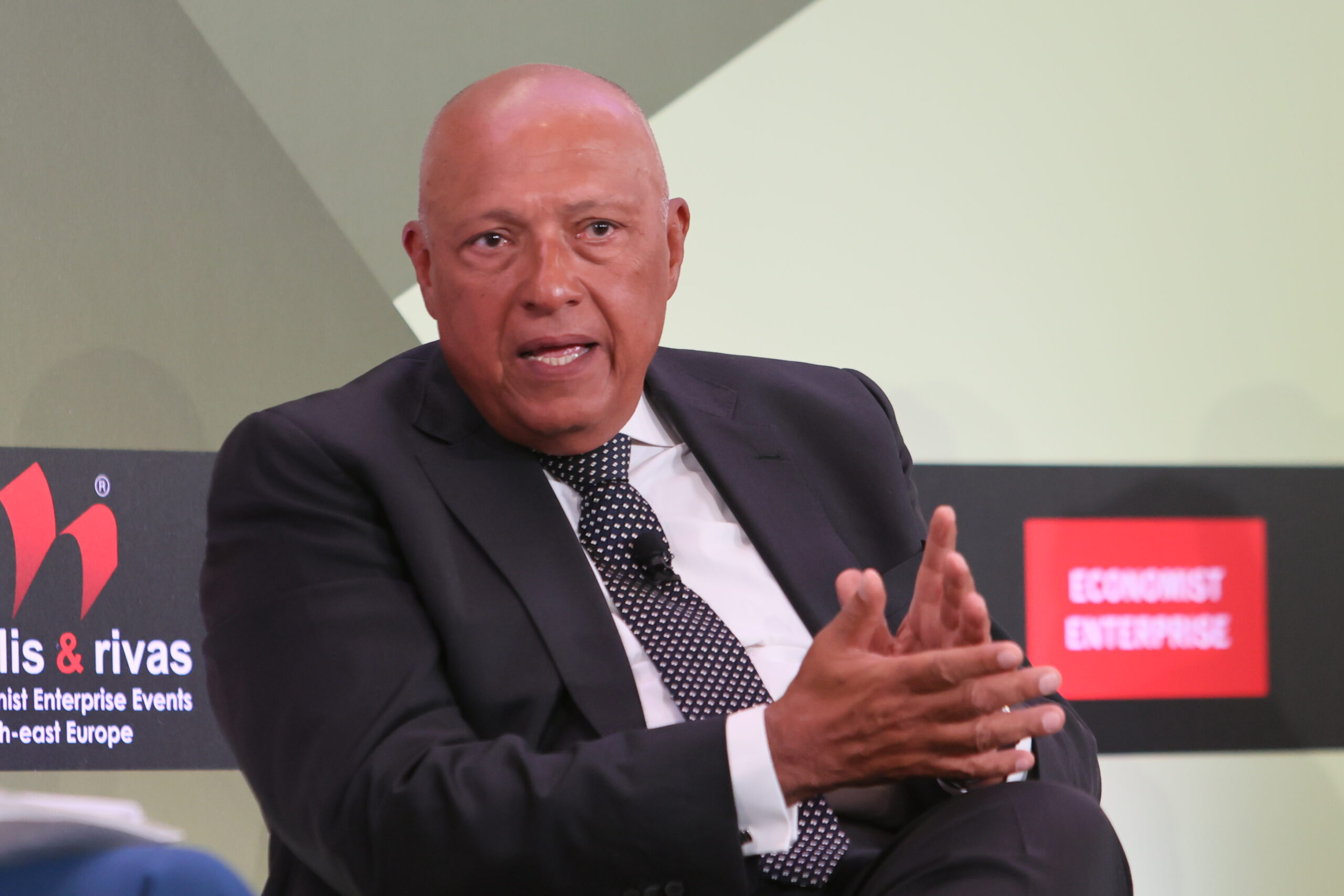
Sameh Shoukry, former Foreign Minister of Egypt
“Energy security will depend on resolving the conflicts in the Middle East and restoring stability to the region,” argued former Egyptian Foreign Minister Sameh Shoukry, pointing out that developments in Ukraine, Gaza and Iran have placed a heavy burden on the global economy