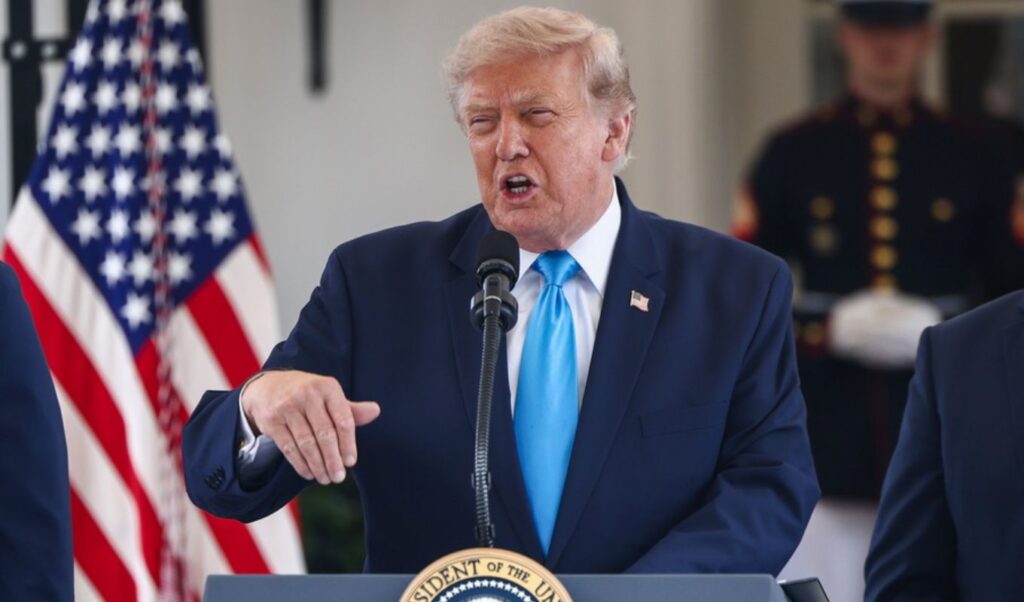
US President Donald Trump announced that negotiations with Iran are resuming today, Monday, noting that he has decided to postpone new military strikes against the Islamic Republic in order to prioritize diplomacy. “Obviously, they don’t want to be hit. They knew the extent of the attack, because they could see it was underway,” Trump told reporters on Sunday aboard Air Force One.
The US president further stated that Washington is entering a new phase of talks with Tehran, noting that “what we are doing now is talking to them as part of a negotiation. The process begins Monday afternoon.” However, he did not provide further details regarding the location of the talks or the composition of the delegations that will participate in the negotiations.
Donald Trump: Why he postponed strikes against Iran — “There is room for a deal”
On Saturday, Donald Trump walked back his threats of a large-scale military operation against Iran — which he had previously described as the biggest since World War II — arguing that conditions were now forming for a deal to be reached.
Explaining his decision to postpone the planned strikes, the US president said he received appeals from both Tehran and American allies, including Saudi Arabia, the United Arab Emirates, and Qatar, urging him to give diplomacy more time. “When allies ask you to hold off, you have to consider whether there’s room. The reason they’re asking is because they believe a deal can be made,” he said.
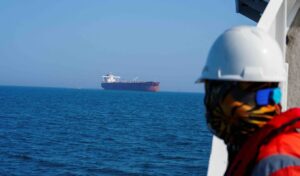
According to Donald Trump, any potential agreement would initially focus on the issue of the Strait of Hormuz and, in a second phase, on Iran’s nuclear program — or, as he put it, the country’s “denuclearization.”
He also added that Saudi Crown Prince Mohammed bin Salman had spoken out against the military strikes, warning of serious and unpredictable consequences for the region.
“They could be faced with massive population displacements and widespread destruction. A lot of bad things can happen,” the US president said.
The war began on February 28, when the United States and Israel launched a surprise strike against Iran. Despite periodic diplomatic efforts that led to brief periods of relative de-escalation, the conflict has since reignited.
A previous ceasefire agreement — which also included provisions for the reopening of the Strait of Hormuz, a critical waterway for global energy supply — failed to hold, as both sides resumed exchanging attacks in recent weeks.