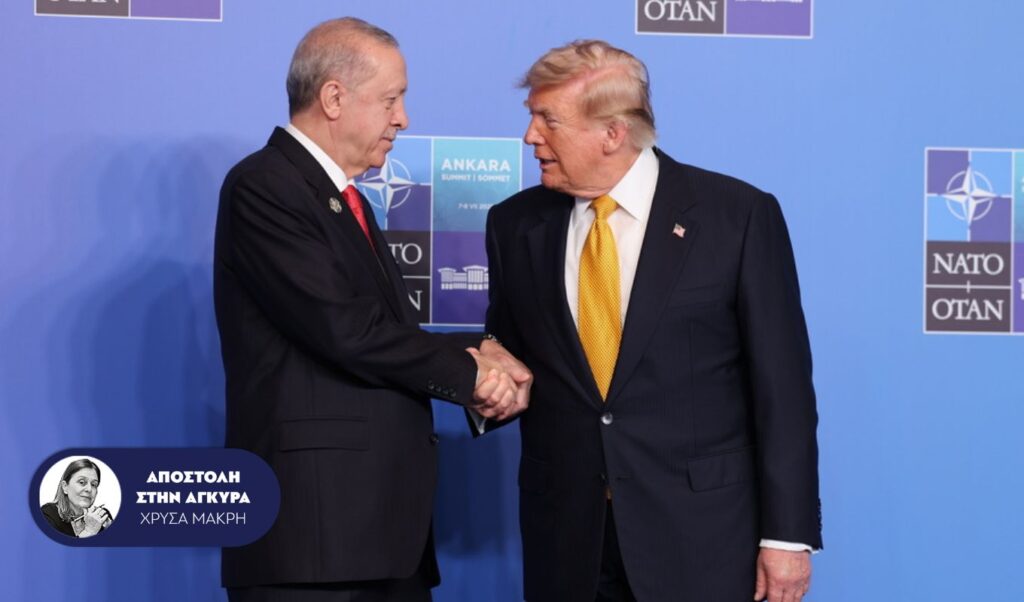
The 36th NATO Summit in Ankara was overshadowed — as widely expected — by Donald Trump’s presence, marked by explosive statements, diplomatic upsets, and unconditional support for Turkish leadership. On the sidelines of his meetings in Ankara, the U.S. president made it abundantly clear that his foreign policy remains unpredictable, volatile, and frequently confrontational — even toward traditional allies.
NATO Summit: What Trump said about the possibility of selling F-35s to Turkey
As the Summit concluded, Donald Trump clarified his intentions regarding Turkey’s potential reinstatement in the F-35 program, stating that he had not yet reached a final decision on the possible sale of the fighter jets to Ankara. “We have an excellent relationship. We’re talking about the F-35 fighter jets. It’s the best aircraft and everyone wants it. We have to decide who we’re going to give it to,” the U.S. president said, adding: “Whether we’ll ultimately go ahead with this, I haven’t decided yet definitively. However, my inclination is to say that Turkey has done everything we asked and has helped us in many different ways.”
Trump’s public support for Erdoğan and the messages sent to Israel
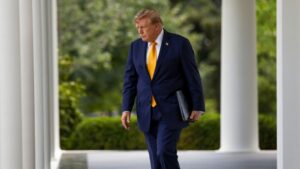
The U.S. president left a powerful mark on the 36th NATO Summit. From the moment he arrived in Ankara, Trump offered warm and effusive support for Recep Tayyip Erdoğan, repeatedly declaring “I love Erdoğan,” while siding with Turkey in its dispute with Israeli Prime Minister Benjamin Netanyahu — a clear signal that the Trump-Netanyahu relationship is no longer at its best. Although Trump expressed affection for “Bibi” as well, he sharply criticized the Israeli prime minister’s statements against Turkey, emphasizing that Turkey is a “very large military power.”
NATO: Trump’s hard line against Iran
From the NATO Summit, Trump launched a new and particularly aggressive attack against Iran, effectively announcing the end of any diplomatic effort. When asked at the press conference, he stated: “The war with Iran was a tremendous military success. They want to make a deal, but they don’t know how to make a deal.” He also claimed that he himself is “the number one target” of Iran.
Rutte distances himself on S-400s and casus belli
NATO Secretary General Mark Rutte aligned himself with the U.S. president, who described the recent American strike on Iran as “necessary and proportionate.” The bilateral meetings and statements made by the Alliance’s leadership outlined the framework within which the 36th NATO Summit in Turkey unfolded, reflecting the new balance of power among member states. What is certain is that Trump’s primacy remains uncontested — a fact underscored by his sidelining of traditional U.S. allies such as the United Kingdom, Spain, and Italy. Trump’s dominance is further reinforced by the backing of the Alliance’s Secretary General, as well as by Turkish President Erdoğan, who emerged as the Summit’s biggest winner. Mark Rutte made no effort to conceal his pro-Turkish sentiments. Even when pressed on the casus belli issue — a matter raised by a fellow ally — he distanced himself from the concern, despite the clear disapproval of Greek Prime Minister Kyriakos Mitsotakis. He similarly stepped back from the S-400 issue, declaring that it “concerns exclusively the U.S. and Turkey.”
The new balance of power in NATO after the Ankara Summit
In the days ahead, the Alliance will be seeking ways to preserve its unity through increased defense spending. As Greek Prime Minister Kyriakos Mitsotakis stated, “In plain terms, this means spending more resources so that a basic balance is achieved between U.S. expenditure and that of the rest of NATO,” urging European nations to recognize that they must assume greater responsibility for their own defense. The issue of increased spending was also the catalyst for Donald Trump’s scathing attack on Spanish Prime Minister Pedro Sánchez, whom he called “a truly terrible ally” with the worst behavior. According to Trump, the U.S. recently spent one trillion dollars protecting Europe from Russia, while some countries “paid nothing.” He further revealed that when he asked England and Germany for help, they refused to contribute.