Nearly 2,000 people have lost their lives in Venezuela following two devastating earthquakes that struck the country on June 24. According to the latest provisional official toll from local authorities, the death count has risen to 1,943, while survivors face critical shortages of food and shelter. The previous official count had reported 1,719 deaths.
Read: Venezuela miracle: 3-year-old child pulled alive from the rubble after six days (Video)
The earthquakes, measuring 7.2 and 7.5 in magnitude, are the most powerful to hit the Latin American country in over a century. They left approximately 10,500 people injured, according to parliamentary speaker Jorge Rodríguez. He also noted that around 30,000 people were in the area of La Guaira port — the hardest-hit region — when the double earthquake struck.
Venezuela earthquakes: Race to find the missing
Since then, 6,461 people have been rescued, according to Rodríguez, but the United Nations estimates that tens of thousands of others remain unaccounted for.
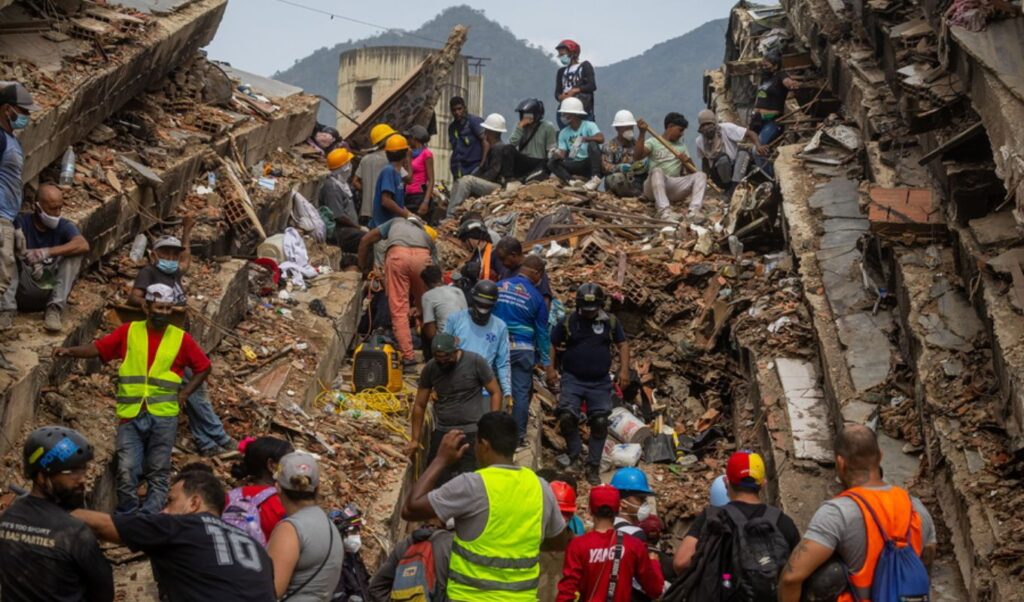
Although the critical 72-hour window — during which survivors are most commonly rescued after major earthquakes — has already closed, experts note there are still slim chances of finding people alive in the rubble.
A Jordanian rescue team pulled a three-year-old child from the debris in Caracas yesterday, offering a rare glimmer of hope in an otherwise increasingly grim picture.
Tens of thousands of buildings damaged
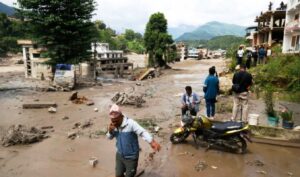
In many of the earthquake-affected areas, buildings have been reduced to rubble. Based on satellite imagery, NASA estimated that approximately 58,870 buildings were damaged or destroyed, while critical infrastructure has also suffered severe blows.
“Access to aid remains severely limited”
In La Guaira state, which bore the brunt of the disaster, “food shortages are widespread, basic services have collapsed, and communications are largely cut off,” the UN High Commissioner for Refugees (UNHCR) noted. “Tensions among the population are rising as access to humanitarian aid remains severely limited,” it added.
“People are killing each other over food”
In La Guaira, Daniela Armas, an 18-year-old vendor who was injured during the earthquakes, described scenes that could have come straight from a disaster film: “Aid is being distributed here, but sometimes people are killing each other to get food. People are fighting like it’s a cockfight.”
World Food Programme issues urgent appeal
Against this dramatic backdrop, the World Food Programme (WFP) yesterday issued an urgent appeal to raise an initial $50 million, in order to distribute food to approximately 500,000 people over the next three months. “The earthquakes have affected many families, some of whom were already struggling to access basic food. Now, with their livelihoods destroyed and infrastructure severely damaged, many are at risk of falling even deeper into food insecurity,” explained Stephanie Hochstetter, the agency’s director in Venezuela.
WHO raises alarm
The World Health Organization (WHO) expressed concern over the risk of epidemic outbreaks, noting that systems for tracking the missing and the dead are “inadequate.” The combined collapse of healthcare systems, water supply networks, and sanitation infrastructure — coupled with forced population displacement — could trigger “vaccine-preventable diseases such as measles, diphtheria, and whooping cough,” warned WHO spokesman Christian Lindmeier during a press conference in Geneva.
What UNHCR estimates
UNHCR estimates its needs at approximately $15 million, primarily to provide temporary shelter to around 30,000 people for six months. “More than 80% of La Guaira state is in crisis and authorities need to act. They must at least focus on basic services such as electricity, drinking water, and sanitation,” said Pablo Alfonso, 64, who is now living in a tent.
“No one wants to go to a shelter”
In the meantime, survivors are making do as best they can — like Félix Ruiz, in Ciudad Piar (eastern Venezuela), who is sleeping in a pharmacy parking lot. “No one wants to go to a shelter,” he said, because going there feels like “being on the street.” Others have rolled up their sleeves, like Diorhaylis Escalona, a 23-year-old doctor: “After two days I started volunteering,” she explained. “Emotionally, it crushes me to see so many lives lost because of the earthquake, but we are trying to help.”
Significant US aid announced
The US government announced it is doubling its humanitarian assistance to Venezuela to a total of $300 million, to be distributed among NGOs and UN agencies.
An improvised morgue has been set up on the waterfront of La Guaira’s port. Since the first days, the injured and the dead have been continuously transported to overwhelmed hospitals. Infrastructure has been pushed to its limits. “I was told my sister and her children are here, as are my brother’s children,” said Wilker Molaya, 25, as he waited in line to identify victims. “Eleven of us lived in our house. Only two of us survived, because we were at work.”
Major international response mobilizes
According to the WHO, which cited the acting president, 38 hospitals sustained damage, three of which are in a critical state. The international community has mobilized in the wake of the tragedy. According to UN coordinator in Venezuela Gianluca Rampolla del Tindaro, 27 countries have dispatched more than 40 rescue teams — with “over 2,000 rescuers and additional personnel in the field, supported by more than 160 search dogs” trained to locate survivors trapped under rubble.