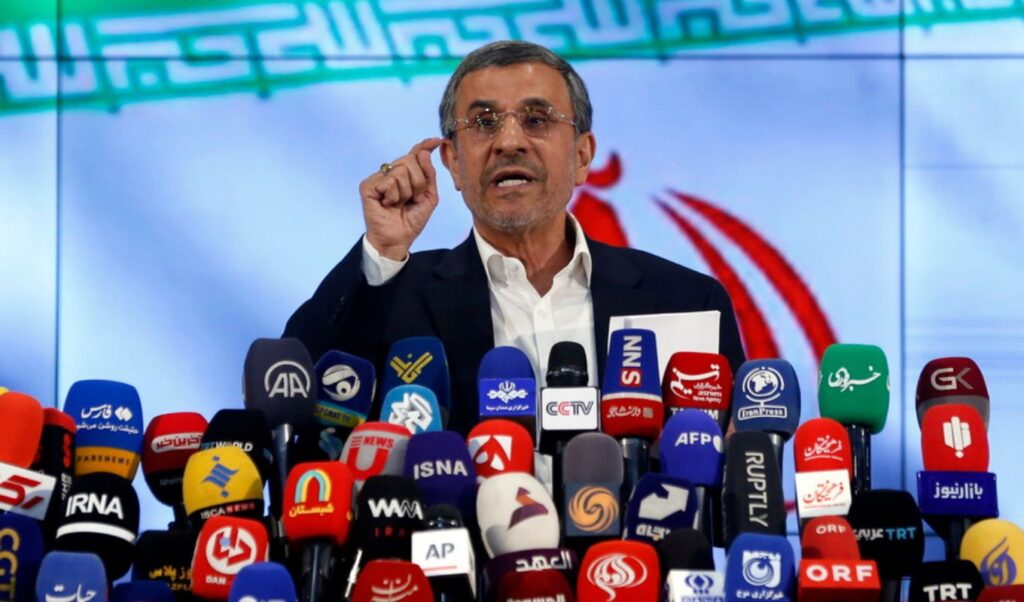
The New York Times has published explosive revelations regarding the war in Iran and the plans of the United States and Israel. According to the report, Washington and Tel Aviv allegedly planned, at the onset of the war, for former president Mahmoud Ahmadinejad to assume power in Iran following the assassination of Supreme Leader Ali Khamenei and other high-ranking Iranian officials.
Mahmoud Ahmadinejad was known for his harsh anti-American and anti-Israeli positions and is considered a representative of the hardline wing of the Iranian political system.
The report, however, emphasizes that Ahmadinejad had come into conflict with senior regime officials, but has called to “wipe Israel off the map” and has supported Iran’s nuclear program. “To say it was an unusual choice would be a massive understatement,” the report characteristically notes.
The New York Times: regime change plan in Iran centered on Mahmoud Ahmadinejad
The New York Times reports, citing American officials, that Ahmadinejad had been approached about the plan, which was largely developed by Israel, but later appeared reluctant. The reason is said to be that he was injured during an Israeli raid in Tehran that was intended to free him from the house arrest imposed on him. He may have survived, but became disillusioned with the regime change plan and has not appeared publicly since.
According to American officials briefed on the matter, the broader regime change effort quickly collapsed. Ahmadinejad’s rise to power was part of a multi-layered war plan that Israel had reportedly designed, the NYT writes.
The first stage included coordinated airstrikes by the US and Israel against high-ranking Iranian officials, as well as activating Kurdish forces to engage in conflict with Iran.
Following the attacks and the planned Kurdish invasion -which ultimately did not materialize- Israel estimated that the Iranian regime would be significantly weakened and possibly collapse under the weight of political pressure and serious strikes on critical infrastructure. At that point, an “alternative government” was believed to be able to assume governance of the country.