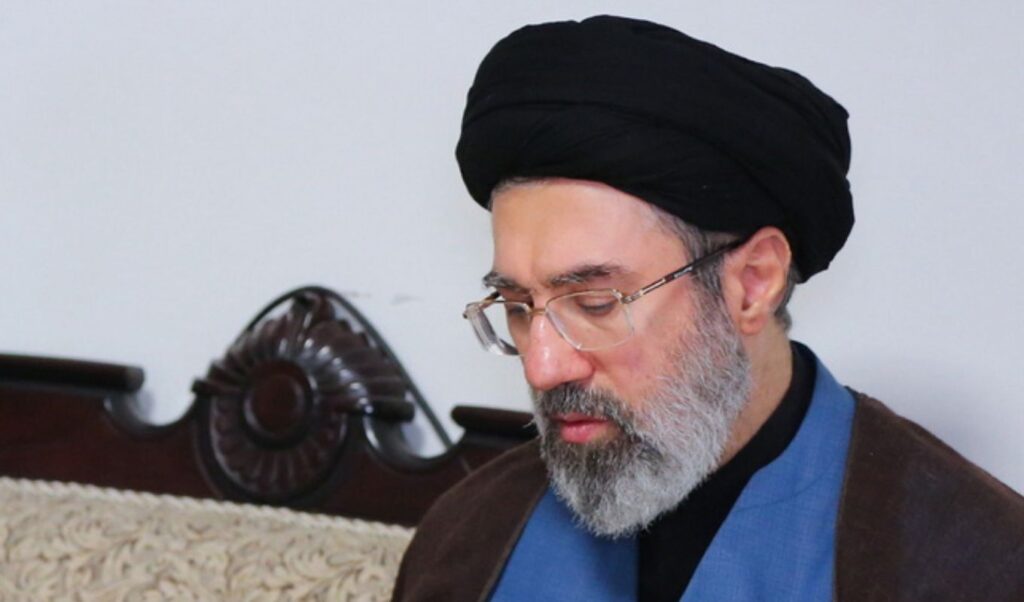
“Wounded, isolated” and unable to respond “to messages being conveyed to him” appears to be the current state of Mojtaba Khamenei, according to American and Israeli security officials speaking to The Washington Post. According to Israeli officials, the Islamic Revolutionary Guard Corps and certain clerics have strengthened their control in Iran while the conflict continues. The news site Axios reported on Saturday that the U.S. Central Intelligence Agency, Israel’s Mossad, and other intelligence services are trying to locate traces of Khamenei, as he remains invisible since being declared the new supreme leader following his father’s assassination.
What Axios reports about Mojtaba Khamenei’s current condition
The CIA, Mossad, and other intelligence agencies monitored during Nowruz (Persian New Year) on Friday to see if Iran’s new supreme leader, Mojtaba Khamenei, would follow his father’s tradition and deliver a New Year’s address. When the holidays passed with only a written message from Mojtaba, the mystery surrounding his physical condition, fate, and role in Iran’s war effort deepened, Axios reports.
His absence – especially during Nowruz when leaders traditionally give speeches – has raised concerns about who is really in charge. The strengthened control by the Revolutionary Guards and extremist clerics explains why Iran is adopting this aggressive rhetoric about the Strait of Hormuz and naval mines. Without the presence of an experienced leader like Ali Khamenei, the military is making the decisions.
What Iran’s National Defense Council announced
Meanwhile, Iran’s National Defense Council announced that the only way for non-belligerent states to pass through the Strait of Hormuz is through coordination with Iran. The Council conveys that Iran remains committed to “mutual reciprocity” as well as an “immediate and devastating response” in case of attacks on power plants and energy infrastructure. Finally, it states that an attack on Iran’s coasts or islands would lead to the disruption of Gulf routes and communication lines, as well as the deployment of naval mines, including in Iranian coastal areas.