It’s not just the scale of the financial damage that makes this case remarkable. It’s the client list. Behind the millions of euros in losses inflicted upon DEDDIE (Greece’s Electricity Distribution Network Operator), an extraordinary cross-section of businesses emerges from the case files: fuel stations belonging to well-known chains, large restaurant groups, hotel properties, diagnostic medical centers, technology companies, bakeries, food manufacturers, meat distributors, internet cafes, and businesses operating in the e-cigarette sector.
What makes this case particularly striking is that a large proportion of the businesses named in the case files fall into the category of high energy consumption enterprises — businesses that, by their very nature, consume significant quantities of electricity on a daily basis. The list includes fuel stations belonging to major national chains, dining establishments at prime locations across Athens and Thessaloniki, upscale seafront venues that serve as landmarks of the city’s social scene, well-known high-end cafes and restaurants, as well as businesses operating in tourism and hospitality. According to investigators, the case files also reference companies involved in food trading, meat and agricultural produce distribution, industrial units, and businesses with elevated cooling, storage, and specialized equipment operation needs.
Of further interest is the fact that among the legal entities under investigation are technology companies, telecommunications service providers, and organizations engaged in social and religious activities — a detail that underlines just how broad the scope of this case truly is.
Police authorities estimate that in several instances, the unrecorded electricity consumption per connection corresponded to amounts exceeding €100,000 — a figure that explains why the investigation focused primarily on businesses with high energy demands.
What is beyond doubt is that behind this €9 million case file, there are far more than small businesses or isolated incidents. On the contrary, the picture that emerges is one of a client network stretching from food service and fuel retail to tourism, technology, and industry — revealing the true magnitude of an affair that is now firmly in the hands of judicial and prosecutorial authorities.
A full breakdown of the electricity theft case
In one of the largest electricity theft cases ever uncovered in Greece, the Organized Crime Division dismantled a criminal organization that had allegedly built an entire “industry” around the illegal tampering of electricity meters, causing losses exceeding €9.1 million to DEDDIE.
During a major police operation in Thessaloniki, five individuals were arrested, three of whom are believed to be core members of the network. The case files also implicate a further 101 natural and legal persons who allegedly benefited from the illegal interventions.
In total, investigators solved 105 criminal offenses, including 103 cases of electricity theft and two cases of fraud related to photovoltaic installations.
The scheme behind the digital meters
According to investigators, the organization had been operating since at least 2017, offering — for a fee — to manipulate electricity meters at business and residential premises across Attica, Thessaloniki, Serres, Kilkis, Chalkidiki, Kavala, Pella, Imathia, Pieria, Evros, Xanthi, Larissa, Trikala, and Ilia.
For older analog meters, various tampering techniques were employed. For modern digital meters, however, the group had allegedly developed a particularly sophisticated method. The suspects would install custom illegal software directly onto the meters, gaining unauthorized access to DEDDIE’s metering and remote reading systems. This allowed them to artificially display reduced electricity consumption, ensuring that the bills received by customers were far lower than their actual usage.
According to Greek Police (ELAS), in many cases the suspects would return at regular intervals to update the software parameters — effectively operating what amounted to a “subscription service” for electricity theft, providing the network with a steady and recurring income stream.
Particularly noteworthy is the fact that the specific tampering was identified in 88 digital meters. The meter manufacturer described the case as the most sophisticated breach ever recorded internationally, across more than two million meters of the same model in operation worldwide. A dedicated diagnostic tool had to be developed specifically to detect the method.
To date, 606 illegal meter interventions have been confirmed, with the total financial damage to DEDDIE calculated at €9,163,354. The illegal financial gain estimated to have been made by the organization exceeds €371,000.
Weapons, DEDDIE seals, and thousands in cash seized during raids
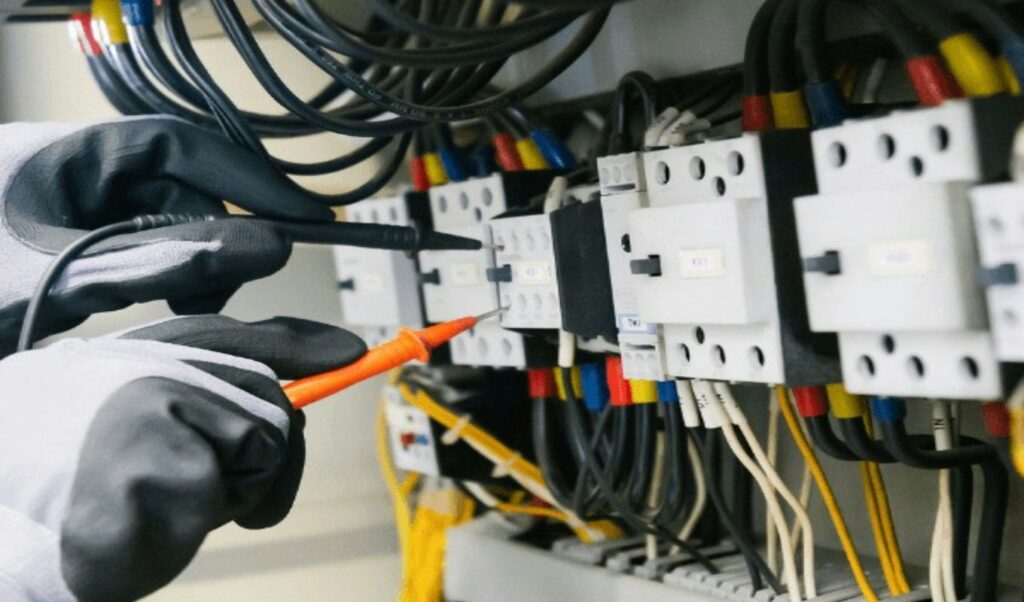
Searches of homes, vehicles, and business premises led to the seizure of a number of significant items, including a blank-firing weapon, equipment used for tampering with and re-sealing meters, hundreds of lead seals, specialized electrical intervention tools, an infrared optical head, computers, mobile phones, equipment bearing the official markings of DEI and DEDDIE, and nearly €25,000 in cash.
Additionally, during DEDDIE’s own inspections, two further cases of electricity theft were detected in flagrante at business premises, resulting in losses amounting to tens of thousands of euros.