The winter ahead looks harsh, and the Greek government is carefully weighing both its fiscal and political limits. According to a GPO poll published in the Parapolitika newspaper, Prime Minister Mitsotakis consistently ranks as the most suitable candidate for the role of prime minister, while New Democracy remains the leading party with a strong double-digit lead over its rivals, securing 30.3% of the projected vote compared to 15.8% for SYRIZA and 13.1% for PASOK.
However, inside the Maximos Mansion, officials are watching with growing concern and unease as two ongoing wars — in Ukraine and the Middle East — have once again driven oil and natural gas prices sharply higher. Unleaded petrol has surpassed €2.10 per litre in Attica and €2.20 on many islands, while fears are mounting that within four weeks, when heating oil distribution begins, prices could reach as high as €2.00 per litre.
In response to these conditions, the government is pursuing three avenues of support for citizens and businesses against rising fuel and energy costs: the state budget, from which a total of approximately €200 million is expected to be disbursed — primarily targeting heating oil — oil refineries, which are being called upon to participate in a new support package, and the European Union, from which Athens is demanding bold, decisive action and the immediate activation of the so-called escape clause.
“Even if a government has fiscal reserves, the scale of the problem makes European intervention necessary — and I insist on this. Should the European Union allow emergency national interventions without counting them against spending limits, we could also consider a temporary reduction in fuel taxation,” Prime Minister Kyriakos Mitsotakis wrote in his regular Sunday Facebook post.
Deputy Prime Minister Kostis Hatzidakis acknowledged (in an interview with Real News) that “the global energy crisis is, without question, a massive problem,” and reassured the public that “we are monitoring it closely and intervening wherever necessary.” Deputy Minister to the Prime Minister Thanasis Kontogeorgis, using the phrase “we want to keep society warm ahead of winter,” announced that the heating oil subsidy will cover “broad categories” of the population and that the financial support will be substantial. He also noted that “this discussion would not be taking place had we not done our homework, had we not planned properly, or had we engaged in a bidding war mentality.”
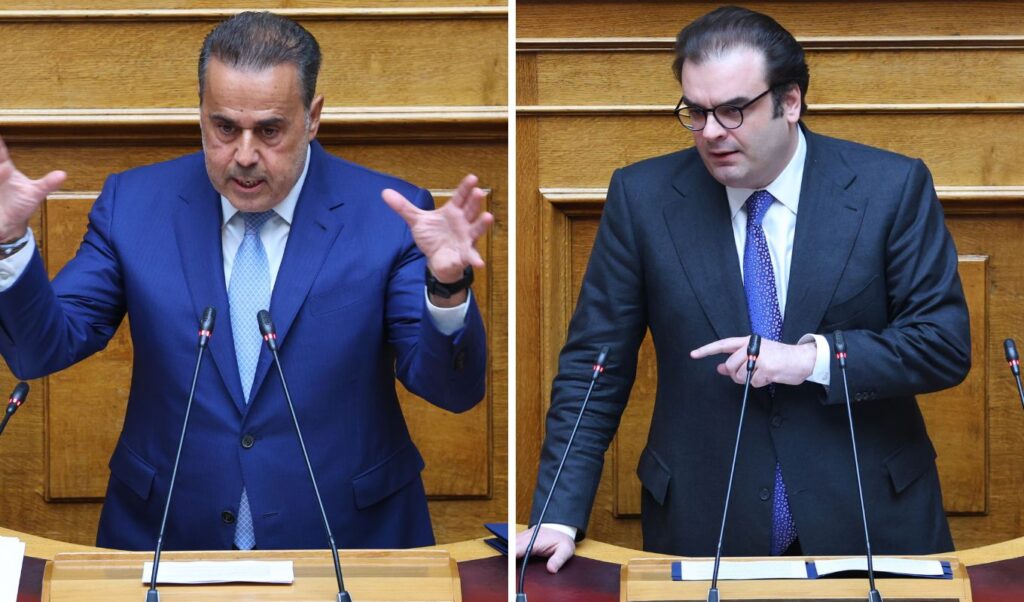
Minister of National Economy and Finance Kyriakos Pierrakakis outlined the framework within which government interventions will operate — namely, without exceeding the budget’s capacity. “On the one hand, we must support businesses, families, and citizens; on the other hand, we must not destabilize the macroeconomy, because we learned the hard way what macroeconomic destabilization means,” he said, speaking at a conference on Small Businesses and Entrepreneurship organized by the Irish party Fine Gael in Dublin.