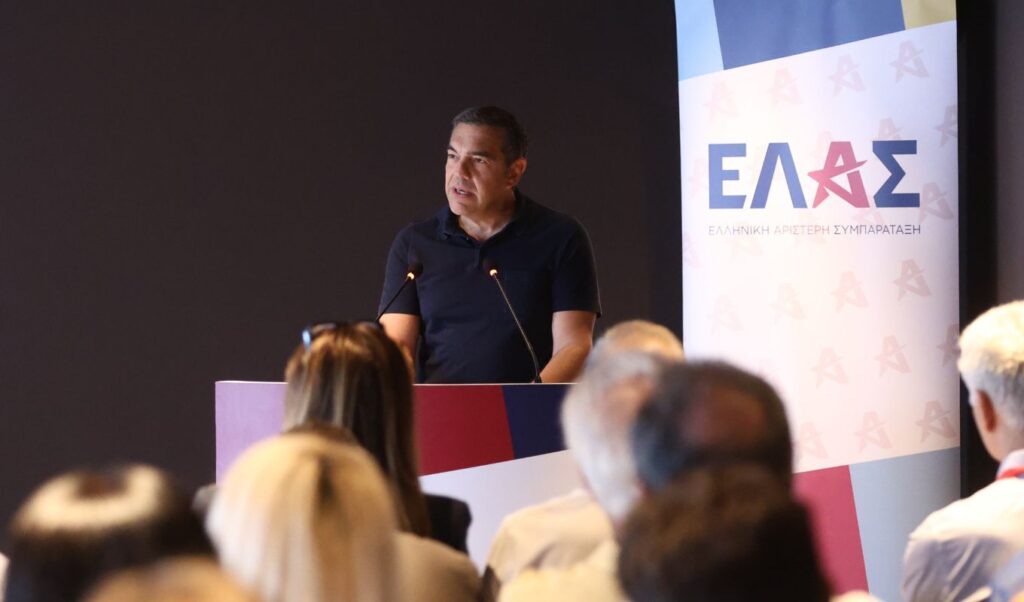
With the cost of living crisis hammering Greek society, Alexis Tsipras has gone on the offensive against the government, not only criticizing its handling of the issue but also putting forward concrete proposals to tackle the escalating energy price crisis.
Tsipras goes on the offensive over the energy cost of living crisis
On Tuesday, Tsipras released a video outlining his proposals, and this morning he is expected to elaborate further during a television interview on SKAI. In the coming weeks, he plans to travel across Greece to bring this issue directly to the public. The fact that soaring prices are spiraling out of control — leaving households and small businesses in despair — has prompted SYRIZA to make this the singular focus of its political agenda.
Indeed, in a recent interview with Le Soir, Alexis Tsipras painted a stark picture of the reality facing the average Greek family: “An average Greek has to work two jobs or put in twelve hours a day just to get by. In short, our wages are Bulgarian, our prices are Belgian and French, and our working conditions are Chinese.”
Tsipras’s four proposals for the energy crisis — What Kyranakis and Marinakis said
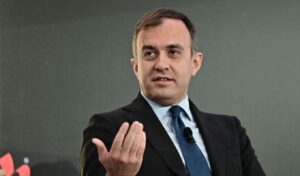
Against this backdrop, on Tuesday Alexis Tsipras put forward four specific proposals to address the energy crisis — and in doing so, he appeared to put the government on the back foot. The secretary of the ruling New Democracy party, Konstantinos Kyranakis, acknowledged that Tsipras’s proposal to impose a price cap of €1.40 per litre on heating oil and €1.80 on diesel fuel was feasible. Government spokesperson Pavlos Marinakis, by contrast, renewed his attacks on the former prime minister and, rather than engaging with the substance of the proposals, attempted to shift the conversation to past record.
The former prime minister proposed imposing a profit margin cap on refineries — not just petrol stations — as well as a windfall tax on refinery profits, a 50% reduction in excise duty, and a cut in fuel VAT to 13%. When asked about Tsipras’s proposals, Konstantinos Kyranakis said he agreed with the excise duty reduction, admitting that households are genuinely struggling to cope with current fuel prices.
The government spokesperson, meanwhile, responded with sarcasm: “All of Europe was waiting for this — for Mr. Tsipras to make a video, line everything up, and solve all the problems, not just for Greek citizens, but for European citizens too.”
SYRIZA’s response to the government
Hitting back at the government spokesperson, SYRIZA’s economics policy coordinator Fragkiskos Koumentakis stated that “the government avoided answering on the substance of the matter. Instead of explaining why it refuses to cap refinery profit margins and return a portion of windfall profits to society, it adopted arguments that could have come straight from the refineries’ own PR department. The government’s statement presents high prices as an inevitable consequence of the international crisis — while conveniently ignoring the fact that the very same external shock burdened households and businesses, while specific companies recorded extraordinary profits. What is fair and socially just is for a greater share of the cost to be borne by those who benefited from the crisis, not by those who are struggling to heat their homes or fill their tanks.”
He further clarified that the price cap and the windfall tax are two distinct but complementary measures. The cap limits profit margins and prevents prices from rising unchecked. The windfall levy draws resources from the crisis-driven excess profits and funds a reduction in the price paid by consumers.
“The answer to the government’s question of ‘who will pay’ is therefore clear: the cost does not need to be passed on to taxpayers again. It can be covered by taxing windfall profits and returned in full to society through the final price at the pump. With the right combination of measures, the price can be brought down to approximately €1.40 per litre for heating oil and €1.80 for diesel — a specific and verifiable target, based on the combined application of available policy tools.”
He concluded by adding that “the tools exist, but the government shows no willingness to use them. When it comes to supporting households, it constantly invokes fiscal and European constraints. When it comes to protecting refinery windfall profits, however, it always finds an argument.”
The real dilemma is clear: protection of society or protection of cartels. With its response, the government has once again revealed which side it has chosen.