Greek diplomacy is operating at full force in the heart of the European Union — Brussels — as Greece positions itself at the forefront of negotiations over the new Multiannual Financial Framework (MFF), the EU’s long-term budget.
Greek diplomacy in the battle for the new EU Multiannual Financial Framework
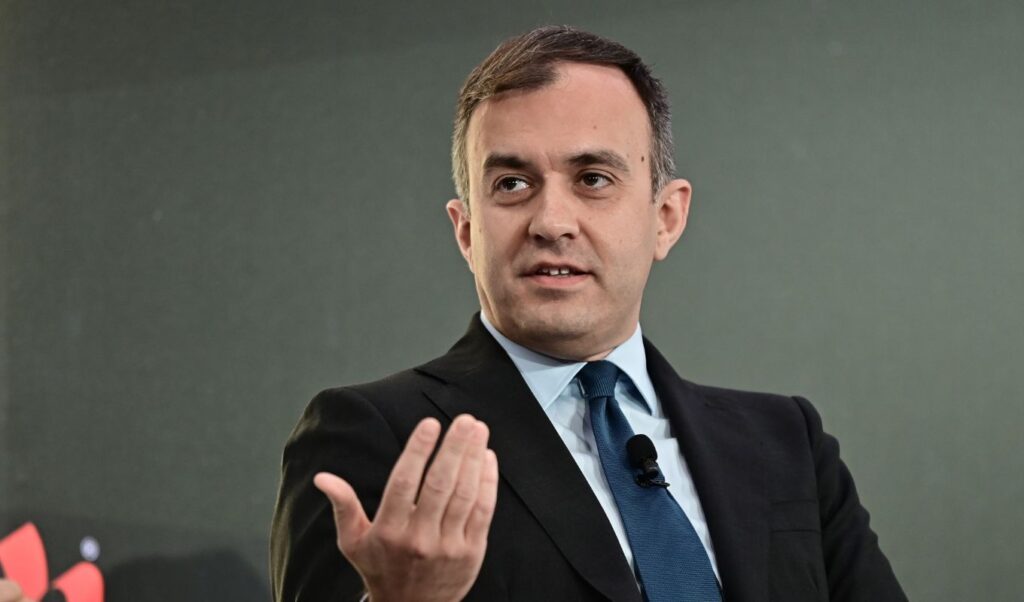
Deputy Foreign Minister Tasos Hatzivassiliou forcefully raised the issue of the energy crisis with his counterparts, stressing that ongoing geopolitical turbulence makes a unified European response imperative. On Monday afternoon, at the General Affairs Council (GAC), EU Affairs Ministers prepared the agenda and content for the upcoming Brussels Summit, scheduled for October 15–16. The Deputy Minister informed his counterparts that the Greek Prime Minister will place energy firmly on the table at the Summit, with the goal of having EU Affairs Ministers — as the designated negotiators — lay the groundwork for a final agreement among EU leaders before year’s end.
It is worth noting that in the MFF negotiations, EU member states have coalesced into three distinct groups. The dominant bloc is the largest one — the 17-country “Friends of Cohesion” group — in which Greece plays a pivotal role, standing in opposition to the so-called “frugal” northern European states (Germany, Austria, Denmark, and the Netherlands) and a number of unaligned countries.
Hatzivassiliou: “The group of 17 stands for an ambitious budget with no across-the-board cuts”
Regarding the drafting of the next EU budget, Greece and its allies are pushing for an ambitious multiannual framework — one that avoids across-the-board cuts and places strong emphasis on the EU’s traditional policies: agricultural policy, fisheries, and cohesion policy. Speaking exclusively to parapolitika.gr, Hatzivassiliou underlines that “the large group of 17 ‘Friends of Cohesion’ countries, in which Greece plays a leading role, stands firmly in favor of an ambitious budget with no horizontal cuts.”
In a move rich in both symbolism and substance, Tasos Hatzivassiliou hosted a working dinner in Brussels on Monday for all 16 of his counterparts from the “Friends of Cohesion” group — forging a united front and sending a clear message of solidarity.
Hatzivassiliou outlines Greece’s six priorities for the 2027 EU Council Presidency
At the same time, amid an environment of intense geopolitical challenges and with the economic pressures weighing on EU member states, Athens is preparing — both institutionally and politically — to take the helm of the EU. Greece is set to hold the Presidency of the Council of the European Union in the second half of 2027 (July–December 2027), succeeding Lithuania.
Preparations for the Greek Presidency of 2027 are already well underway, with Deputy Minister Tasos Hatzivassiliou bearing direct responsibility for the effort. The establishment of a dedicated Greek Presidency Office and the formation of specialized working groups — including one at the Ministry of Justice, led by former Supreme Court President Ioanna Klapa — represent the first concrete steps in this direction. Alongside these efforts, open participatory initiatives are also being promoted, such as a student competition to design the official Presidency logo, which is expected to be unveiled shortly before Greece assumes the Presidency.
Speaking to parapolitika.gr, Deputy Foreign Minister Tasos Hatzivassiliou outlined the six priorities that the Greek government has set in view of the Presidency. According to the Deputy Minister, the government has placed at the center of its agenda: defense and security, the competitiveness of the European economy, EU resilience, enlargement, migration management, and an integrated maritime policy. As he told parapolitika.gr, “preparations are continuing at an intensive pace — under the Presidency program, approximately 25 Ministerial Councils and two major Summits are planned to take place in Athens. The first Summit has been scheduled for September 30, 2027, and concerns the European Political Community, with the participation of EU member states as well as European countries outside the Union — such as the United Kingdom, Turkey, Georgia, Azerbaijan, and Moldova — while immediately after, on October 1, 2027, the Informal EU Leaders’ Summit will be held in Athens.”