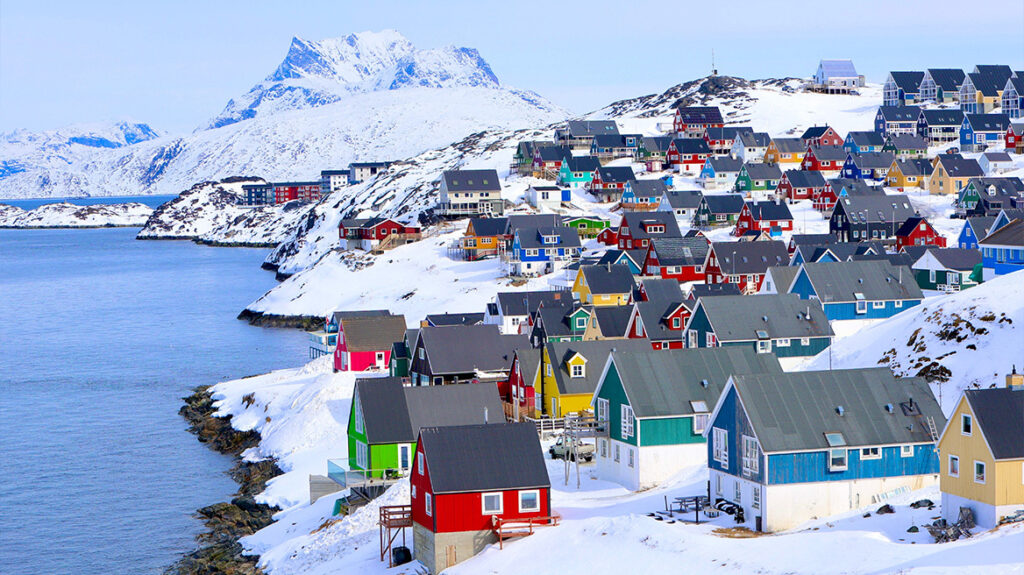
“Arctic security under NATO’s umbrella” is Denmark’s clear message, just ahead of the historic security agreement signing with the United States concerning Greenland. One of Donald Trump’s core demands regarding the Arctic island now appears to be at the center of developments, as the American president has been pressing for “permanent US control” over Greenland for months. On Tuesday, September 22, Trump, Danish Prime Minister Mette Frederiksen, and Greenlandic Prime Minister Jens-Frederik Nielsen are expected to sign the agreement. However, the details and final terms reached by the three parties have not yet been made public.
Just ahead of the signing, Denmark moved quickly to clarify that Arctic security — even after the agreement — will remain under NATO’s broader umbrella and will not be an exclusive matter for either the US or Denmark alone. At the same time, Donald Trump has spoken of “permanent US control” over Greenland. This claim has not yet been commented on by the leadership of either Greenland or Denmark, and it remains unclear how it relates to the content of the forthcoming agreement, whose terms have not yet been disclosed.
What is certain is that the agreement comes at a time when the Arctic is gaining ever-greater geopolitical and strategic importance. For both Denmark and Greenland, the central priority remains strengthening the island’s security while simultaneously respecting Greenland’s sovereignty and its unique constitutional status.
The agreement will be signed on Tuesday at the UN General Assembly in New York, in the presence of US President Donald Trump, Danish Prime Minister Mette Frederiksen, and Greenlandic Prime Minister Jens-Frederik Nielsen.
Greenland: what the agreement with the US will include
The agreement follows months of pressure from Donald Trump, who has stated that the US should take control of Greenland and has at times refused to rule out the use of military or economic force to acquire this semi-autonomous Danish territory.
His threats, which reached their peak in January, triggered a diplomatic crisis within NATO and pushed Denmark and Greenland into negotiations with Washington aimed at de-escalating tensions.
“The agreement will take a form in which responsibility for Arctic security will not rest with Denmark or the US alone,” Danish Foreign Minister Lars Løkke Rasmussen said on Sunday on the public broadcaster TV2. He added that, to a large extent, “it will be NATO that looks after the Arctic.”
Strengthening “security, stability, and cooperation”
A NATO spokesperson said on Saturday that the alliance welcomes the agreement, which “will help strengthen security, stability, and cooperation in this vital region.”
Rasmussen, who traveled to New York overnight, declined to discuss the contents of the agreement.
“But we have stated from the outset that we are open to safeguarding the legitimate security interests of the United States,” Rasmussen told the Danish news agency Ritzau today.
Trump claimed on Friday, in a post on Truth Social, that the agreement gives the US “permanent control over security and other needs in Greenland” and that no adversary of the United States will be permitted to maintain a base or military presence there without written approval from Washington.
Denmark has not responded to Trump’s claim, although Copenhagen had previously acknowledged that it had underinvested in Greenland’s defense for decades and pledged to expand its military presence on the island, including through additional NATO troops.
Key details remain unknown, including whether the agreement modifies the 1951 defense treaty that forms the legal basis for the US military presence in Greenland.
Greenland’s government sought to reassure the public about the agreement.
Erik Jensen, an opposition member of Greenland’s parliament, wrote on Facebook that he had read the draft agreement.
“I felt reassured and I am not worried,” he said, adding that the island’s foreign minister is doing a good job.