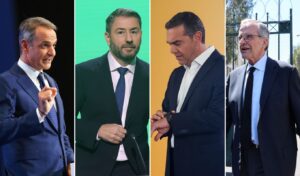
The aftershock of the Thessaloniki International Fair (TIF) has not fundamentally reshuffled the political landscape, yet it does mark the starting point for political parties at the beginning of what promises to be a long, intense, and potentially unpredictable pre-election period. With the cost-of-living crisis remaining the number one concern for citizens in yet another survey, party leaders presented their economic programs and sought to win over both broader social groups and specific segments of the population each considers their own key battlegrounds.
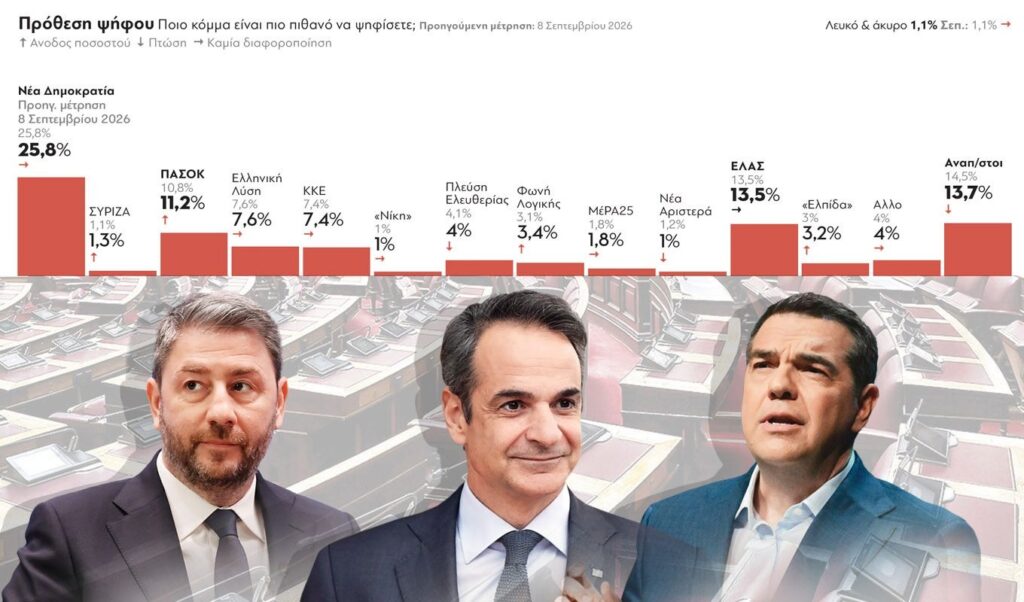
Voting intention
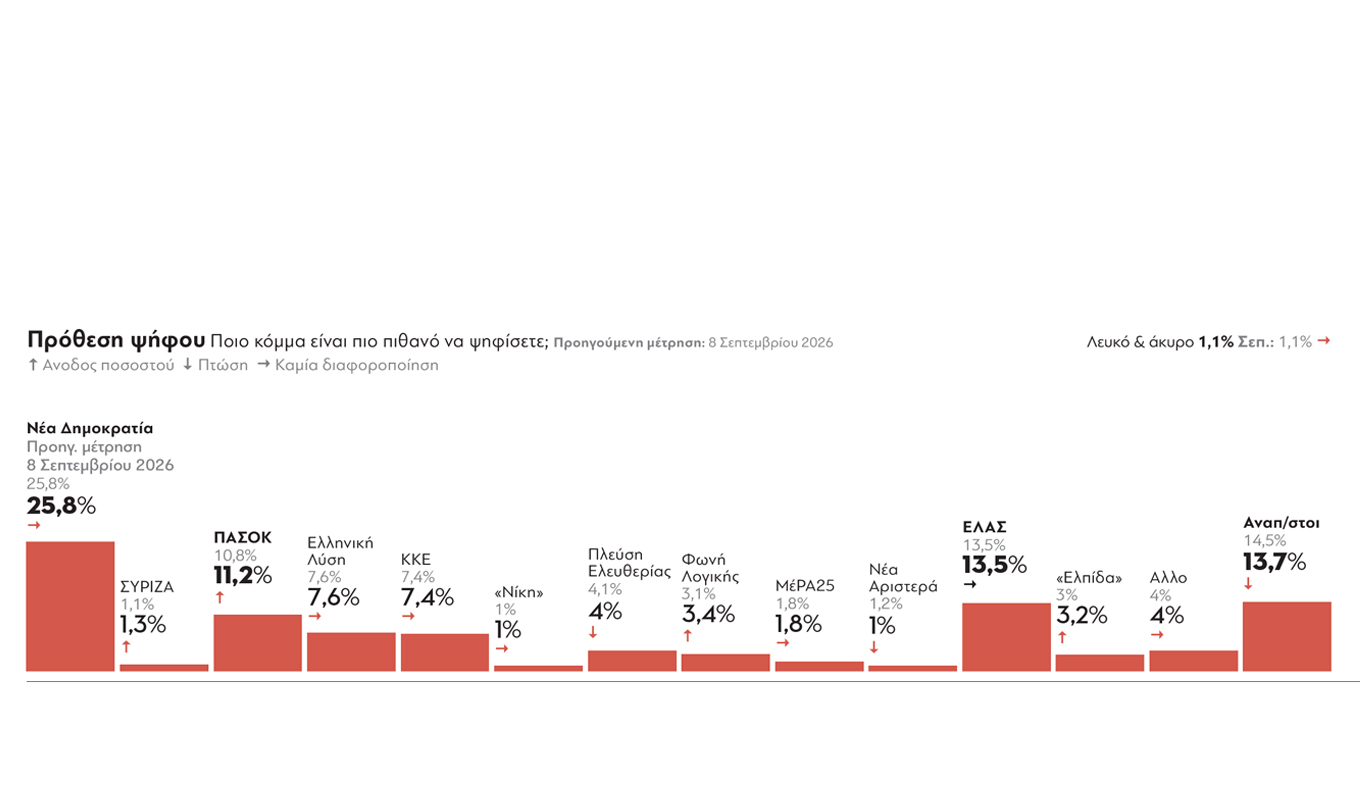
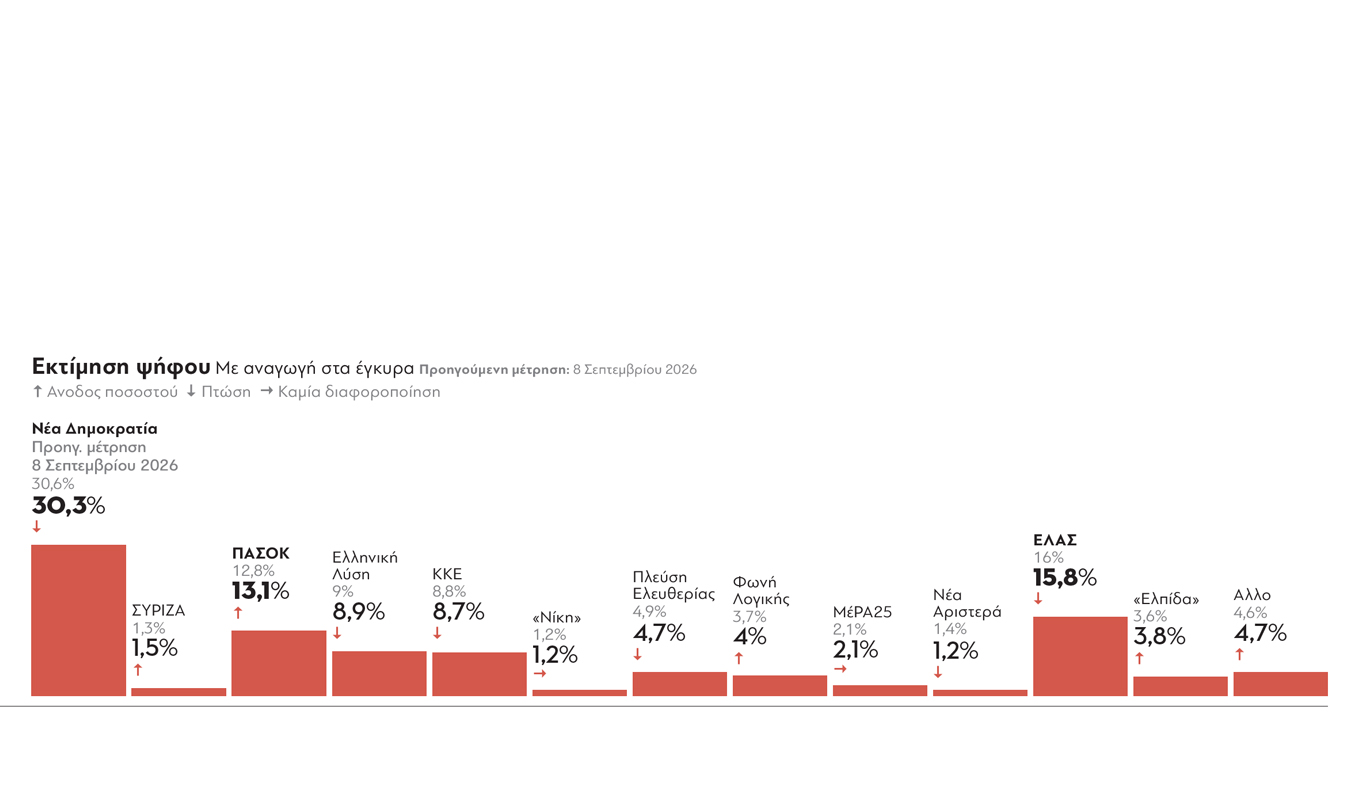
Vote estimate
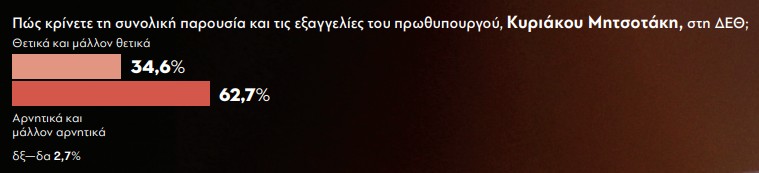
The economic measures announced by the Prime Minister are rated positively or somewhat positively by 34.6% of respondents overall — an improvement of approximately 3 percentage points compared to the same figures from last year. However, these positive ratings stem primarily from New Democracy voters and have found little resonance among the broader electorate.
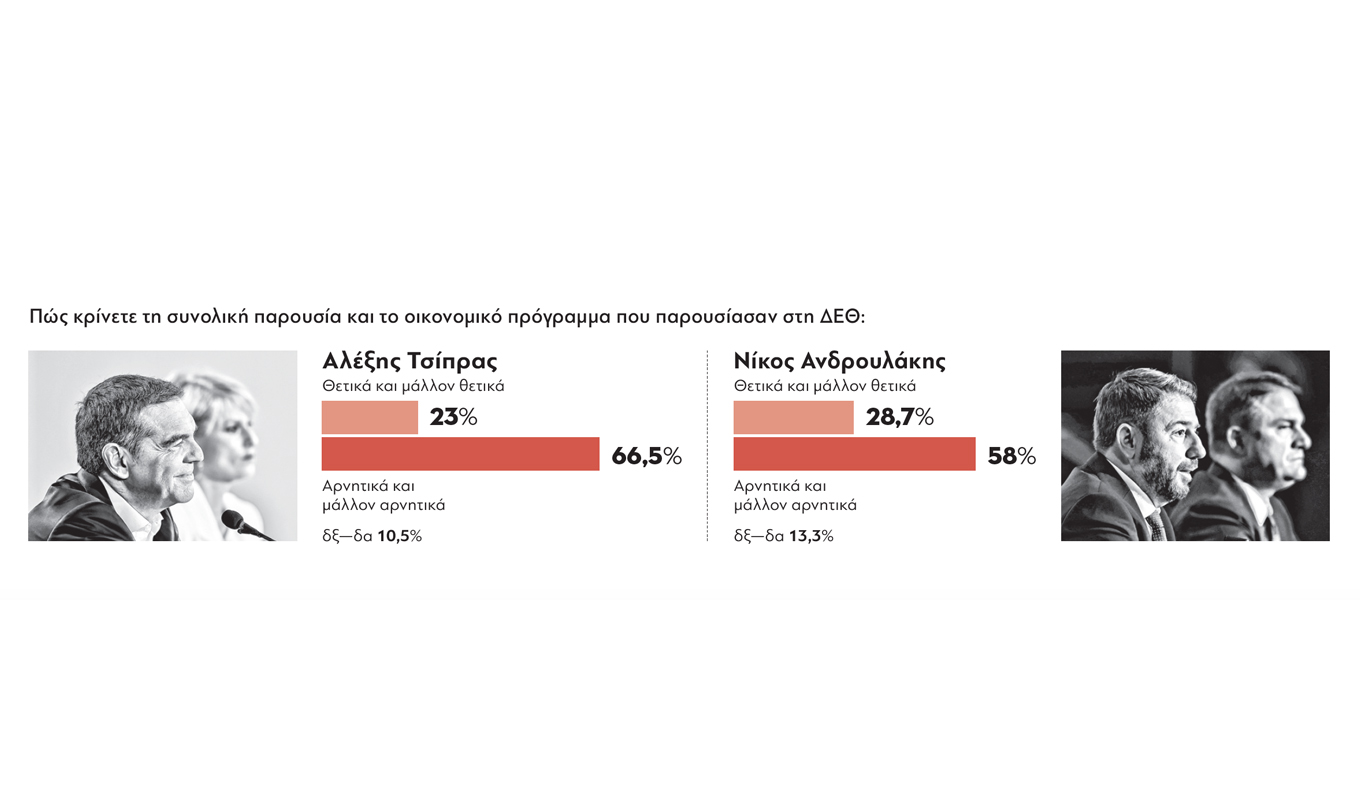
In any case, K. Mitsotakis’s overall performance outpaces that of the other two party leaders, making a comparative assessment of their TIF appearances and proposed programs particularly telling. PASOK emerges as the clear winner in this regard, with its economic program rated positively by 28.7% of respondents, compared to 23% for the program announced by Al. Tsipras — which appears to require further elaboration and specificity.
However, despite PASOK’s documented edge in program ratings, when respondents were asked to directly compare the three party leaders on persuasiveness, Tsipras came out ahead with 15.5%, followed by Androulakis at 14%, while the Prime Minister was the clear frontrunner at 25.5%. Notably, 41.7% of survey participants stated that none of the three leaders convinced them — yet another confirmation of a significant representation deficit felt by large segments of the electorate. From this comparative analysis, however, several key conclusions can be drawn:
– The prolonged cost-of-living crisis is taking its toll on the government and the Prime Minister, who nonetheless continues to command the greatest credibility capital, with his program still perceived as the most realistic approach.
– Al. Tsipras appears to have consolidated a solid core of supporters — around 15–16% — which keeps him in second place. At the same time, he is struggling to broaden his appeal, and N. Androulakis’s strong TIF performance has narrowed the gap between SYRIZA and PASOK, injecting fresh political intrigue into the battle for second place. The balance of power is proving volatile, and a strong next move from Tsipras could shift it once again. Opinion remains deeply divided on the form of the next government, with 49.6% in favour of a single-party majority — even if that requires repeated elections — while 47.6% would prefer a coalition government. In the latter scenario, 52.1% would want the leader of the largest party to serve as Prime Minister, compared to 43.6% who would prefer a mutually agreed-upon figure from among the coalition partners. Responses to this question largely reflect party affiliation, with New Democracy voters favouring the first option — perhaps already anticipating their party’s victory.
When asked who would make the most suitable Prime Minister, K. Mitsotakis continues to lead comfortably at 29.5%, well ahead of the other party leaders, followed by Al. Tsipras at 14.6% and N. Androulakis at 8%.