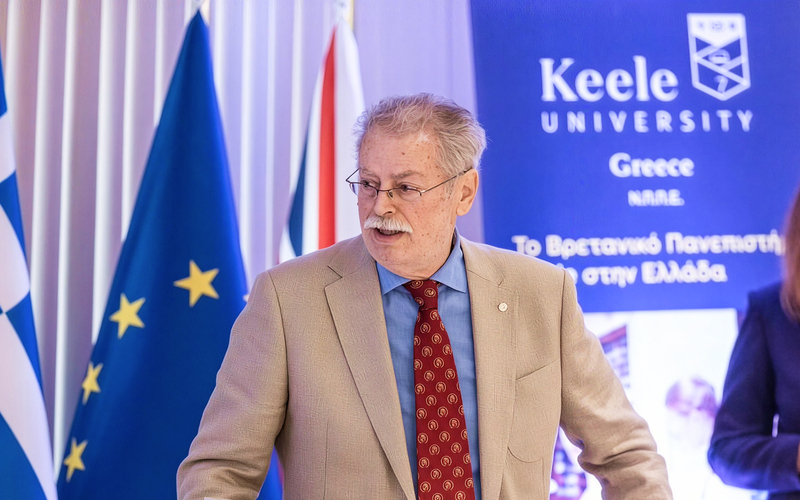
Keele University has announced the official submission of its application for an undergraduate Medicine programme (MBChB) for evaluation by the National Authority for Higher Education (NQAA), with a projected launch date of October 2026. This move brings to Greece one of the United Kingdom’s leading Medicine programmes, which — according to official GMC (General Medical Council) National Training Survey data — produces the best-prepared newly qualified doctors in the United Kingdom. The programme is specifically designed to address the modern challenges facing the medical field, including artificial intelligence and precision medicine, and to shape the next generation of physicians.
Studying in Athens with the stamp of a leading British university
Keele University, with 77 years of academic tradition, boasts a Medical School that has been operating for more than 20 years and ranks among the top five Medicine programmes in England (Guardian University Guide 2026). Its educational philosophy is now being brought to Athens through a six-year degree programme designed specifically for the Greek clinical and academic environment.
Modern educational philosophy and problem-based learning
The academic journey is not made up of disconnected courses. The core converging sciences — anatomy, pathophysiology, clinical semiology, and evidence-based medicine — are integrated into a spiral curriculum, where medical thinking is built progressively through clinical case studies, small groups, and simulation. At its heart lies research — epidemiology, biostatistics, medical informatics — along with the intersection of medicine with bioethics, law, and artificial intelligence, precisely because tomorrow’s doctor will not practise medicine in isolation, but within an interdisciplinary framework. Central to the educational approach is Problem-Based Learning (PBL), through the analysis of clinical cases and the development of clinical reasoning, critical thinking, and evidence-based decision-making.
A leading academic team with international standing
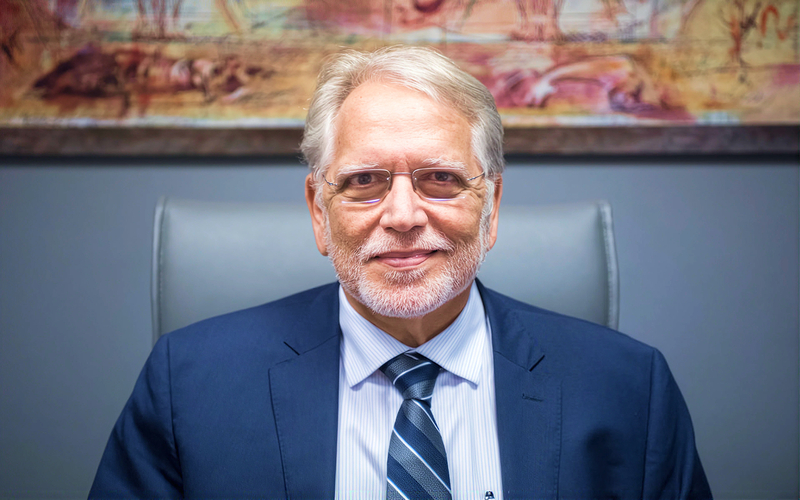
The programme — the first in Greece to have been designed and submitted from the outset in full compliance with the new, stringent quality standards of the National Authority for Higher Education — is underpinned by a leading academic team of internationally distinguished figures, comprising: Professor Odysseas Zoras, University Rector; Professor Konstantinos Simopoulos, Dean of the Medical School; Professor George Chrousos, Chair of the Advisory Committee; and Professor Konstantinos Gourgoulianis, Vice-Chair of the Medical School Advisory Committee.
This leadership team is supported by a strong interdisciplinary group combining experienced academics, active clinicians, researchers, dynamic educators, and professionals from critically relevant fields within the health sciences. Personalised academic and clinical pathways — with particular emphasis on final-year placements — allow each student to shape their own scientific or clinical orientation.
State-of-the-art facilities and multi-level clinical training
The programme is underpinned by a large-scale investment in an advanced medical education ecosystem, combining digital anatomy, three-dimensional printing of anatomical models, immersive and high-fidelity clinical simulation, specialist clinical skills laboratories, and cutting-edge biomedical education and research facilities. Technology, however, is not the goal — it is the means. Clinical education is not designed around a single hospital within a group. It is developed across a multi-level network of public and private hospitals, primary care settings, community services, and rehabilitation environments — because the doctor who graduates from this programme will not only be familiar with the acute hospital presentation of disease. They will understand the full patient journey: from prevention and primary care through to chronic illness, multimorbidity, and rehabilitation. This is a doctor who can function anywhere.
This philosophy also informs another deliberate choice: numerus clausus. The first cohort will admit exactly 50 students — ensuring a more personal, more closely supervised, and more meaningful learning experience for each individual. This is not an administrative constraint — it is a statement of values. Admission to the programme requires assessment across multiple dimensions: academic criteria, a structured interview examining clinical reasoning, ethical maturity, and the capacity to make decisions under pressure. The programme presented today to young people considering a career in medicine is the culmination of systematic collaboration with the core academic team of the parent university, held to the highest standards of academic quality assurance. A university of international standing does not extend its academic approval to operate outside the United Kingdom lightly — and that trust is not claimed. It is earned. Keele University offers far more than a new programme to the Greek higher education landscape. It brings a new benchmark for the future of medical education.