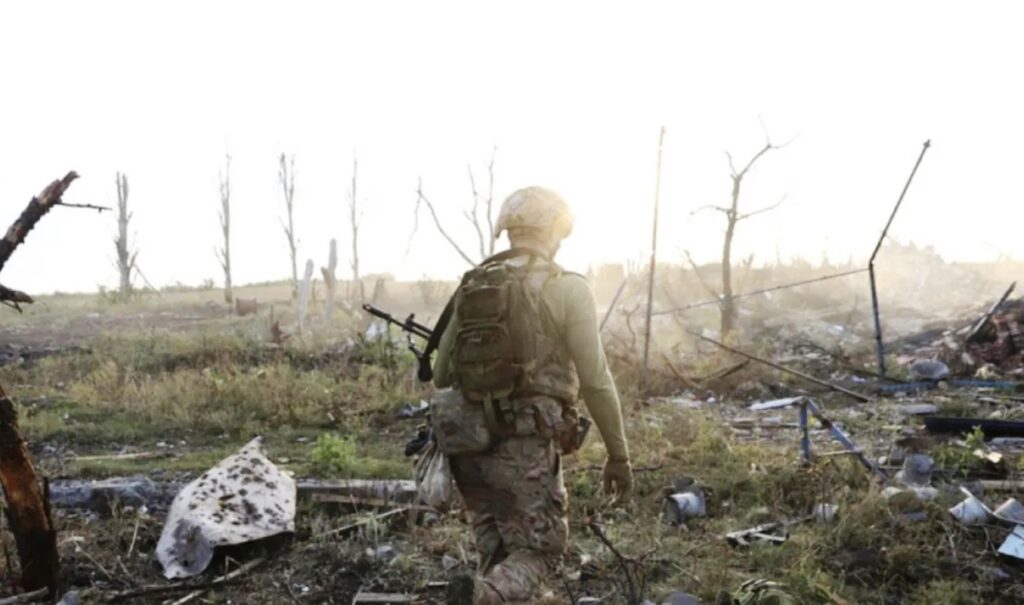
Russian soldiers are reportedly choosing to blow themselves up rather than surrender to Ukrainian forces, fearing that capture will lead to torture or execution. At the same time, more than 250 Russian military personnel — including dozens of officers — have been captured in northern Donetsk during “Operation Vivaldi,” according to the commander of Ukraine’s 3rd Army Corps, Oleksandr Borodin. His accounts paint an extremely grim picture of the front lines, where fear of capture coexists with brutal survival conditions, food shortages, and inadequate medical care for the wounded. According to the Ukrainian officer, Russian soldiers have been conditioned by warnings that surrendering will result in torture and death — leading some to carry out self-destructive acts while simultaneously attempting to take Ukrainian soldiers down with them. These claims come from the Ukrainian side and have not been independently verified by available sources.
Read also: Zelensky slams US: “They don’t want to help us” — demands Starlink access after deadly Russian strikes
Russian soldiers: the fear of capture and “Operation Vivaldi”
The Ukrainian forces’ operation in northern Donetsk resulted in the capture of more than 250 Russian military personnel, including dozens of officers, according to Oleksandr Borodin. The number of officers taken prisoner is being described by Ukraine as one of the highest recorded since the war began. The commander of the 3rd Army Corps contends that surrender was not an obvious choice for many Russian soldiers, who had been convinced that Ukrainian forces would torture or kill them. According to his account, this fear was so deeply ingrained that some chose to detonate explosives even when capture seemed inevitable, in an attempt to take Ukrainian soldiers with them.
“They were hesitant to surrender because they were afraid, and they blew themselves up, trying to take our soldiers with them,” said Oleksandr Borodin. “The Russian military spreads this propaganda that if they fall into Ukrainian captivity, they will be tortured and killed.”
Testimonies of starvation, exhaustion, and abandoned wounded
Equally disturbing are the accounts of the conditions Russian soldiers endured at their positions in Donetsk. Those who surrendered to Ukrainian forces reportedly described being forced to drink their own urine and consume tree bark and nettles to survive due to severe supply shortages. They also described a situation in which wounded soldiers remained at their posts without being evacuated for medical treatment, even when their condition was serious. According to these testimonies, the only way out for an injured soldier was to crawl on their own to a point from which evacuation might be possible. This picture is further darkened by what a captured Russian officer reportedly described as mass deaths among troops from starvation and exhaustion.
Borodin stated that approximately half of the prisoners required medical attention, as many had been self-treating wounds while remaining at their combat positions. He claimed that Russian commanders were aware of the conditions their troops were enduring but took no meaningful steps to improve them. He further alleged that evacuating the wounded was not considered a priority, as doing so would have placed additional strain on military medical services. These allegations, as presented by Ukraine, highlight the scale of physical deterioration and lack of support faced by soldiers in this sector of the front.
Officers as a bargaining chip for Azov fighters
The capture of dozens of Russian officers is considered particularly significant by the Ukrainian side, which intends to use the prisoners in future POW exchanges. Kyiv’s primary objective is to secure the return of Azov Regiment fighters who have been held in Russia since the fall of 2022. Borodin believes that the presence of higher-ranking officers increases the likelihood that Moscow will agree to exchanges, as he considers these prisoners to hold greater negotiating value than ordinary soldiers. As he stated, there are “better chances” of achieving a swap with higher-ranking officers “than with a random Russian soldier.”
However, the exchange process comes with an additional complication: according to the Ukrainian commander, a significant number of Russian prisoners do not wish to be returned to their country through this process. As he explained, soldiers who have surrendered fear that their own military will treat them as inferior fighters and send them back to the front line — potentially under even harsher conditions. Thus, while Ukraine views the prisoners as a potential means of freeing its own captured fighters, some of the Russian detainees reportedly consider being returned to the front a greater danger than remaining in captivity.