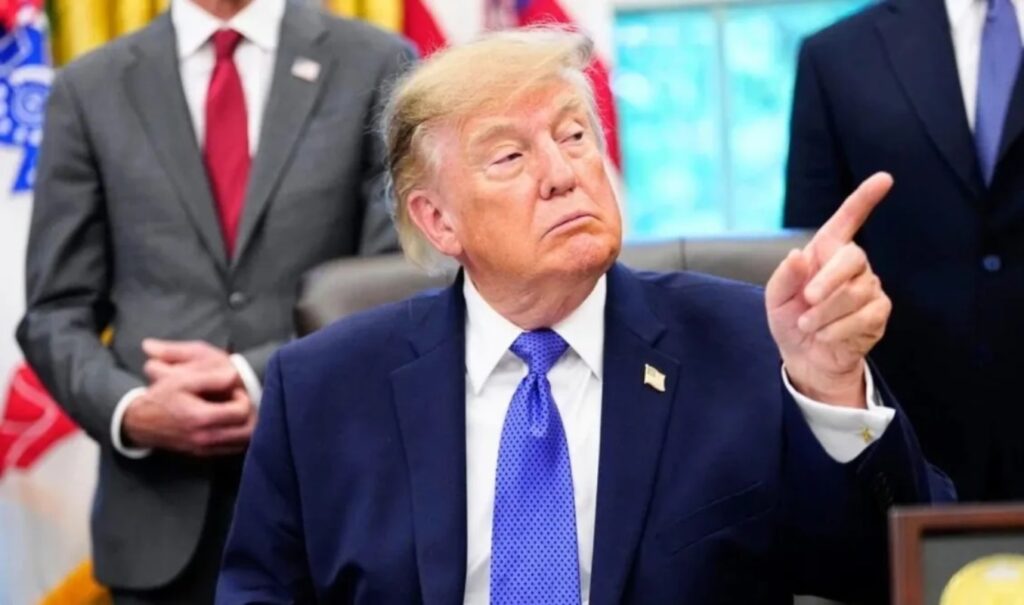
Donald Trump announced that the United States will not carry out a military strike against Iran before the November 3rd midterm elections, while noting that “productive discussions” with Tehran are currently underway. In a post on Truth Social, the U.S. president described Iran’s economic and military situation as particularly dire, but made clear that the blockade will remain fully in force. In the same statement, he addressed oil transit through the Strait of Hormuz, sharing figures on the quantities that passed through the waterway the previous night, while reiterating his firm position that Iran will not be allowed to acquire a nuclear weapon.
Read also: Rubio: “We would never allow a Greek-Turkish conflict, it would be unthinkable” — The obstacles to F-35s for Turkey
Trump: No attack on Iran before November 3rd
The U.S. president explicitly linked the possibility of American military action to the midterm election timeline, setting November 3rd as the cutoff date before which no strike would take place. He also maintained that contacts with the Iranian side are progressing productively, without providing further details about the substance of the talks or their potential outcomes. His statement combines a reference to ongoing diplomatic communication with sustained pressure on Tehran, as he made clear that the blockade will not be lifted as part of this particular announcement.
“I want to make it clear to everyone that, while Iran is in very bad shape, both economically and militarily, and while the blockade will remain fully in force, we will not attack them at any point before the midterm elections.”
With this statement, Donald Trump ruled out the possibility of a strike during the period leading up to the election, without, however, making any commitments regarding the period that follows. His characterization of Iran’s economic and military condition reflects the assessment he publicly expressed about Tehran’s position, even as talks between the two sides, according to the U.S. president, continue.
22 million barrels of oil through the Strait of Hormuz
In the same post, Trump addressed oil transit through the Strait of Hormuz, claiming that “22 million barrels” passed through the strait the previous night. According to him, that quantity did not include any oil originating from or destined for Iran. As he specifically stated, the transit took place “without a single barrel coming from or going to Iran,” presenting this data point alongside his assurance that the blockade will continue.
The reference to oil transit formed a distinct part of the U.S. president’s statement, in which he chose to connect the announcement of no pre-election military strike with the conditions he claims are prevailing in that critical maritime corridor. The figures cited come from his own statement and were not accompanied, within the post itself, by any further clarification.
The message on Tehran’s nuclear program
Donald Trump concluded his post by reiterating his position on the nuclear issue, with his characteristic declaration: “Iran will not get a nuclear weapon!” This statement came after his assurance of no military strike before November 3rd, as well as his emphasis that the blockade would be maintained.
In doing so, the U.S. president laid out three core pillars of his stance toward Tehran: the continuation of talks he described as productive, the ruling out of a military strike before the midterm elections, and the firm position that Iran must not be allowed to acquire nuclear weapons. He did not, however, clarify what approach would apply to the possibility of military action after election day.