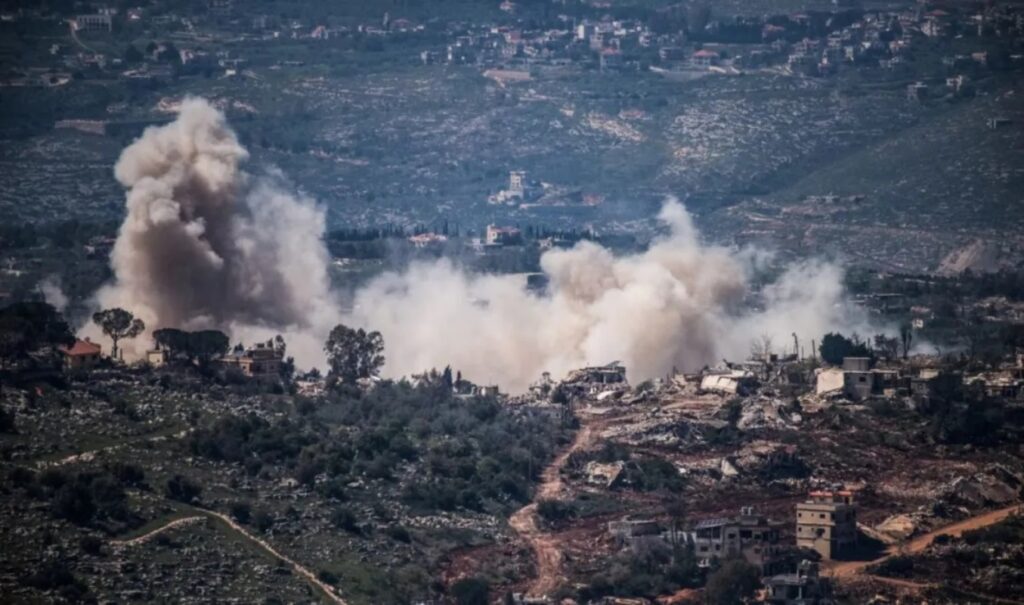
Iran launched a new harsh attack against the US and Israel, accusing both countries of attempting to cause destabilization, division and ultimately overthrow the Islamic Republic’s regime. Tensions in the region remain particularly high following American bombings near the Strait of Hormuz, while the fragile ceasefire continues to be considered extremely unstable. Despite the fact that chances of returning to full-scale war appear limited, Tehran seems to be facing Washington and Tel Aviv’s moves with increased concern. In an official statement, Iran’s Ministry of Intelligence claimed that the US and Israel are now seeking to achieve through different means what they failed to accomplish through military attack. Tehran accuses both countries of economic warfare, sabotage operations, attempts to provoke internal conflicts, and planning “terrorist operations” within Iranian territory. These statements come as diplomatic contacts between Iran and the US are underway to end the war crisis that erupted after the American-Israeli attack of February 28, 2026.
Iran: Heavy accusations against US and Israel
Iran’s Ministry of Intelligence claimed that the US and Israel continue to pursue the overthrow of the Islamic Republic, this time through indirect methods. “The enemy now seeks through other means the goal of overthrowing and dividing the country, which it openly declared at the beginning of the war but failed to achieve through military attack,” the statement characteristically noted. According to Tehran, the goal is to create internal tensions and cause destabilization within the country.
Iran accuses the US and Israel of attempting to intensify economic pressure on Iranian society while exploiting internal differences between ethnic and religious communities. Meanwhile, the Ministry of Intelligence spoke of planning sabotage operations and “terrorist operations” within Iranian territory. The statement reflects Tehran’s intense fear of possible destabilization moves inside the country following the recent military crisis.
Iran: References to weapons and Starlink
Tehran also made particular reference to the possibility of illegal equipment imports into Iran. According to Iran’s Ministry of Intelligence, the country’s adversaries’ plans include illegal transfer of weapons, ammunition, and “illegal communication means.” Among these, the statement specifically names Starlink satellite internet systems.
Iranian authorities believe such technologies can be used for communication and coordination of anti-government groups or networks operating outside state control. Tehran has maintained strict internet restrictions and access to independent communication networks for years, considering them a potential threat to internal security.
The fragile ceasefire and Tehran’s concerns
The Iranian ministry’s statements come at a particularly critical time for the region. The ceasefire between Iran and the US remains fragile following American bombings of Islamic Republic positions and forces near the Strait of Hormuz. Although there are no indications of immediate return to full-scale military conflict, Iran’s security services appear to remain in a state of heightened alert.
Tehran particularly fears possible asymmetric operations, sabotage, or strikes on critical infrastructure. Meanwhile, diplomatic contacts continue between the two sides aimed at preventing new military escalation. However, the climate of distrust remains intense on both sides, as recent conflicts have significantly burdened already tense relations.
The long-term Iran-Israel conflict
Iran has accused Israel for decades of sabotage operations within the country. Tehran claims Israel is behind attacks on nuclear facilities and assassinations of military officials, political figures, and scientists. On the other hand, Israel considers Iran’s nuclear program one of the greatest threats to its security.
The conflict between the two countries has evolved in recent years into a broader shadow war, with cyberattacks, intelligence operations, and indirect military conflicts at various points in the Middle East. Recent developments show that despite diplomatic efforts, tensions remain high and the situation in the region continues to be characterized as extremely fragile.