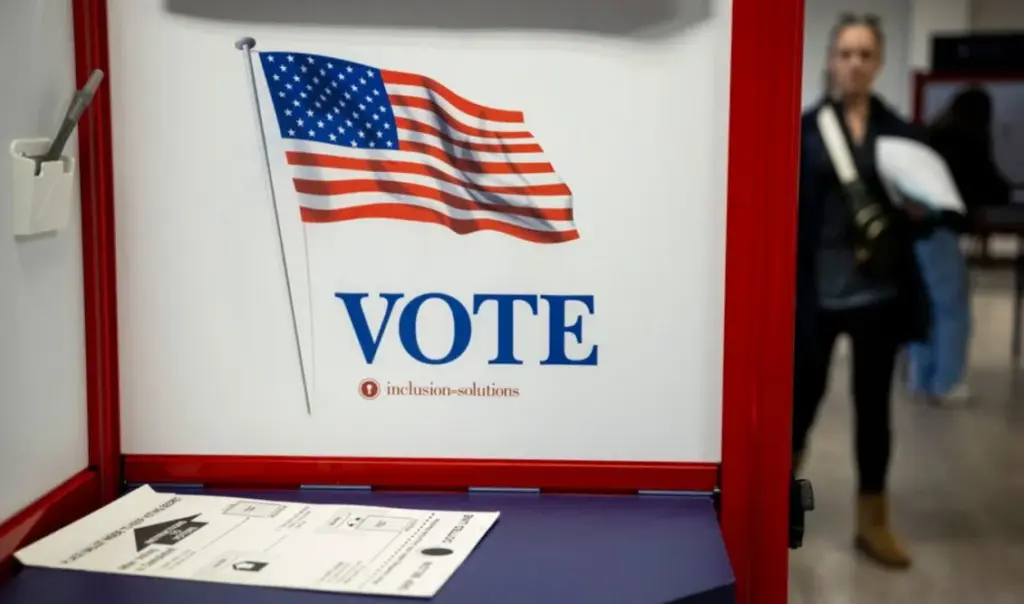
These US midterm elections have captured the attention of global public opinion — and for good reason. They function, in many ways, as an informal vote of confidence in the Trump administration’s handling of affairs at a time when geopolitical balances are exceptionally fragile. Analysts warn that a major strike on Iran’s nuclear facilities may be imminent. The latest forecasts give Democrats a clear advantage in recapturing the House of Representatives, while also showing increased odds of a Senate takeover — though that battle remains far more competitive. Should these projections hold at the ballot box, they could significantly constrain Donald Trump’s political room to maneuver in the second half of his term.
The outcome, however, extends well beyond Washington. It directly affects Europe, which is watching developments with acute attention — particularly regarding US security guarantees, the war in Ukraine, trade relations, and the broader trajectory of transatlantic ties.
US midterm elections: What the betting markets are showing
Data from November 1st on prediction platforms Polymarket and Kalshi tells a revealing story. Prediction markets are giving Democrats roughly a 93–95% probability of winning the House of Representatives. In the Senate, the picture is more complex, with Democratic odds of prevailing hovering around 72–73%.
In other words, the markets are largely pricing in a Democratic House victory, while leaving open the possibility that Republicans retain the Senate. The scenario in which Democrats sweep both chambers is drawing roughly 71–72% on the relevant prediction markets.
Meanwhile, the latest polling data shows Democrats leading by approximately nine percentage points in congressional vote intention among likely voters.
The ballot box as a referendum on Trump
This electoral contest represents the first major test of Donald Trump’s second presidential term. The rising cost of living, the economy, tariffs, and immigration policy dominated the campaign debate. Particularly notable is the widespread dissatisfaction over energy prices — a sentiment recorded even in traditionally conservative areas.
The US president embarked on a relentless campaign trail through key battleground states, working to shore up Republican candidates. His efforts focused especially on holding the Senate, as losing both chambers would create an entirely different political environment for the White House.
A Democratic majority in the House could trigger congressional investigations, hearings, and tighter scrutiny of executive decisions. It would also make it harder to advance Trump’s legislative agenda. That said, it would not automatically reverse his policies — particularly in foreign affairs, where the president retains considerable executive authority.
What’s at stake for Europe
For Brussels, the result carries immediate geopolitical and economic significance. Ukraine, US security guarantees, NATO, sanctions against Russia, and US–EU trade relations sit at the top of European concerns.
A Democratic victory could amplify voices calling for greater congressional oversight of US foreign policy and shift the balance of the debate around Ukraine and NATO. It would not, however, guarantee a return to the pre-Trump era. The American debate over burden-sharing in European defense and strategic competition with China transcends party lines.
On trade, European governments are well aware that tariffs and economic pressure are tools of US policy that do not automatically disappear with a change in congressional majority. Equally, climate policy, technology, and global governance will continue to be areas of friction.
The European Policy Centre has noted that Europe should not treat the midterm elections as a harbinger of a simple return to the traditional transatlantic relationship. Europe needs to strengthen its own strategic autonomy, its defense capabilities, and its partnerships with allies such as Canada.
The real question, therefore, is not only who will win the November 3rd elections. It is how significantly the balance of power in Washington will shift — and whether Europe can adapt to an America that, regardless of the outcome, has already changed its political course.