The United States and Venezuela have announced a mammoth agreement for the exploitation of the Latin American country’s oil reserves, granting Washington majority control over a joint venture tied to more than 65 billion barrels of proven crude reserves — with concessions lasting up to 100 years.
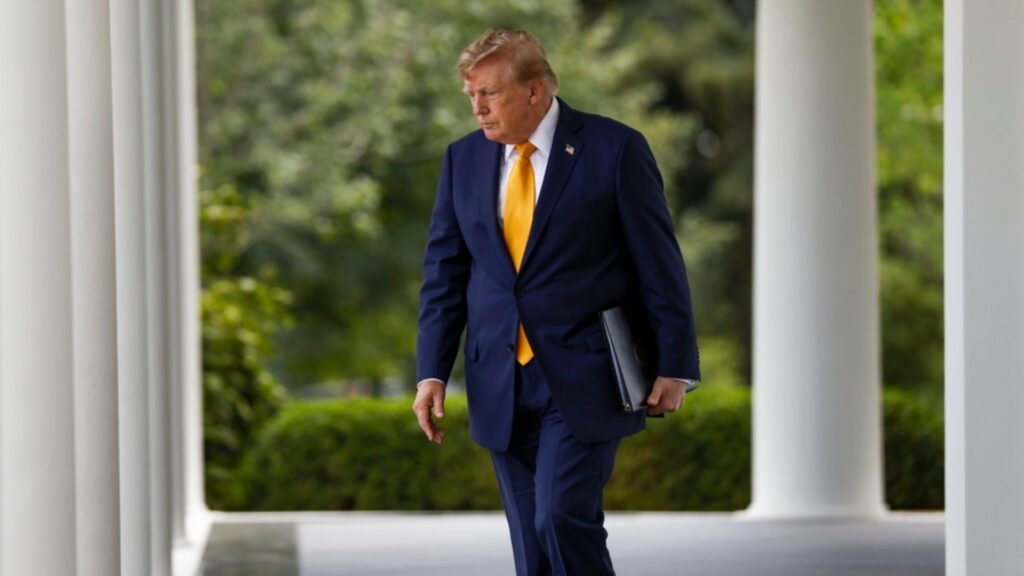
“This historic agreement more than doubles American oil reserves, significantly increases our oil supply, and will substantially reduce fuel prices for all Americans,” wrote President Donald Trump in a social media post about the landmark deal.
Trump also insisted that the agreement “will cost American taxpayers nothing.”
The US president described the deal with Venezuela on Truth Social as “the biggest in world history,” claiming it “more than doubles” American oil reserves.
He also noted that the agreement was reached “in close cooperation” with Venezuela’s acting president Delcy Rodríguez and a group of “private companies.”
What the US-Venezuela oil agreement entails
The deal announced by Trump effectively provides for expanded American control over the development of a portion of Venezuela’s vast oil reserves. It is a highly unusual arrangement, covering the development of 17 strategic oil fields with a proven potential exceeding 65 billion barrels.
According to Venezuela’s acting president Delcy Rodríguez, the plan envisions investments of over $100 billion, while the Venezuelan state is expected to collect more than $209 billion in tax revenues.
The new oil agreement between Washington and Caracas is expected to mobilize nearly $100 billion in private investment in Venezuela, according to US Secretary of State Marco Rubio. The deal comes at a time when American strategic petroleum reserves have fallen to their lowest level since 1982 and high fuel prices are putting pressure on the Trump administration.
The top US diplomat argued that the agreement could serve as a catalyst for rebooting Venezuela’s economy, and its oil sector in particular.
“For the people of Venezuela, this agreement will attract nearly $100 billion in private investment, support thousands of well-paying jobs, and help rebuild the economy,” Rubio wrote in a post on X.
Who will control the joint venture
The most significant element is how the joint venture will be governed. Under the agreement, the US government will retain 55% control of a joint venture with an “experienced private operator in Venezuela,” an American official told CBS News.
The joint venture will hold 100-year concession contracts for fields with total proven reserves of approximately 65 billion barrels, according to the official. The new entity would become the second-largest corporate holder of proven reserves after Saudi Aramco, the official added.
Production from the new venture will help supply oil at cost price, bolster replenishment of the US Strategic Petroleum Reserve, and help meet the needs of the American military, the official stated.
The arrival of the energy giants
The announcements came as Chevron — the largest active oil company in Venezuela — is set to finalize negotiations to transfer all of its Venezuelan oil joint ventures into the country’s new energy framework, allowing the American company greater control over its operations and key oilfield expansions, according to two sources familiar with the negotiations who spoke to Reuters.
The agreement, expected to be formally announced on Wednesday, will include a previously disclosed asset swap that will allow the company’s Petropiar heavy crude project — its largest in Venezuela — to expand into the neighboring Ayacucho 8 block. A second area in the vast Orinoco belt is also involved in negotiations to expand a smaller project there, the source said.
The company, Venezuela’s oil ministry, and state-owned PDVSA have also recently held talks about a potential new oil block that could be added to the portfolio, according to the sources.
Wednesday’s signing ceremony is also expected to include contract relocations involving other foreign companies, the sources said.
Halliburton joins the picture, but challenges in attracting major companies remain
Meanwhile, Halliburton — one of the largest oilfield services companies in the United States — is also in talks to return its equipment and services to Venezuela.
However, not everything is straightforward for Washington: the US government is working to attract companies to Venezuela, but the endeavor faces significant obstacles.
One major challenge is the development of new fields, which is far from a simple undertaking. Many of the areas Venezuela is offering are essentially “greenfields” — regions that lack the necessary infrastructure and, in some cases, even adequate electricity supply. Converting them into fully productive oil fields will require billions of dollars in investment in facilities, pipelines, and equipment. Beyond that, Venezuela’s history of nationalizations raises serious concerns. Among the companies that were affected in the past was ExxonMobil, which now appears to remain on the sidelines.
“The main problem in Venezuela is security,” said Again Capital analyst John Kilduff, speaking to AFP.
In his assessment, Washington may seek to establish a framework that allows American companies to operate with greater security and without facing the political risk that has traditionally accompanied investment in Venezuela.
Similar concerns are raised by Jorge Piñon, a researcher at the University of Texas at Austin’s Energy Institute. As he points out, “dark spots” remain — particularly regarding whether a future Venezuelan government might change the rules and challenge agreements signed today.
For major oil companies, after all, there is one overriding requirement: stability and reliable guarantees for the multi-billion-dollar investments that would be needed.
The key unknown
The most contentious point is that the full terms of the agreement have not yet been made public. As a result, it is not entirely clear what exactly the US is acquiring, what the obligations of each side are, or under what legal framework control is being transferred.
The deal is particularly unusual in that it appears to give the American side a direct role in the governance and exploitation of the sovereign natural resources of another country. The question of whether there will be legal or constitutional challenges in Venezuela therefore remains very much open.