Negotiations over the reopening of the Strait of Hormuz have reached a new impasse, with Iran seeking to bar American and Israeli vessels and demanding compensation from countries it considers hostile before allowing them access to the critical waterway.
Read more: Iran considers blocking the Strait of Hormuz to “hostile” ships — fines of up to 20% of cargo
According to Bloomberg and Iranian media outlets, these demands are included in a draft agreement currently being negotiated between Tehran and Oman over management of the Strait. Global markets are in a holding pattern as they monitor developments, since a deal could allow a larger share of energy flows from the Persian Gulf to resume.
In the meantime, the uncertainty surrounding the draft agreement’s terms has already given fresh momentum to oil prices, with Brent crude rising 1.59% to $83.809 per barrel and US crude trading at $78.329 per barrel, up 1.34%.
Iran’s terms for the Strait of Hormuz
According to the semi-official Fars news agency, the draft under consideration would give Iran control over the entry of vessels into the Strait of Hormuz, while exit would be jointly supervised with Oman. Traffic through the Strait would be channeled through a single “central corridor,” while the two other routes currently in limited use would be phased out within a set timeframe.
Still under discussion is a ban on Israel-linked cargo, as well as a fee structure covering services such as insurance and environmental costs. It remains unclear how broadly a ban on US- or Israel-linked vessels could be applied.
It is worth noting that the number of commercial ships flying American or Israeli flags is limited — however, the complex ownership and management structures common in international shipping could significantly widen the scope of any such measure. According to the semi-official Fars agency, the draft is now under review by the Iranian parliament.
Trump: The war will end very soon
The United States has made its position clear: it is demanding free passage through the Strait and an effective return to pre-war conditions. As one American official stated, any temporary corridor that is established must not be subject to approvals, permits, tolls, or other fees.
Tehran, for its part, argues that full reopening of the Strait requires the lifting of the American naval blockade. It remains an open question whether Washington is prepared to revive the terms of a previous June agreement — one that collapsed within weeks — which had included a relaxation of sanctions on Iranian oil and the release of a portion of frozen Iranian assets.
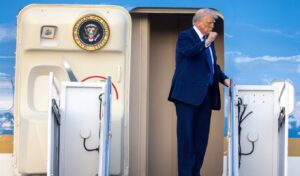
Nevertheless, US President Donald Trump struck a relatively optimistic tone on the state of talks, saying on Thursday evening that negotiations were “going well.” Shortly afterward, he told reporters he believed the war with Iran “will end very soon.” Addressing reports of US ammunition shortages, he insisted the country had “unlimited stockpiles,” adding that “we always want more.”
Only 33 ships in 4 days
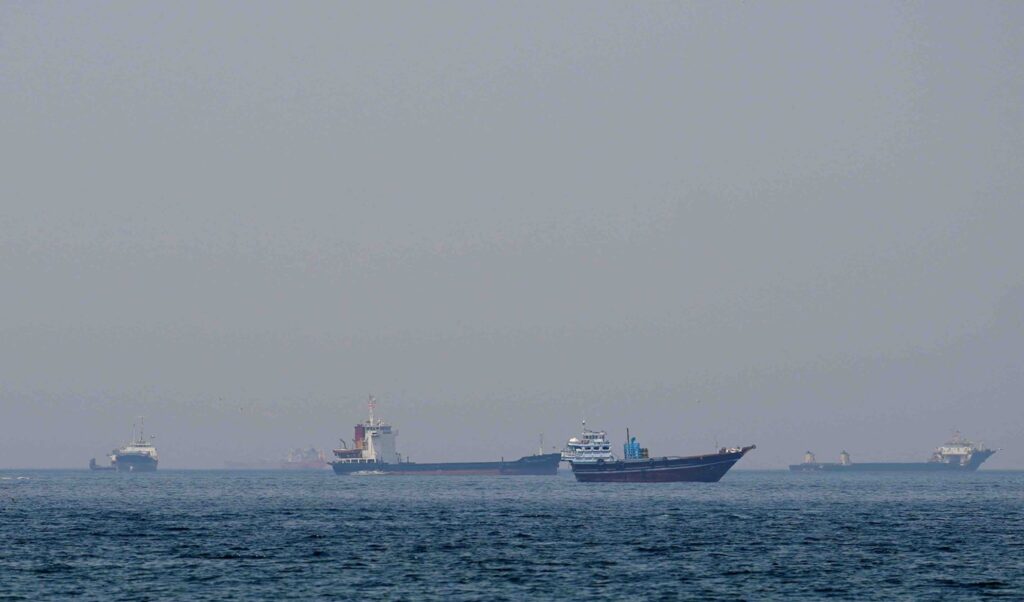
Commercial vessel traffic through the Strait of Hormuz has dropped sharply, with only 33 ships transiting between Monday and Thursday of this week, compared to 50 the previous week, according to available data. Markets are waiting for news or signals of progress in the Iran–Oman talks, in hopes that the key global hydrocarbon shipping lane will reopen.
Just four vessels passed through the Strait on Thursday, among them a very large crude carrier (VLCC), the Nissos Kea, which had loaded approximately 2 million barrels at the Iraqi port of Basra, according to Kpler data. Of the remaining three, two carried liquefied petroleum gas and one was a bulk carrier.
Only six crude tankers exited the Strait throughout the entire week, again according to Kpler. A total of 21 vessels entered, most via the shipping lane running along the Iranian coastline. Before Iran announced the closure of the Strait following the American-Israeli strike against the Islamic Republic on February 28, between 130 and 140 ships were transiting it daily.
Deep discounts are not enough
Despite the steep discounts Iraq is offering on its crude, shipowners continue to avoid taking on cargo from the Persian Gulf. Chinese and Indian refineries have been searching for vessels willing to enter the region and load crude at the Basra terminal, drawn in by the low prices.
Iraq’s state oil marketer SOMO is offering discounts of up to $30 per barrel on Basrah Heavy and Basrah Medium grades for August loadings. However, according to shipping sources cited by Reuters, no vessels have been fixed so far, as shipowners remain deeply cautious about the risks of entering the area.
Industry sources point to serious practical obstacles stemming from the proposal that Tehran would gain control over vessels entering the Gulf — obstacles arising both from US sanctions and from the restrictive terms built into marine insurance policies.
New flashpoints in the region
Even as efforts continue toward a Strait of Hormuz agreement, other flashpoints across the Middle East remain active. Yemen’s Houthis announced a new large-scale offensive against Saudi-backed forces, while tensions in the Red Sea are flaring up once again. On Thursday, however, according to Kpler, 26 vessels passed through the Bab el-Mandeb strait, up from 19 the day before.
Fresh signs of escalation are also emerging between Israel and Hezbollah in Lebanon, further complicating prospects for a broader and sustainable regional agreement. Markets remain focused on one central question: whether the Iran–Oman talks can this time translate into a genuine increase in shipping activity. The picture remains murky, with Tehran’s latest demands suggesting that the gap with Washington remains substantial.