Greek public universities are entering a new era, with student housing and campus security remaining top priorities. More than €1 billion has been allocated to renovate existing student dormitories or build new ones. At the same time, access control measures — already tightened across university campuses — will now be extended to student residences, where entry will be strictly limited to eligible residents. Additionally, the so-called self-managed spaces are being permanently abolished.
Read also: “Student dormitories are in a chaotic state”: What a resident tells Parapolitika 90.1 (Audio)
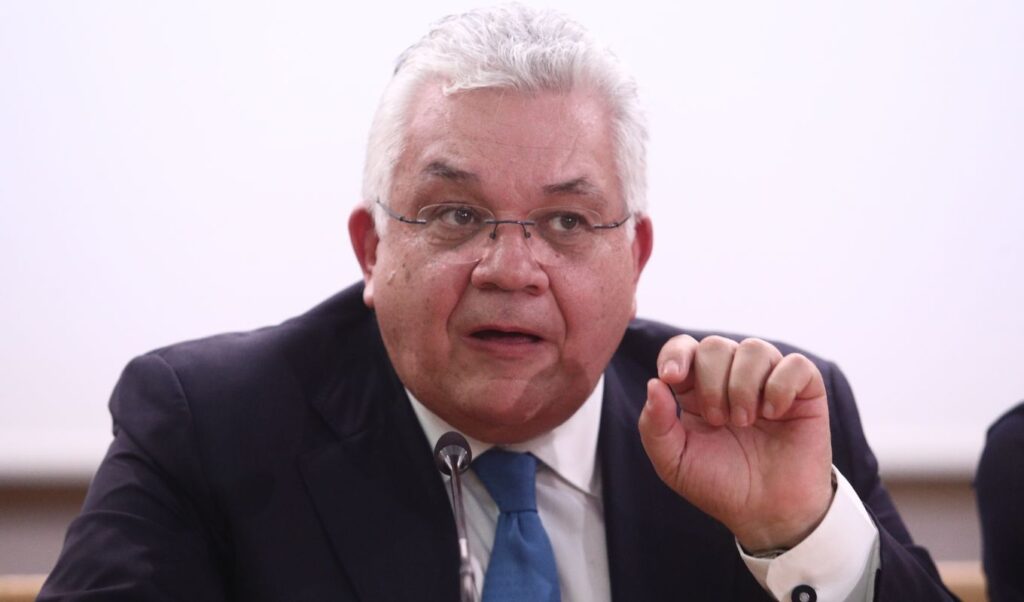
Speaking on Open TV, Deputy Minister of Education Nikos Papaioannou explained that the large-scale programme to upgrade existing facilities and build new student dormitories is currently underway and will be fully completed within two years. The student residences at the University of Thessaly are set to be finished this year. “For Kyriakos Mitsotakis’s government since 2019, a fundamental condition for ensuring equal opportunities for all has been student welfare — giving as many opportunities as possible, especially to students studying far from home,” Papaioannou stressed, noting that over €1 billion has been committed since last year, broken down as follows:
- €737,000,000 through Public-Private Partnerships (PPP).
- Approximately €87,000,000 from the Public Investment Programme.
- €227,000,000 from the Social Climate Fund.
The Deputy Minister also referenced universities with smaller student populations, such as the University of Florina, where the state — through the Foundation for Youth and Lifelong Learning (INEDIVIM) — leases hotel rooms to house students.
“Regarding meal subsidies, we see a 15% annual increase in allocated funding, and last year, 83,000 students across the country benefited from the programme,” the Deputy Minister emphasized. When asked about opposition criticism — specifically that only 3,000 beds were announced for 70,000 new university entrants — Papaioannou presented data on both existing and new infrastructure. He stated that the total number of places will exceed 20,000: currently available dormitories already offer rooms for 12,116 beneficiaries, while the €737 million investment across six universities is expected to add another 8,609 places.
Addressing student safety in dormitories and the protection of facilities — which are frequently damaged by non-university individuals — the Deputy Minister of Education revealed a particularly striking case: last year, it was discovered that a female student who had been admitted ten years ago was still occupying three dormitory rooms. He clarified that card-access entry systems are already in place at the University of Athens (EKPA), the Aristotle University of Thessaloniki, and Democritus University, with plans to extend the system to additional universities.
The Ministry’s objective is to ensure that only authorized individuals can access dormitory facilities. Even in cases of food delivery orders, students are required to collect their orders at the entrance themselves, with delivery personnel prohibited from freely entering the premises. As Papaioannou added, “Any security personnel present — guards, for example — are legally prohibited from physically detaining anyone. Their presence is preventive, allowing them to notify the relevant law enforcement authorities responsible for maintaining order. Students must therefore treat their dormitory room as their own personal property.”
Papaioannou was equally firm when asked about the controversial self-managed spaces. As he stated, “Such spaces — which some in the opposition, from Tsipras’s SYRIZA, considered cultural spaces — have already ceased to exist in universities, and they are now being abolished in dormitories as well.”
Finally, speaking about the new academic school year and the start of classes on September 11, Nikos Papaioannou said that the Ministry of Education and Minister Sofia Zacharaki have made all necessary preparations to ensure students have teachers for at least their core subjects from day one, with most vacancies covered through both permanent appointments and the first major wave of substitute teacher hirings.
Originally published in “Apogevmatini.”