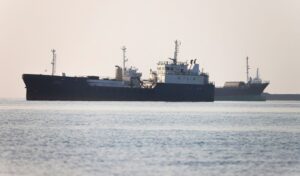
Iranian authorities have targeted a Greek oil tanker in waters south of the country, immobilizing the vessel, according to reports from Iranian state broadcaster IRIB. This marks the second such incident within a short period, following Monday’s (July 20) attack on a Kuwaiti-flagged tanker near the coast of Oman, in the Strait of Hormuz region.
Read more: Iran: New wave of US strikes — “Goal is to weaken operations against ships in the Strait of Hormuz”
Strait of Hormuz: Revolutionary Guards immobilize Greek tanker
It is worth recalling that a similar incident occurred on Sunday (July 19) involving the tanker KAVOMELEAS, a Greek-owned vessel sailing under a Maltese flag. According to available information, there were no injuries among crew members — none of whom are Greek nationals — and the sailors have since abandoned the ship.
⚡️🚨 New report: a Greek oil tanker has been targeted and stopped in waters south of Iran, marking a second tanker incident in the Strait of Hormuz area following the earlier attack on a Kuwaiti-flagged vessel. (IRIB News)
— Middle East Observer (@ME_Observer_) July 21, 2026
The Revolutionary Guards’ statement
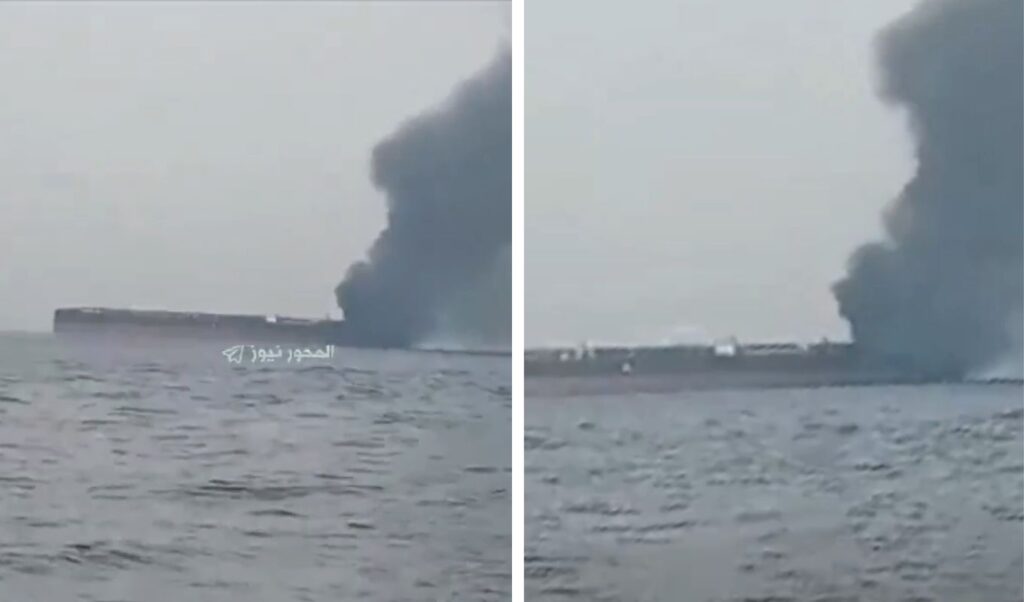
In an official statement, the Revolutionary Guards reported that a major fire broke out and two oil tankers were immobilized. They claimed the vessels had violated maritime rules by attempting to navigate the dangerous southern route through the Strait of Hormuz — allegedly acting on guidance from the US military — following explosions that occurred on board.
🚨 BREAKING:
Iran hit a Greek-owned oil tanker in the Strait of Hormuz.pic.twitter.com/3Qiwp51APj
— The Hormuz Wire (@HormuzJournal) July 20, 2026
Iranian state news agency footage purports to show a tanker on fire in the Strait of Hormuz after an Iranian attack. Greek shipping firm Dynacom confirmed the Kavomaleas was struck and burning off the coast of Oman. pic.twitter.com/SxftacMlc0
— The National (@TheNationalNews) July 20, 2026
The Revolutionary Guards stated that rescue teams are currently conducting operations to evacuate crews from the area. The Revolutionary Guards’ Navy also reiterated its warning to shipping companies, urging them to prioritize the safety of their crews and vessels, to disregard information attributed to the US military, and to avoid routes designated as dangerous or operationally unsafe.
Furthermore, the Revolutionary Guards’ statement emphasized that as long as US operations in the region continue, the Strait of Hormuz will remain closed and no exports of oil, natural gas, or chemical fertilizers will be permitted through the waterway. The Guards also announced that “punitive operations” against what they describe as aggressive American military bases have already commenced, in response to naval violations.