The new operational traffic management system Traffic Commander was unveiled at the facilities of the Traffic Monitoring and Control Operations Center (THEPEK) of the Attica General Police Directorate (GADA). The system leverages real-time data from dozens of different sources — including drones, patrol cars, and traffic police motorcycles — providing a comprehensive picture of traffic conditions across the city. It represents a modern operational management center, developed in-house by Hellenic Police officers with the goal of improving traffic organization across the Attica basin through the use of technology, data analytics, and real-time operational intelligence.
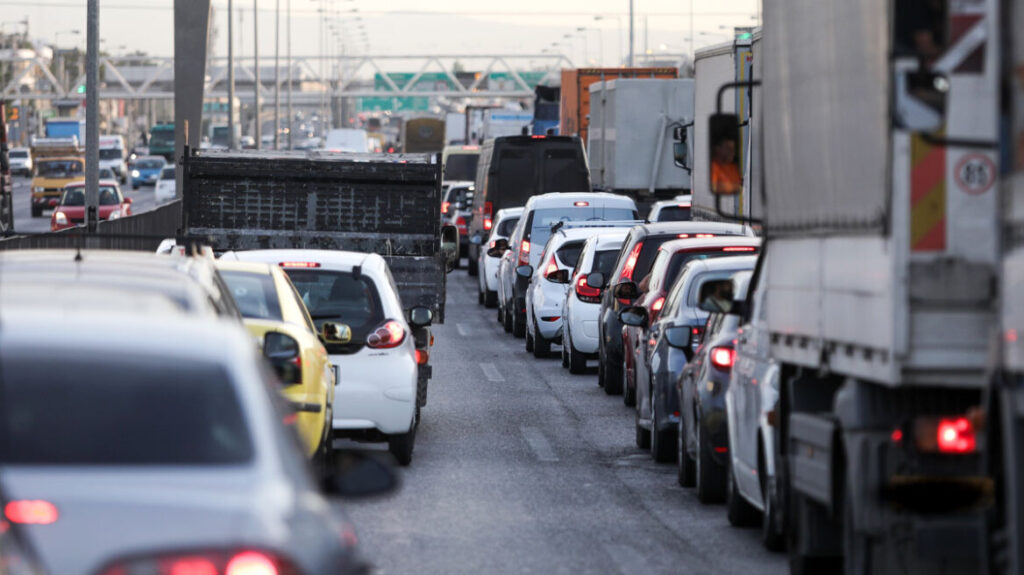
The General Police Director of Attica, Major General Thanasis Kampras, described Traffic Commander as another significant step in the digital transformation of the Hellenic Police. He noted that the new tool has been designed to improve the daily lives of citizens and to more effectively address traffic problems throughout Attica. He emphasized that Attica is one of the most complex traffic management areas in Europe, serving more than 4 million residents, with approximately 700,000 vehicles entering central Athens every day and moving across a road network exceeding 1,600 kilometers.
Traffic Commander: Managing approximately 50,000 traffic incidents daily
In this context, he explained that Traffic Commander handles approximately 50,000 traffic incidents per day, drawing on information from 24 different data sources, which it consolidates into a single unified operational picture for THEPEK officers.
Mr. Kampras stressed that the new system “is not simply another digital application,” but rather a mechanism that transforms large volumes of information into actionable operational intelligence — enabling faster and more effective decision-making, without replacing the experience and judgment of police personnel.
He also noted that Traffic Commander operates in a complementary capacity alongside the existing KOMVOS system, and has been designed to continuously evolve through the integration of artificial intelligence applications, new data sources, and additional operational capabilities. He expressed the Hellenic Police’s ambition for this model to serve as the foundation for developing similar management centers in other parts of the country.
The head of the Traffic Commander development team, Police Sub-Director Anastasios Kalaitzidis, highlighted that it is a new operational traffic management tool, developed entirely in-house by Hellenic Police software engineers at no additional development cost, with the aim of providing a common operational picture, data analysis, and coordination. As he explained, Traffic Commander collects and combines data from dozens of different sources, transforming individual data points into a comprehensive traffic overview and supporting evidence-based decision-making. He underlined that “it is not just another traffic map. It is a system that turns the image of the city into operational knowledge, and operational knowledge into more effective action.”
THEPEK head, Police Sub-Director Theofanis Anagnostou, then delivered a brief live demonstration of the system, showing in real time how a traffic incident is managed.
It is worth noting that the Union of Greek Shipowners (UGS) donated 10 state-of-the-art drones built to specialized police specifications, valued at €125,000, which will provide aerial surveillance feeds directly to THEPEK.
Also present at the event was the Secretary General of the Union of Greek Shipowners, Dimitris Fafalios, who stated that the donation forms part of the Union’s longstanding corporate social responsibility program and its consistent support for the Hellenic Police and the field of public safety. He noted that the initiative aims to enhance operational awareness, enable faster response times, and improve traffic management for the benefit of society as a whole. He also praised the work of Hellenic Police personnel, reaffirming that Greek shipping will continue to stand firmly by their side in support of initiatives that serve the common good.
Chrysochoidis: Traffic Commander combines ground policing with aerial surveillance
For his part, the Minister of Citizen Protection, Michalis Chrysochoidis, described Traffic Commander as yet another significant contribution by the Hellenic Police to improving citizens’ daily lives, noting that it represents “an operational effort with a strong social impact” and is rooted in the philosophy of community policing.
He stated that community policing has now become a core priority for the Hellenic Police, with the goal of maintaining a daily presence in addressing the problems citizens face. In this context, he referenced, among other things, actions taken to combat domestic violence, protect victims, and improve road safety.
He made particular reference to the results of intensive breathalyzer checks, noting that in the first half of 2026, 1,572,000 tests were conducted nationwide, compared to approximately 750,000 during the same period in 2025. Of those tested, 13,613 drivers were found to exceed the legal alcohol limit — a rate of 0.86% — compared to 16,000 drivers, or 2.11%, during the same period the previous year.
“This is an achievement — it is a victory. And it is a victory for our society, for our citizens. It is a victory for public safety. That is why we have fewer accidents, fewer hospital admissions, and we are safer,” the minister stressed, noting that the shift in driving behavior is a prime example of the social impact that effective policing can have.
Turning to the new system, Mr. Chrysochoidis explained that Traffic Commander integrates ground-level policing — using patrol cars, motorcycles, and aerial assets — with advanced technology to achieve more effective traffic management. He noted that the Hellenic Police now has access to modern drones, acquired through the donation from the Union of Greek Shipowners, and expressed his gratitude to the Union for its contribution to strengthening ELAS’s operational capabilities. He stated that the combination of ground policing, aerial assets, and new technologies creates a comprehensive traffic management framework.
“The new element is how we can use technology for the benefit of society, for the benefit of our lives,” he said, noting that the system operates primarily in a preventive capacity, with the goal of making everyday life easier for citizens.
He also emphasized that traffic congestion is currently, after the cost-of-living crisis, the most pressing problem facing the Attica basin, and that it requires the cooperation of all relevant stakeholders in order to achieve the best possible traffic management within existing infrastructure.
The minister expressed confidence that following the system’s full deployment from September onwards — when daily life in Attica returns to normal — a traffic improvement of between 25% and 30% could be achieved, significantly reducing the inconvenience experienced by drivers.
He also announced that Traffic Commander will produce monthly evaluation reports, which will document the effectiveness of interventions. “Where there is improvement, we push further; where there is no improvement, we make corrections — so that we keep getting better,” he stressed.
Mr. Chrysochoidis further noted that the system currently draws on data from 24 different sources, which will be enriched and utilized to an even greater extent in the future in order to continuously improve its operational effectiveness.
“The launch of Traffic Commander marks the implementation of a modern traffic management model”
In closing, he thanked the General Police Director of Attica and all the officers who contributed to the creation of the system, emphasizing that it is a project designed and implemented entirely by Hellenic Police personnel, without any external development involvement.
Finally, the Chief of the Hellenic Police, Lieutenant General Dimitrios Mallios, underlined that the launch of Traffic Commander marks the implementation of a modern traffic management model, aimed at more effectively addressing congestion problems in Athens and the wider Attica basin. He stressed that it is a comprehensive system, built entirely in-house by Hellenic Police personnel at no additional cost, providing real-time traffic monitoring and the ability to proactively manage traffic issues. Through the storage and analysis of relevant data, the system also supports more effective long-term responses. He concluded by thanking all the officers who contributed to bringing the system to life.