An extremely dangerous escalation is unfolding in the Middle East, as Washington and Tehran now stand on the brink of full-scale military conflict. On one side, U.S. President Donald Trump has issued an unprecedented ultimatum threatening total destruction of Iran’s critical infrastructure. On the other, Iran’s Revolutionary Guards have launched attacks against American military targets in Bahrain and Kuwait, vowing to teach the United States a lesson.
Trump’s stark ultimatum
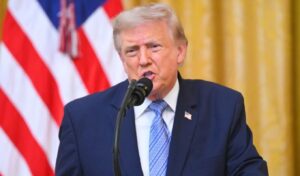
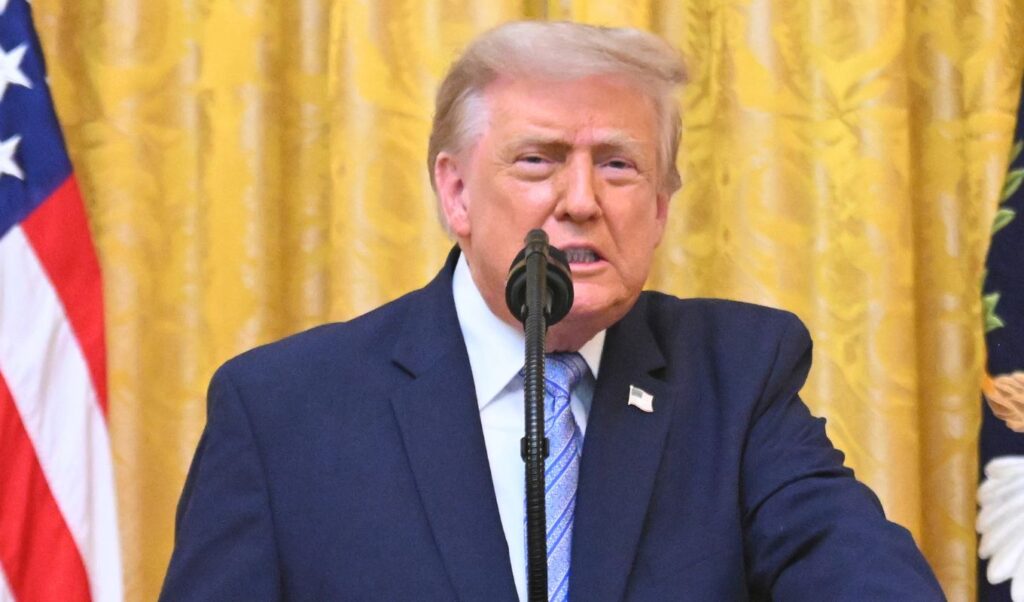
Speaking to reporters, President Donald Trump set a hard deadline for Tehran, threatening to level the country’s key infrastructure if it does not stand down. In his own words: “They have until tomorrow at 8 o’clock — we’ll see what happens. We’re negotiating in good faith. After 8, they won’t have bridges, they won’t have stations.”
Trump did not hold back, issuing direct threats of “total destruction,” while clarifying he “wouldn’t want to do it,” adding: “It will take them 100 years to rebuild their country.” He also expressed sharp frustration with his allies, stating: “I’m very disappointed with NATO,” while projecting confidence about the outcome of the crisis: “We are the winners, they have lost. We will put tolls on the Strait of Hormuz.”
Revolutionary Guards strike American bases
Tehran’s response was immediate. Iran claims to have launched strikes against American targets in Bahrain and Kuwait, with the Revolutionary Guards’ leadership sending an uncompromising message to Washington.
Tehran described the attacks as a direct response to American military moves in the region and warned it is prepared to continue the confrontation, pushing tensions in the Middle East to even greater heights.
According to Iran’s FARS news agency, the Revolutionary Guards stated they carried out attacks against Al-Sakhir Air Base and Bin Salman Port in Bahrain, as well as the Arifjan base in Kuwait. The Kuwaiti military, for its part, announced that its air defense forces successfully intercepted the incoming missiles and hostile unmanned aerial vehicles.
Revolutionary Guards commander Ahmad Vahidi delivered a blunt message via state television: “We will teach the United States a lesson that will destroy every aggressor and open the path to global dominance for the oppressed. We will obey the Leader (Mojtaba Khamenei) and will never tie Iran’s fate to the promises of an enemy that kills children — an enemy known for breaking commitments and using deception.”
A war of words over military intelligence
Iranian parliament speaker Mohammad Ghalibaf also entered the political fray, using a post on X to mock Washington’s strategic calculations.
“The Americans keep bringing new military equipment into the region and claim they want to stop the war. They have measured our intelligence against their own laughably low IQ. Having fully recognized these American games, we have reached the level of absolute mastery and have prepared ourselves accordingly. Actions must confirm statements — not contradict them.”
The situation in the Persian Gulf remains critically volatile, with the coming hours considered decisive for the trajectory of regional security.
آمریکاییها مدام تجهیزات نظامی جدید به منطقه میآورند و ادعا میکنند دنبال توقف جنگند. روی هوش ما اندازهٔ آی کیوی مختصر خودشان حساب کردهاند.
ما در شناخت این آمریکاییبازیها به مرحلهٔ استاد تمامی رسیدهایم و بر این اساس آماده شدهایم. اقدامات باید مؤید ادعاها باشد نه ناقض آنها.— محمدباقر قالیباف | MB Ghalibaf (@mb_ghalibaf) July 20, 2026
Revolutionary Guards: “Not a single drop of oil will pass through Hormuz while we are under attack”
The Strait of Hormuz “is our territory, and the intervention of the American terrorist military — coming from thousands of miles away — has no legal standing and will certainly be confronted. For as long as America’s malicious actions in the region continue, this passage will not be safe for the transit of fertilizers, nor even a single drop of oil or natural gas,” the Iranian Revolutionary Guards stated, citing Tasnim News Agency. “The invading military must prepare to face the consequences,” they added.
Houthis declare naval blockade of Saudi Arabia
Yemen’s Iran-backed Houthi rebels announced a maritime embargo against Saudi Arabia, following an exchange of fire between the two sides last week — the first such incident in years.
The rebels “declare a naval embargo against the criminal enemy, Saudi Arabia, based on the principle of an eye for an eye, effective immediately upon the publication of this declaration,” said military spokesperson Yahia Sari, as reported by Al Jazeera.
The United States is increasing its aircraft presence in the Middle East as tensions with Iran escalate.
The U.S. plans to deploy additional F-16 and F-35 fighter jets from bases in Europe, along with extra aerial refueling tankers, according to an American official.
The additional assets could expand President Donald Trump’s options as he weighs how to proceed in the escalating conflict.
Last week, Trump received a Situation Room briefing on options for intensifying the war. He has considered attempting to seize Kharg Island, a key Iranian oil export hub, or striking Iranian nuclear facilities at Pickaxe Mountain.
Trump has not entirely ruled out a diplomatic solution, however, and U.S. Secretary of State Marco Rubio said last night that the door remains open for a return to the negotiating table.
Reuters: “Mediators propose 10-day ceasefire”
Mediators between Iran and the United States have proposed a 10-day suspension of hostilities, Reuters reports, citing Middle East Eye. The proposed pause, they explained, is aimed at creating diplomatic space to revive the agreement between Tehran and Washington.
Wall Street opens higher
Major Wall Street indexes opened higher on Monday, as chipmaker stocks rebounded from last week’s losses and investors looked ahead to a wave of major earnings reports from large technology companies that have fueled the AI-driven market rally.
The Dow Jones Industrial Average .DJI rose 8.2 points, or 0.02%, at the open to 52,154.57. The S&P 500 .SPX gained 31.5 points, or 0.42%, opening at 7,489.18, while the Nasdaq Composite .IXIC climbed 200.6 points, or 0.79%, to 25,720.871 at the opening bell.