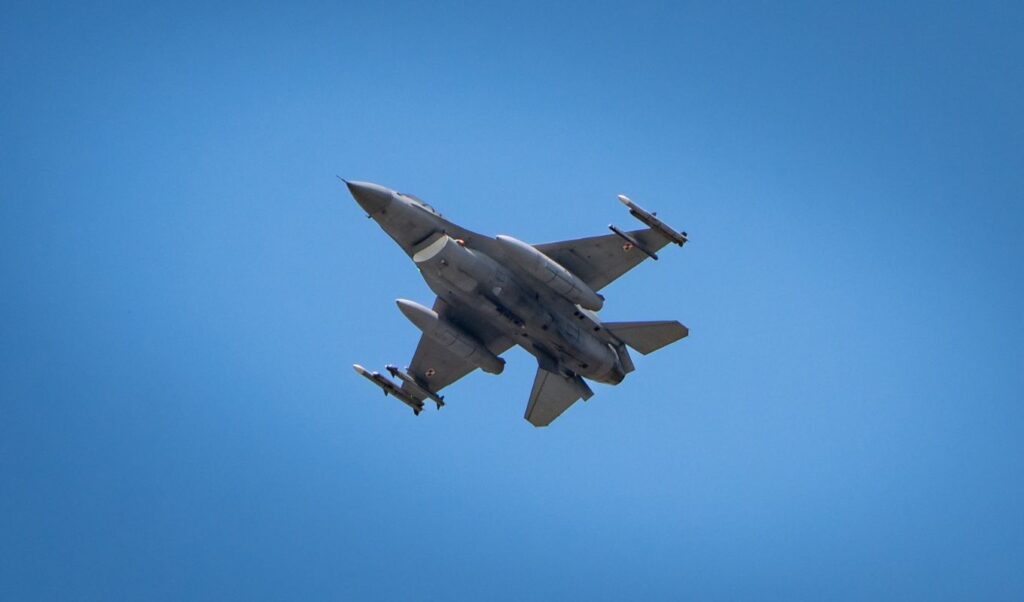
Turkish President Recep Tayyip Erdoğan has raised the issue of the F-35 fighter jets and the S-400 missile systems with his cabinet ministers, as the Turkish government weighs its next steps toward lifting CAATSA sanctions. However, no official announcement was made regarding the fate of the Russian air defense system.
US ambassador to NATO calls Turkey’s return to F-35 program “realistic”
Reinforcing the role the West envisions for Ankara, US Ambassador to NATO Matthew Whitaker told CNN that he considers Turkey’s reintegration into the F-35 fighter jet program to be realistic — provided Ankara withdraws the Russian-made S-400 air defense system it acquired in 2019. To date, however, the system’s ultimate fate remains a matter of media speculation rather than official confirmation. While Whitaker confirmed that the Trump administration is in direct talks with the Turkish president to resolve the issue, he also cautioned on CNN that operating the S-400 alongside the fifth-generation F-35 could allow Russia to gather intelligence on the aircraft’s capabilities, thereby jeopardizing the security of the entire program.
So far, despite reports in the Turkish press, there has been no official announcement regarding the transfer or destination of the Russian missiles. A Middle East Eye report on Monday suggested the missiles could be transferred to the United Arab Emirates, which already operates Russian Pantsir air defense systems. However, a key obstacle remains: Russia appears unwilling to agree to such a transfer, given its ongoing dispute with the UAE over Iran. Turkey’s potential return to the F-35 program has attracted significant international media attention. French news agency RFI reports that Trump’s decision to lift sanctions reflects the West’s broader intention to make Ankara a key strategic ally.
Theodoros Tsikas: “Turkey will ultimately get the F-35s”
International affairs analyst Theodoros Tsikas, speaking to parapolitika.gr, argues that Turkey will ultimately succeed in acquiring the F-35s, given that both American and Turkish leadership share the political will to make it happen. “It seems as though everything has already been decided, and we’re learning about it piece by piece,” he said. “A telling sign is that two weeks before the NATO Summit, Hakan Fidan met personally with Putin. Take note — Fidan, the foreign minister, met with President Putin in person. That’s not something that normally happens. And clearly, the S-400 issue was on the table during that meeting. It appears that in order to move forward on the remaining issues — and on the announcements made by both the American and Turkish sides — certain agreements have already been reached behind the scenes.”
“What Turkey will receive immediately are the six F-35s currently stationed at a base in Virginia. These aircraft already bear the colors of the Turkish Air Force and have already been paid for by Turkey. They were left stranded at the base when CAATSA sanctions intervened. Those planes are ready to go — they are also a fully American co-production. Turkey will receive those six immediately. However, rejoining the co-production program will take much longer, as it is far more complex — politically, technically, and legally. These are two entirely separate matters.”
Israel’s reaction to the potential F-35 sale to Turkey
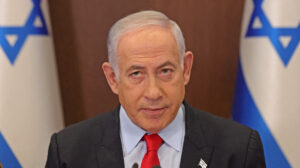
As the process moves forward, the US government appears to be giving little serious weight to the objections raised by Israeli Prime Minister Benjamin Netanyahu, who has argued that Turkey acquiring F-35s would upset the balance of power in the Middle East.
According to Tsikas, this is yet another indication that when Donald Trump perceives a divergence between American and Israeli interests, he has no hesitation in sidelining Netanyahu. “We saw this with Iran and Lebanon — issues that affect Israel far more directly. So yes, Israel has influence, but that doesn’t mean everything Netanyahu or Israel demands will happen. Moreover, Israel is asking that no Middle Eastern country receive F-35s — not just Turkey. It’s making the same demand regarding Saudi Arabia and other nations. But the American leadership simply cannot deny two of its closest allies something they seek solely because Israel objects.”
“There is another scenario being discussed and considered quite plausible: that Turkey and Saudi Arabia may not receive the exact same variant of the F-35 as Israel. In other words, Israel’s technological edge in the region could be preserved to a certain degree. That is also a solution currently on the table.”
Of particular interest is Benjamin Netanyahu’s imminent visit to the United States — expected imminently, according to Israeli media — to attend the funeral of US Senator Lindsey Graham. Should the visit go ahead, a meeting with President Trump is also being anticipated.