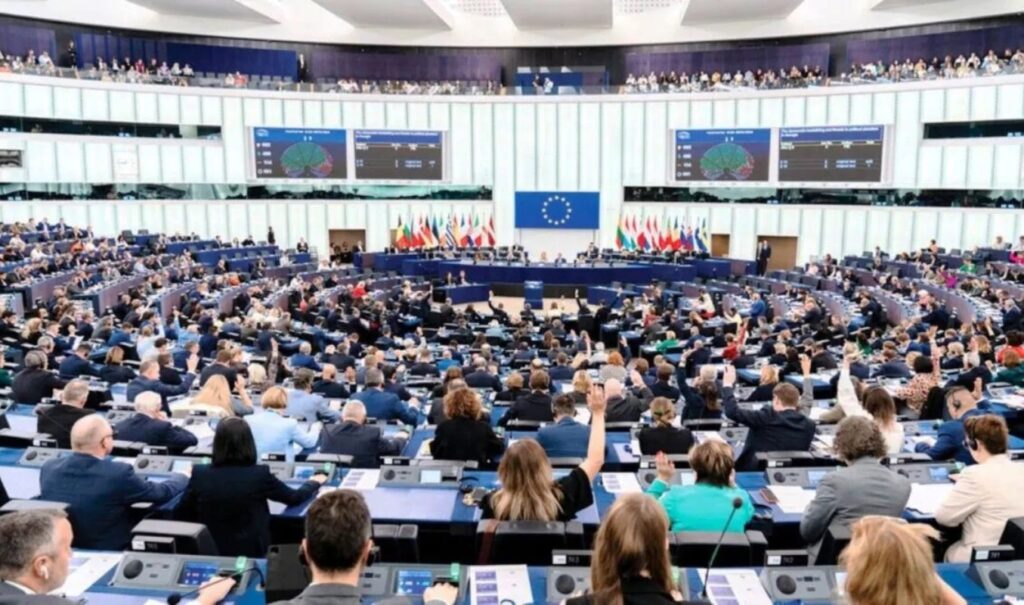
Turkey is once again at the center of European political debate, as the European Parliament sends a clear message about the future of relations between Ankara and the European Union. During the plenary session in Strasbourg, the rapporteur of the annual report on Turkey, Nacho Sánchez Amor, argued that current conditions do not allow for a restart of the accession process. The report, which has already been approved by the Committee on Foreign Affairs and is expected to be put to a plenary vote, documents serious concerns about the state of democracy, institutions, and human rights in the country.
Turkey: “We have been waiting ten years for good news”
Nacho Sánchez Amor was particularly critical of Turkey’s trajectory in recent years, noting that the European Union has been waiting a decade for positive steps that have never materialized. As he pointedly remarked, there is an “absolute lack of willingness” to comply with European principles and values. According to him, Turkey has drifted away from the democratic standards required of a country seeking to join the European Union.
The rapporteur argued that “Turkey is now a genuinely authoritarian country” and questioned what place such a country could have within the European project. At the same time, he was careful to distinguish between the political leadership and a significant portion of Turkish society, stressing that there are citizens who still aspire to greater democracy and freedoms. As he emphasized, Europe does not wish to deprive these people of hope — however, the fundamental principles of the rule of law and human rights remain non-negotiable prerequisites for any candidate country seeking EU membership.
Turkey: References to Imamoglu and political persecution
Particular attention was drawn to the arrests and judicial prosecutions of political figures in Turkey. Nacho Sánchez Amor denounced the detention of government opponents, including Istanbul Mayor Ekrem Imamoglu. The report also highlights the intimidation of activists, journalists, and civil society representatives — a situation that, according to the European Parliament, creates a suffocating environment for political pluralism and freedom of expression.
For her part, EU Enlargement Commissioner Marta Kos agreed that the situation raises serious concerns. She recalled that Turkey remains a strategic partner, a NATO ally, and a candidate country, but noted that since 2018 there has been a continuous backsliding in the areas of rule of law and fundamental freedoms. The Commissioner made it clear that without tangible progress in these specific areas, there is no possibility of reopening accession negotiations. At the same time, both the report and the interventions by European officials acknowledge that EU-Turkey cooperation remains essential on critical issues such as migration management, trade, and regional security. Particular emphasis was also placed on the role of Greece and Cyprus, which are described as key pillars of Europe’s relationship with Ankara and crucial factors for stability in the Eastern Mediterranean.