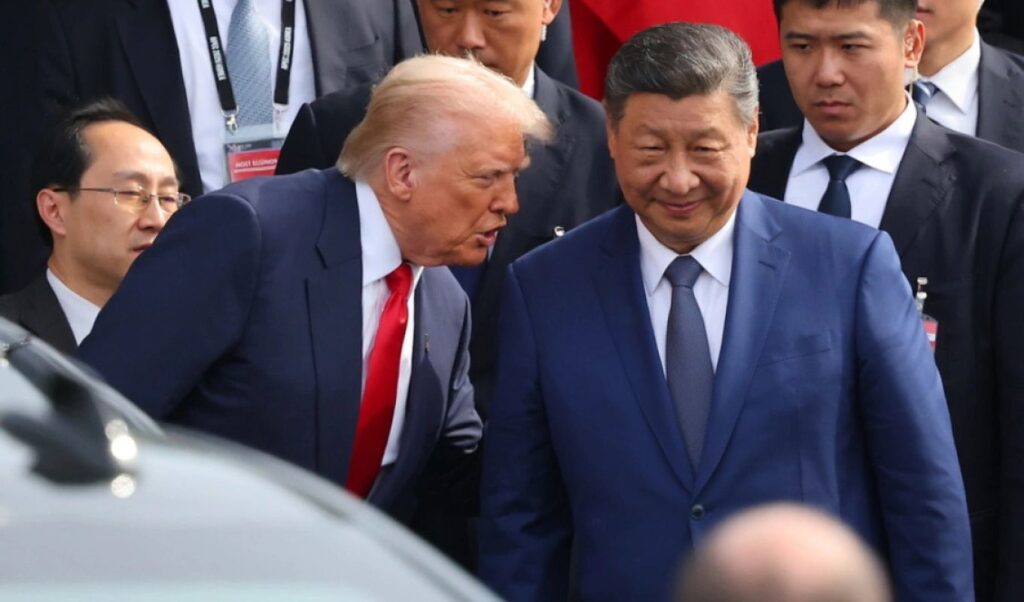
Chinese President Xi Jinping referenced the “Thucydides trap” during his conversation with US President Donald Trump, emphasizing that both countries must avoid it. This historical concept refers to the Greek historian’s account of Athens’ rise and Sparta’s resulting fear, which led these two major powers (city-states) of antiquity to war.
China and US want to avoid the “Thucydides trap”
Chinese President Xi Jinping referenced the “Thucydides trap” during his conversation with US President Donald Trump, who was making an official visit to Beijing. The roots of this historical concept, which the Chinese president favors using, trace back to Greek historian Thucydides, who described how Athens’ rise caused fear in Sparta, making war between the two ancient Greek cities – the superpowers of their era – inevitable. As the Chinese president stated, this is the great trap-challenge that both countries, the US and China, must avoid.
The Chinese president used this historical example, one of his favorites, to demonstrate that Beijing does not seek to displace Washington but warns that if the US reacts with fear to China’s rise (as Sparta did with Athens), then conflict between the two countries becomes almost inevitable.
The Harvard professor who coined the term in 2015 to describe tensions between major powers
It was in 2015 when Harvard professor Graham Allison coined this specific term to describe the tensions that develop between rising powers and established powers that feel their dominance is under threat. According to him, this dynamic almost always leads to war.
The Harvard professor studied 16 historical cases of rivalry spanning 600 years, with 12 of them ending in military conflict. Since then, this term has been used to describe the geopolitical risks in US-China relations.