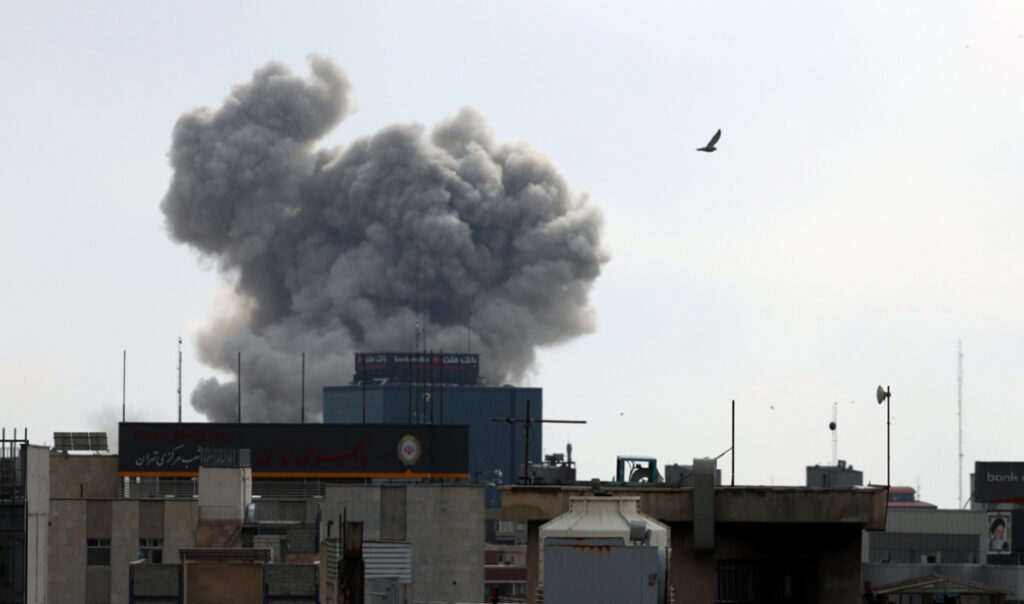
The dynamics of a new balance of power have been brought to the negotiating table, involving the unlikely pairing of formerly mismatched forces – the United States and Saudi Arabia – and the freezing of Operation Freedom has become a turning point in opening new contacts, with a new agenda now taking shape. The role of Gulf countries, particularly Riyadh, regarding the progress of processes within the Middle East conflict has its own significant importance. The Saudi side is making a critical move on the war chessboard, as close cooperation with the Republican establishment led to the suspension of Operation Freedom, which the American president had previously announced in triumphant tones before freezing it – something that unfroze talks with Tehran. The new regime in the Strait of Hormuz, while not yet equivalent to free navigation, seemed to lower the tones of the confrontational US-Iran relationship, with Donald Trump stating that a deal is in the works, the Pakistani side subsequently confirming this, and Iran appearing initially positive toward a ceasefire. International media, with the unfreezing of consultations, spoke of a 14-point peace memorandum, and shortly after, Washington clarified that a prerequisite for peace remains the nuclear program and specifically its termination – something that still intensifies confrontation with Tehran.
It should be noted that just hours ago, Trump appeared more optimistic about a potential agreement with Iran, while acknowledging that similar efforts in the past had proven fruitless. “I had felt this before with them,” he said. “We’ll see what happens,” he added. Trump also stated that it is “unlikely” he would send American envoys for a second round of peace talks with Iran in the Pakistani capital, Islamabad.
Trump on Iran deal: “The war will end quickly”
News networks Axios and Reuters reported that Washington and Tehran are approaching the drafting of a one-page, 14-point agreement to end the war. According to the information, the plan aims to end hostilities, followed by talks to restore free navigation in the Strait of Hormuz, lift sanctions, and limit Iran’s nuclear ambitions.
However, Axios also reported that some American officials maintain reservations both about the potential agreement and about who could ultimately approve such an agreement among the different centers of power in Iranian leadership. Iranian parliamentarian Ebrahim Rezaei, spokesperson for the National Security and Foreign Policy Committee of the Iranian parliament, wrote on platform X that the 14 points published by Axios constitute an American “wish list.” He added that Iran “has its finger on the trigger and is ready” if Americans do not “make the necessary concessions.”
The US president predicted that the war with Iran would “end quickly” and argued that most people “understand” his goal of limiting Tehran’s nuclear ambitions. His statements came after Iran’s announcement that the American proposal to end the war “continues to be under consideration.”
Operation Freedom: The backstory behind the “freeze”
Donald Trump’s decision to temporarily “freeze” the Freedom plan for escorting ships through the Strait of Hormuz reassured oil markets and reignited hopes for a diplomatic solution.
Iran announced Wednesday that it is considering a new proposal from Washington, following reports from American media citing anonymous American officials stating that the two sides are approaching a one-page memorandum to end the Gulf war.
A source close to mediators in Pakistan told Reuters: “We will close this very soon. We are close.”
However, Trump warned 24 hours earlier that if no agreement is reached, bombings would resume “at a much higher level and with greater intensity than before.”
The American president’s threat was made less than 24 hours after US Secretary of State Marco Rubio had stated at the White House that Operation Freedom, the American-led military attacks against Iran, had been completed.
Trump’s decision to suspend the American ship escort operation through the Strait of Hormuz was taken after pressure from Saudi Arabia, according to NBC News reporting citing two American officials.
According to the same sources, US allies in Gulf countries were surprised by Trump’s Sunday announcement of the Strait operation that was implemented Monday.
Saudi leadership informed Washington that it would not allow American military aircraft to take off from Prince Sultan Air Base or transit through Saudi airspace for the operation to escort trapped ships outside the Straits.
Trump attempted to resolve the issue in a phone call with Saudi Crown Prince Mohammed bin Salman, without success, the officials reported. He was thus forced to halt the operation to ensure renewed access for US armed forces to strategically important Saudi airspace.
Efforts for a definitive end to the war
Pakistan’s Foreign Minister stated that his country is “making efforts so this ceasefire can be transformed into a definitive end to the war.”
Among the terms mentioned in the 14-point plan are the suspension of Iranian nuclear enrichment, lifting of sanctions, and restoration of free passage through the Strait of Hormuz.
Meanwhile, Hezbollah, the pro-Iranian Shiite organization and political party of Lebanon, began attacks against Israel in early March as retaliation for Israeli strikes against Iran. Despite the ceasefire agreement, Israel and Hezbollah continued attacks, with each side accusing the other of violations.
Most Israeli airstrikes hit southern Lebanon, while Hezbollah launched rocket and drone attacks against Israeli forces in Lebanon and northern Israel.