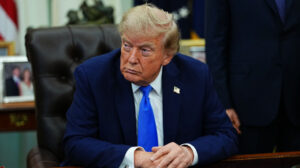
Two months after the start of the war in Iran, the landscape remains murky, with CNN pointing out that almost all parties involved find themselves in an unfavorable position. When US President Donald Trump announced the start of the war, he had promised a quick and decisive victory. Indeed, just ten days later, he declared that the United States had “already won the war in many respects.”
Today, the conflicts have essentially “frozen,” without any definitive conclusion in sight. According to CNN’s analysis, Washington has not gained clear strategic benefits, while the conflict that was initially presented as limited has now expanded, dragging much of the world into it.
Global implications and uncertainty from the US-Iran conflict
The crisis is evolving into a widening geopolitical front, with consequences affecting more and more countries. CNN notes that very few appear to emerge as winners from the developing situation.
“There are no real winners from the war, but there are certain countries that are in a relatively advantageous position to manage its consequences,” Melanie Sisson, senior researcher at the Brookings Institution, told CNN.
The losers from the US-Iran war
The Iranian people
In every conflict, anywhere in the world, it is always ordinary people who have the most to lose from a war – and this is truer than anywhere else in Iran. The Iranian people find themselves under fire both from abroad and domestically. The US and Israel have struck thousands of targets in Iran – including some attacks on civilian infrastructure – killing more than 3,600 people, including more than 1,700 civilians, according to Human Rights Activists in Iran. Trump has gone so far as to threaten that he will destroy Iran’s “entire civilization” if the country’s leaders do not submit to his demands.
Meanwhile, the Iranian regime has intensified its violent suppression of the opposition. The new regime leadership, under Supreme Leader Mojtaba Khamenei, appears to be even harsher than the previous one, determined to send a message to anyone who dares to challenge it.
According to human rights organizations, more than 600 people have been executed by the government since the beginning of the year, after thousands were killed during demonstrations in late December and January. Additionally, Iranians have been under a government internet blockade for over eight weeks.
The Iranian economy has also suffered a serious blow, resulting in job losses and increased poverty.
The Lebanese people
The people of Lebanon have been trapped for decades in the conflict between Iran-backed Hezbollah and Israel. A fragile ceasefire held until February, when, after Israel’s assassination of Iran’s supreme leader, Ayatollah Ali Khamenei, Hezbollah began attacking Israel.
Israel responded by launching a series of deadly airstrikes and a more extensive ground invasion aimed at destroying Hezbollah. Over 2,500 people have been killed by Israeli attacks in Lebanon since they began on March 2, Lebanon’s Health Ministry announced Tuesday.
A CNN satellite imagery analysis suggests that Israel has adopted in Lebanon the same strategy it had previously applied in Gaza and is now leveling entire villages. Israel has stated that the 600,000 people displaced in southern Lebanon will not be allowed to return to their homes until Hezbollah stops threatening northern Israel.
Gulf countries
Gulf countries have found themselves severely affected by a war they didn’t want and tried hard to prevent.
Despite being close to many of the most devastating conflicts of recent years, they enjoyed decades of stability and prosperity – until Iran began retaliating against the US and Israel, attacking them.
The United Arab Emirates has been hit much harder than any other country, including Israel, as they have received more Iranian rockets and drones. Although the vast majority have been intercepted, the damage has already been done, threatening the UAE’s position as a regional commercial and tourism hub.
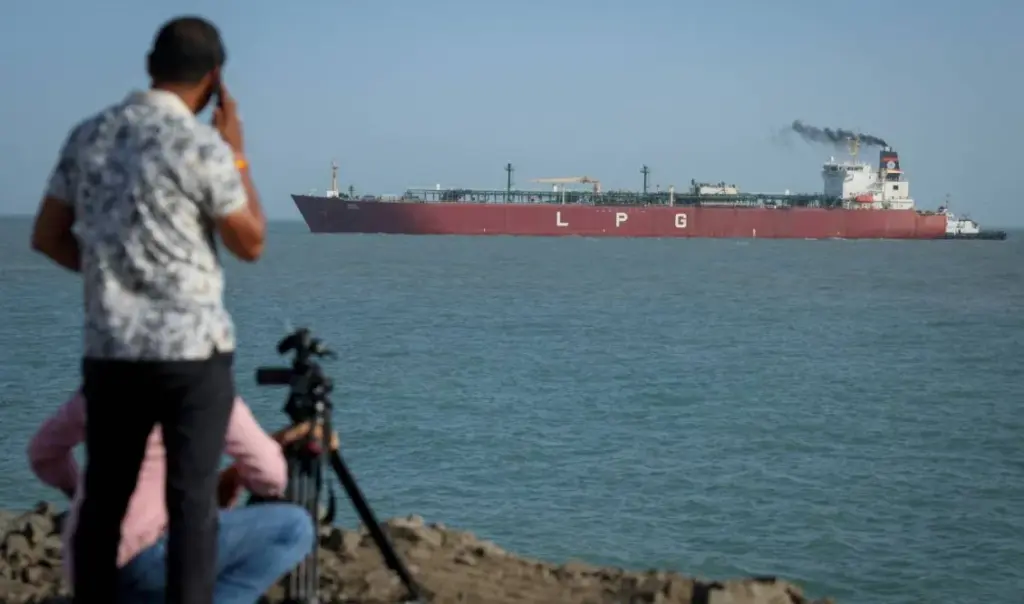
Meanwhile, Iran’s closure of the Strait of Hormuz has had devastating effects on Iraq, Qatar and Kuwait, which depend on this sea passage for their exports of oil, natural gas and other products.
The International Monetary Fund significantly lowered its forecasts for these countries’ economic growth and estimates that the economies of Iraq, Qatar and Kuwait will shrink this year.
The American people
The war has burdened Americans and their wallets. They are already paying more for gasoline and airline tickets, as well as for certain services, as more and more businesses begin adding fuel surcharges to their prices. Annual inflation rose to 3.3% in March, from 2.4% in February. Consumer confidence is collapsing.
“There’s no other way to put it: the situation for the United States right now is not good,” said Sisson from the Brookings Institution. “The American economy depends heavily on oil for transporting people and goods and has not invested enough in renewable energy sources.”
The global economy and consumers worldwide
Consumers around the world are already feeling the effects of the war.
The situation is particularly difficult in Asia, where many countries depend on imports of oil and other petrochemical products used in manufacturing. Latin American residents are struggling to cope with increased energy and food prices. The crisis is burdening already tested economies across Africa. Additionally, the European Central Bank warns of a “major shock.”
Before the war, according to the International Monetary Fund, global inflation was expected to slow to 3.8% this year from 4.1% last year. Now, the IMF predicts prices will rise by 4.4%.
The IMF also lowered its economic growth forecasts earlier this month, stating it now expects the global economy to grow by 3.1% this year, compared to the 3.3% it predicted in January.
The IMF warned that poorer countries will be hit harder, partly due to the rapid rise in fertilizer prices. Residents of these countries are more dependent on agriculture and spend a larger percentage of their total income on food.
The potential losers
Donald Trump
Trump took a huge risk which has yet to bear fruit. He promised a short war aimed at ending Iranian nuclear and missile threats – and perhaps even overthrowing the regime itself. However, these goals have not yet been achieved and the end of the conflict remains uncertain.
In the US, the war was not popular from the start. The longer it continues, the worse Trump’s poll results become. A CNN poll of polls – the average of recent polls – shows the president’s approval rating at just 37%.
“Politically, natural gas prices are already high and continue to rise, which doesn’t help the Trump administration. And diplomatically, Trump appears weak. He now seems to understand that resuming hostilities will cost the United States dearly and is unlikely to bring the results he desires – regarding the nuclear issue, the Strait of Hormuz, as well as regime change,” Sisson added.
However, Trump could still emerge victorious – if Iran is forced to submit and accept the US’s extreme demands. But such a scenario doesn’t seem likely, at least for now.
Israel and Benjamin Netanyahu
Just a few years ago, the idea of a direct confrontation between Iran and Israel would have been unthinkable – mainly because most of the world, especially the US, was actively trying to prevent it.
However, Israeli Prime Minister Benjamin Netanyahu managed to convince Trump that a joint US-Israeli attack on Iran was the only way to deal with the regime and its nuclear program. This was a strategic victory for Netanyahu, at least initially. Last week, Netanyahu reiterated his promise to “change the face of the Middle East” and that he is “fully cooperating” with Donald Trump.
The fact that the military operation destroyed much of Iran’s military power could give Netanyahu the boost he needs, ahead of Israel’s election year.
Meanwhile, many polls have shown that while most Israelis support the war with Iran, they don’t believe the US and Israel are winning. The war has also further damaged Israel’s image in the US, which had already been hurt by the devastating conflict in Gaza.
There are also concerns about the security of the large number of people living in northern Israel, where the threat from Hezbollah rockets and drones has increased again.
The Iranian regime
The Iranian regime has suffered losses in the conflict, as many high-ranking officials, including longtime Supreme Leader Ayatollah Ali Khamenei, have been killed by the US and Israel.
However, the regime remains in place and its new leaders appear more radical and more willing to confront than their predecessors. Most importantly, the regime has gained new diplomatic influence, proving it can cause global turmoil by closing the Strait of Hormuz.
“They took the risk and, as a result of this rather dangerous move, proved they have de facto control of the Strait, which has significant implications for the future of the region and the global economy,” said Mona Yacoubian, director of the Middle East Program at the Center for Strategic and International Studies (CSIS).
Ukraine
In the short term, the war in Iran is very bad news for Kyiv. Significant arms deliveries have been redirected, while Ukrainian President Volodymyr Zelensky told CNN last week that anti-ballistic missile supplies have been negatively affected due to limited production capacity in the US.
The Middle East crisis has also diverted the world’s attention from Ukraine, with the American negotiating team, led by US envoy Steve Witkoff, now focusing on Iran.
However, there may be a positive side. More than four years of trying to defend against Russia have turned Ukraine into something of a superpower in the drone sector. The Iranian threat made the world realize this.
“This war has created some interesting prospects for Ukraine in the Gulf. Zelensky traveled to the Gulf and was welcomed with open arms. … This could be the beginning of a significant relationship, due to their shared interest in developing anti-drone technology,” Yacoubian said.
The winners… so far
China
China, the world’s largest energy importer, depends heavily on Middle Eastern oil. However, experts argue that Beijing may emerge from this conflict stronger.
China has weathered the oil crisis relatively well. Over the past decade, it has built huge oil reserves, diversified its import sources, and accelerated the transition to electric power, which is generated from domestic energy sources like coal and renewables. This helps the country withstand pressure from high oil prices. It could also lead to increased demand for Chinese solar panels and wind turbines in the future, as demand for renewable energy sources is expected to increase.
There’s also a diplomatic aspect. China may also benefit from the damage to US reputation due to the war, Yacoubian noted. “The US has suffered a huge blow globally because of this war. This is a war that is unpopular, not only in the United States, but around the world… and China managed to gain the upper hand on this issue and emerge as a key supporter of global peace and security, as well as international law,” she noted.
There’s also a security and strategic dimension. The Middle East conflict has forced the US to withdraw some of its most critical military assets from Asia, weakening their deterrence in a region where China is increasingly asserting its power and maintains ambitions regarding Taiwan.
However, the Chinese economy depends heavily on exports. If the global economy continues to struggle, there will be fewer customers for its products. This is already happening. Exports to the Middle East – a key market for China – are declining.
Fossil fuel companies
While the rapid rise in oil prices makes life much more expensive for people around the world, oil and natural gas companies are reaping huge profits.
Chevron, Shell, BP, ConocoPhillips, Exxon and TotalEnergies are all recording massive profits due to high oil prices and sharp fluctuations in them. According to a new Oxfam report, the six companies are projected to record profits of $94 billion this year.
However, high profits have led to calls for windfall taxes on these companies in many countries. The crisis also makes renewable energy sources more attractive and could accelerate the reduction of fossil fuel use.
Russia
There’s no doubt that the Russian economy has been boosted by the conflict. High oil and fertilizer prices have brought additional revenue to the Kremlin – especially after the US temporarily relaxed sanctions on Russian oil already at sea, to provide new supply to the oil market as prices rose.
The International Energy Agency announced earlier this week that Russia’s energy sector revenues nearly doubled in March, reaching $19 billion, from $9.75 billion in February. However, Ukraine’s continued attacks on Russian oil facilities – particularly ports and refineries – have limited the amount of oil Russia can sell.
“But there’s an important ‘but’ here,” Yacoubian said, referring to the new relationships Ukraine has developed in the Gulf. “For the Russians, who, of course, also have a presence in the Gulf, the fact that their main opponent is entering the Middle East must be cause for deep concern,” she added, noting Moscow’s long-standing presence in the region and its ties to it.
Renewable energy
The global oil crisis has intensified many countries’ desire to turn to clean forms of energy, which could prove beneficial for the sector.
The European Commission presented a new strategy last week to protect citizens from “sharp fluctuations in fossil fuel prices” and accelerate the development of “domestic clean energy,” partly in response to the global energy crisis.
However, there’s a caveat: The Iran crisis is driving up prices of materials used in the renewable energy sector, such as aluminum, and disrupting key supply chains. This could make renewable energy technology more expensive.
Drone and weapons manufacturers
As in every conflict, weapons manufacturers are expected to profit. The Stockholm International Peace Research Institute published a report Monday showing that global military spending increased by 2.9% last year, reaching $2.019 trillion in 2025.
Xiao Liang, a researcher in the institute’s Military Expenditure and Arms Production Program, said this increase was due to states responding “to another year of wars, uncertainty and geopolitical upheaval with large-scale armament programs.”
“Given the scope of current crises, as well as the long-term goals of many states regarding military spending, this increase will likely continue through 2026 and beyond,” he added.
However, even the defense sector cannot be considered a sure winner long-term. Shares of some of the world’s largest defense companies have come under pressure in recent months, after a steady upward trajectory in recent years. Analysts argue this is partly due to the unpopularity of the Iran war in the US and expectations of possible policy changes in the future, as well as uncertainty about whether the Trump administration’s defense budget will be approved by Congress.