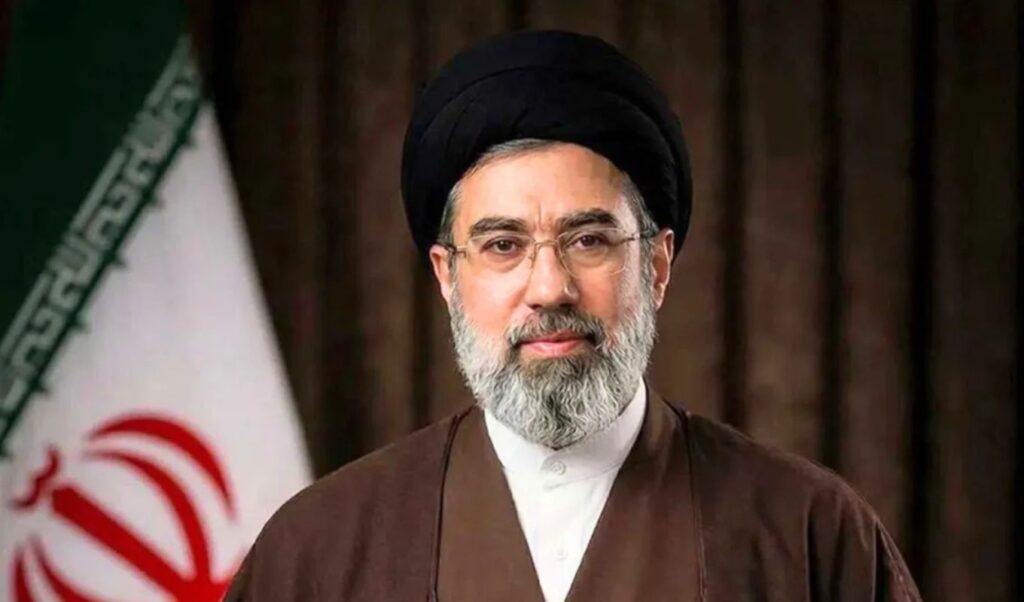
Power shifts within Iran are being recorded by Reuters, which reports that the Revolutionary Guards are those seizing power in wartime, diminishing the role of Supreme Leader Mojtaba Khamenei. As there is no undisputed clerical leader at the head of the Iranian regime, this likely plays a role in the negotiation process, as it leads to a hardening of Tehran’s stance while weighing whether to restart talks with the US.
Since its founding in 1979, the Islamic Republic has revolved around a supreme leader with power over all major state issues. But the assassination of Ayatollah Ali Khamenei on the first day of the war and the assumption of power by his wounded son, Mojtaba, have ushered in a different order of things, which is dominated by commanders of the Islamic Revolutionary Guard Corps (IRGC) and characterized by the absence of a decisive, authoritative arbiter, Reuters reports.
Mojtaba Khamenei remains at the top of the system, but people familiar with internal deliberations say his role is largely to legitimize decisions made by his generals rather than issuing directives himself. The pressure of war has concentrated power in a narrower, harder inner circle rooted in the Supreme National Security Council (SNSC), the Supreme Leader’s office and the IRGC, which now dominates both military strategy and key policy decisions, Iranian officials and analysts say.
“The Iranians are painfully slow to react,” said a senior Pakistani government official briefed on peace talks between Iran and the US mediated by Islamabad. “Obviously there is no unified command structure making decisions. At times, they need 2 to 3 days to respond.”
What is the gap between US and Iran – The critical role of the Revolutionary Guards
Analysts said the obstacle to an agreement is not internal disputes in Tehran, but the gap between what Washington is willing to offer and what Iran’s hardline Guards are willing to accept. Iran’s diplomatic face in talks with the US has been Foreign Minister Abbas Araghchi, more recently joined by parliament speaker Mohammad Bagher Ghalibaf – a former Revolutionary Guards commander, Tehran mayor and presidential candidate – who has emerged during the war as a key conduit between Iran’s political, security and clerical elites.
On the ground, however, the central interlocutor has been IRGC commander Ahmad Vahidi according to one Pakistani and two Iranian sources who identified him weeks ago as Iran’s central figure, including the night the ceasefire was announced. Mojtaba, who was seriously injured in the opening Israeli and American raid that killed his father and other relatives and left him disfigured with serious leg injuries, has not appeared publicly and communicates through IRGC aides or limited audio messages due to security restrictions, people close to his inner circle said.
Iran submitted a new proposal to Washington on Monday, which, according to senior Iranian sources, provides for gradual talks, with the nuclear issue set aside from the outset until the war ends and differences over Gulf shipping are resolved. Washington insists the nuclear issue must be addressed from the beginning. “Neither side wants to negotiate,” said Alan Eyre, an Iran specialist and former diplomat, adding that both sides believe time would weaken the opponent, Iran through pressure on Hormuz and Washington through economic pressure and blockade.
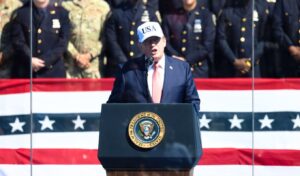
For now, neither side has the luxury of bending, Eyre said. Iran’s IRGC is reluctant to appear weak to Washington, while President Donald Trump faces pressure in midterm elections and has little room for flexibility without political cost.
“For both cases, flexibility would be considered weakness,” Eyre said. This caution reflects not only the pressures of the moment, but also the way power is now exercised within Iran. While Mojtaba is formally Iran’s absolute authority, he is a figure of consensus rather than command, analysts say, validating results forged through institutional consensus, rather than imposing authority.
Real power, they say, has shifted to a unified wartime leadership centered on the SNSC. “Important agreements probably go through him,” said Iranian analyst Aras Azizi, “but I can’t imagine him bypassing the National Security Council. How could he go against those running the war effort?”
Hardline figures like former nuclear negotiator Saeed Jalili and a group of radical parliamentarians have enhanced their profile using strong rhetoric during the war, but lack the institutional influence to derail decisions or shape outcomes. Mojtaba owes his rise to the Guards, who sidelined pragmatists and supported him as a reliable custodian of their hardline agenda.
What does the increasing dominance of the Revolutionary Guards in Iran signal
Already strengthened by war, the Guards’ increasing dominance signals a more aggressive foreign policy and stricter domestic repression, sources familiar with the country’s internal policy-making circles told Reuters. Based on revolutionary Islamism and a worldview that prioritizes security, the Guards see their mission as preserving the Islamic Republic domestically while projecting deterrence abroad. This view, often shared by hardliners throughout the judiciary and clerical establishment, prioritizes rigid central control and resistance to Western pressure, particularly on Iran’s nuclear policy and regional reach.
In practice, the Guards’ ideology shapes strategy and decision-making remains firmly in their hands. With the country at war and Ali Khamenei departed, no factor within the system has the power or flexibility to oppose them, even if they wished to, said people close to internal discussions. The choice facing Iran’s leadership is no longer between moderate and hard policy, but between hard and even harder line.
The shift signals a decisive realignment of power from clerical primacy to security dominance. “We’ve moved from divine power to hard power,” said Aaron David Miller, former US negotiator. “From clerical influence to Revolutionary Guard Corps influence. This is how Iran is governed.”
While there are differences of opinion, decision-making has concentrated around security institutions, with Mojtaba acting as a central coordinating figure rather than sole decision-maker, added Alex Vatanka, senior fellow at the Middle East Institute. Despite continued military and economic pressure from the US and Israel, Iran has shown no signs of breaking or capitulating almost nine weeks after the war began.
Nor, as Miller noted, is there evidence of fundamental rifts within the system or substantial street opposition. This cohesion suggests governance now lies with the Guards and security services, who appear to be directing the war rather than simply executing it. A strategic consensus has emerged – to avoid returning to full-scale war, maintain influence, especially in the Strait of Hormuz, and emerge from the conflict politically, economically and militarily stronger, Miller said.