The changes signaled by the announcement of the sudden departure of the United Arab Emirates (UAE) from OPEC, the Organization of Petroleum Exporting Countries, are analyzed by the BBC, with questions now being raised about the cohesion of the bloc and whether it will continue to influence oil prices globally.
According to the BBC, it is very significant that the United Arab Emirates proceeded with this move, reminding that they were a member of the organization even before becoming a nation-state in 1971.
OPEC is the organization consisting mainly of Gulf countries, which for many decades controlled the price of crude oil by reducing or increasing production and allocating quotas among their members. It played a vital role in the oil crises of the 1970s, which in turn transformed global energy policy.
While OPEC production is dominated by Saudi Arabia, the UAE had the second highest surplus production capacity. In other words, it was the second most important producer, capable of increasing production to help reduce prices. Indeed, this is exactly what led to the UAE’s long-term reconsideration of its position. Simply put, the UAE wanted to use the significant capacity in which it has invested.
OPEC quotas limited its production to 3-3.5 million barrels per day. The sacrifices as an OPEC member, in terms of lost revenue, became a disproportionate burden for the UAE. However, the timing of this move suggests the consequences of the war in Iran. The “pressure cooker” in the Gulf has affected the UAE’s relationship with Iran and may impact their already strained relationship with Saudi Arabia.
As for OPEC, this constitutes a major blow at a time when significant questions are being raised about its long-term cohesion. It’s not just that the UAE, when it can fully restore its oil to the market via sea or pipeline, is likely to target production of 5 million barrels per day. Saudi Arabia may respond with an oil price war that the UAE’s more diversified economy could withstand, but other poorer OPEC members might not.
Saudi Arabia’s reaction to UAE’s OPEC exit is “key”
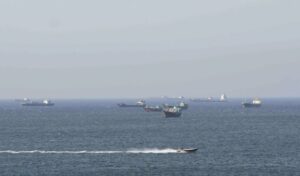
Much depends on Saudi Arabia’s reaction. Top UAE officials speak of new pipelines from the UAE’s oil fields in Abu Dhabi, bypassing the Strait of Hormuz and heading to the underutilized port of Fujairah. There is already one pipeline in intensive use today, but greater capacity will be needed to handle increased production and a permanent change in the liquidity and cost of tanker traffic in the Gulf.
For now, during the dual blockade of maritime traffic at Hormuz, this is not the main event affecting the prices of oil, natural gas, gasoline, plastics and food.
While the world, understandably, focuses on oil prices at $110 per barrel, this is, however, a reason not to underestimate the possibility of it approaching $50 at some point next year – if the chaos in the Straits is resolved, for example, in time for the US midterm elections later this year.
OPEC is less important to global oil markets than it was in the 1970s, with its share of 85% of internationally traded oil now being about 50%. Oil is also less critical to the global economy than it was in the 1970s. OPEC now has leverage, but not a monopoly. It cannot hold the world hostage, so to speak.
As BBC economic editor Faisal Islam characteristically recalls, the leading figure of OPEC, former Saudi Oil Minister Sheikh Yamani, had told him: “The Stone Age did not end because the world ran out of stones. The Oil Age will not end because the world ran out of oil.” This foreshadows a world where hydrocarbons will be replaced by other energy sources.
One way to interpret the UAE’s action is that it represents an indication of reduced dependence on oil in this world, and there have been some other indications in the current turmoil: China’s investments in electrification have helped blunt the economic blow from rising oil and natural gas prices.
According to some calculations, the electrification of China’s cars, trucks and trains has reduced oil demand in the world’s second-largest economy by 1 million barrels per day. Global oil demand could stabilize as this trend accelerates worldwide.
From this perspective, it makes sense to collect as much money as possible from oil reserves as soon as possible, before demand collapses. The UAE has economic strength and a partially diversified economy, through financial services and tourism.
Much will depend on what the new normal will be if and when hostilities in the Gulf cease. The UAE’s exit from OPEC could trigger a new domino effect in the region, and there will be significant pressure now on Saudi Arabia. When tankers pass through the Strait again or if the UAE doubles its efforts to build new pipelines, Emirati oil will flow like never before, without restrictions from OPEC commitments. It will have little impact on current blocks. It could change everything thereafter.