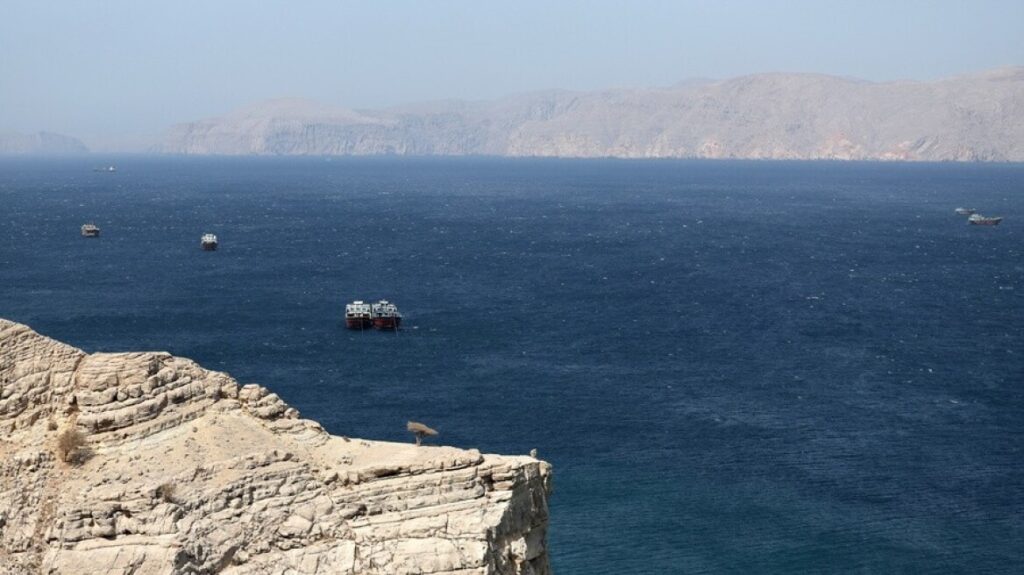
The Strait of Hormuz proves to be a major flashpoint, with the waterway through which 20% of global oil and natural gas passes further inflaming tensions between the US and Iran. This key sticking point in bilateral relations creates mounting pressure in the markets. As uncertainty for the global economy and inflationary pressures intensify, many wonder whether the US is prepared to board and seize – or even strike or sink – ships attempting to break the blockade. Another question that arises is what will happen if these vessels carry oil for major powers like China or US allies such as India and South Korea.
Earlier, however, messages from both opposing sides showed a willingness to persist with their terms and ultimatums. Donald Trump warned that “any Iranian who opens fire against us or peaceful ships will be eliminated,” while Iran’s Revolutionary Guards sent word that any military vessel approaching the Strait would be considered a ceasefire violation and would be met “harshly and decisively,” highlighting the danger of a perilous escalation.
Strait of Hormuz: Scenarios for the American operation
Some international analysts write about a massive American military operation, while others note that blockading Iranian ports involves entering an even more dangerous field than where the US previously found itself – legally, militarily, and economically. US Navy warships won’t patrol exactly outside ports like Bandar Abbas or Jask, as this would amount to an invitation for immediate attack from drones, missiles, or fast “kamikaze” boats.
Instead, CENTCOM, the US armed forces division covering the Middle East, is likely to use satellite and other intelligence-gathering means to identify which ships have departed from Iranian ports and who owns them. Even if ships’ automatic identification systems (AIS) are disabled, American warships moving at safe distances offshore won’t have difficulty detecting them once they enter the Gulf of Oman and intercepting them.
However, Iran has characterized the US move as an act of maritime piracy, with Tehran simultaneously threatening to turn against ports of neighboring Arab Gulf states. At the same time, there’s the question of Iran’s allies: China and Russia. Would the US be willing, for example, to board and seize a ship or cargo of Chinese ownership? And what would happen if China, which maintains a military base nearby in Djibouti, decides to provide armed naval escort to its ships?
It should be noted that the Strait of Hormuz constitutes a vital maritime route, as approximately one-fifth of global oil and liquefied natural gas passes through it. China is the largest single recipient of crude oil from the Strait, receiving 31% of transported quantities, followed by India with 14%. Overall, 86% of oil passing through the strait heads toward Asian countries.
However, any disruption to this route could affect prices globally.
Europe’s message
European Commission President Ursula von der Leyen addressed the economic impact of the American-Israeli war against Iran.
As she stated, the European Union’s bill for fossil fuel imports has increased by more than 22 billion euros since the war began 44 days ago, without receiving “a single additional molecule.”
“We are paying a very high price for our excessive dependence on fossil fuels,” von der Leyen noted characteristically.
The “window” that Vance opened
Regarding the possibility of resuming peace processes, diplomacy has not yet been exhausted, although US Vice President JD Vance boarded an aircraft stating he had submitted Washington’s “final and best” proposal.
For now, the fragile ceasefire is maintained, albeit marginally. Even if both sides, the US and Iran, avoid military escalation, the risk of sliding into conflict remains, as has been repeatedly demonstrated.