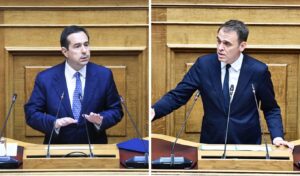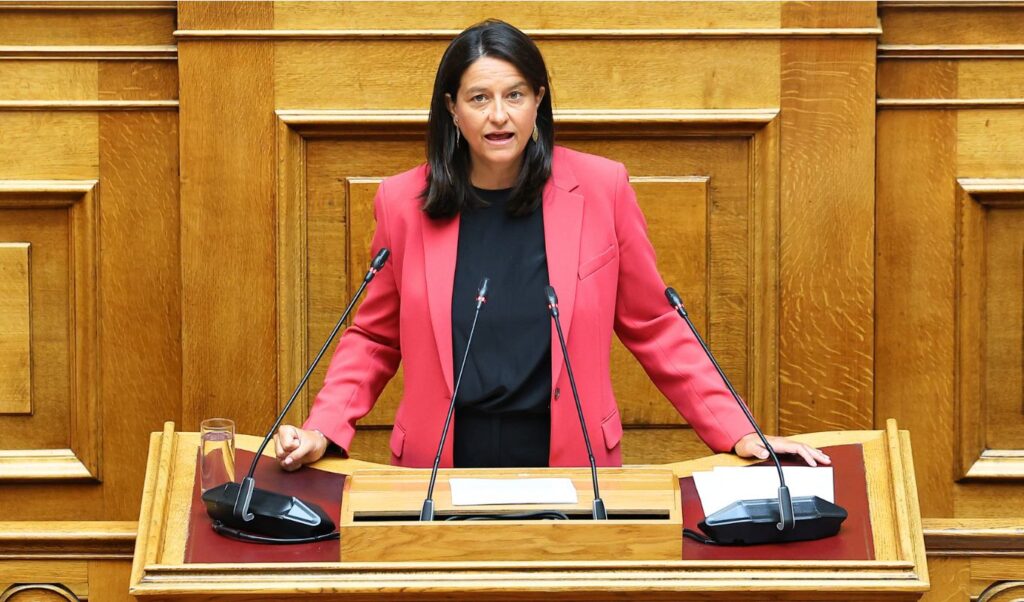
The occupational insurance bill was approved by majority vote in the parliamentary plenary session. Closing the debate, the Minister of Labour and Social Insurance addressed the issue of pensions. “We constantly hear about the Katroungalos law. It is not the Katroungalos law — it is the Tsipras law, the law of the Tsipras government. We’ve heard that we haven’t abolished it.
Read also: Kerameus: Ten truths about strengthening occupational insurance — An analysis of the bill under parliamentary debate
But all of its structural elements have been abolished,” said Niki Kerameus, who specifically noted:
– The low return rates and low replacement ratios previously in place have been abolished.
– The personal difference provision has been abolished.
– The excessive social security contributions for self-employed professionals have been abolished.
– The cuts to widows’ pensions have been abolished.
– The 60% withholding tax on working pensioners has been abolished.
– The ban on employment for disability pensioners has been abolished.
The most important point, the minister emphasized, is that the social insurance system has been significantly strengthened compared to 2019, thanks to a major increase in employment and a rise in declared overtime hours.
Kerameus: “Who could possibly object to an employer contributing something every month for the benefit of their employee?”
Niki Kerameus addressed the government’s prioritization of actions aimed at strengthening the first pillar of the social insurance system. She also spoke emphatically about occupational insurance — the core subject of the bill — stressing that society needs to become aware of this option and embrace a “change in mindset.” Workers and businesses alike must understand that a second, supplementary pension is an available option. She noted that “one of the distinctive features of occupational insurance is that there are a great many occupational insurance funds in which contributions come exclusively from employers.”
“Who could possibly object to an employer contributing something every month for the benefit of their employee? A great many occupational pension funds exist through savings made by employers themselves. So an employer alone can save on behalf of an employee. I therefore believe there is a real need for a change in mindset, and to highlight the opportunity that exists for occupational insurance — whether it comes from employees’ own savings or from contributions made by employers. And all of this comes with tax-exempt contributions, exceptionally low tax rates on benefits, and the protection of rights, even if you change jobs,” said Niki Kerameus.
“We consider it our duty as a government to communicate to citizens and businesses that they can save that little bit extra,” said the Minister of Labour and Social Insurance, adding: “It is their choice whether to make use of this option, and when and how to do so. But we have an obligation to offer this opportunity under the best possible conditions — with tax relief, simplification, accessibility for all, and portability. And that is precisely what we are doing with this bill. We are bringing this opportunity to light and we are building the foundations today, so that Greeks can enjoy far better years in the future.”