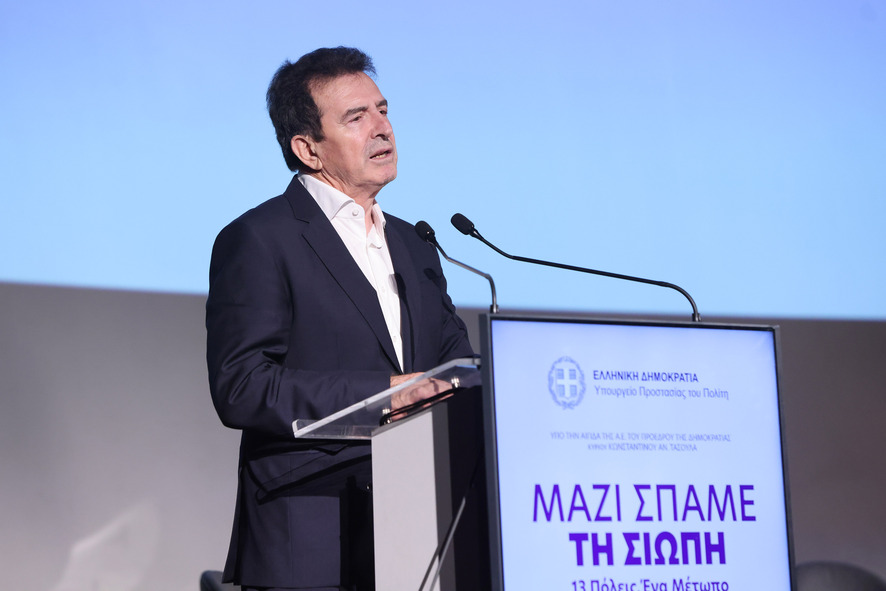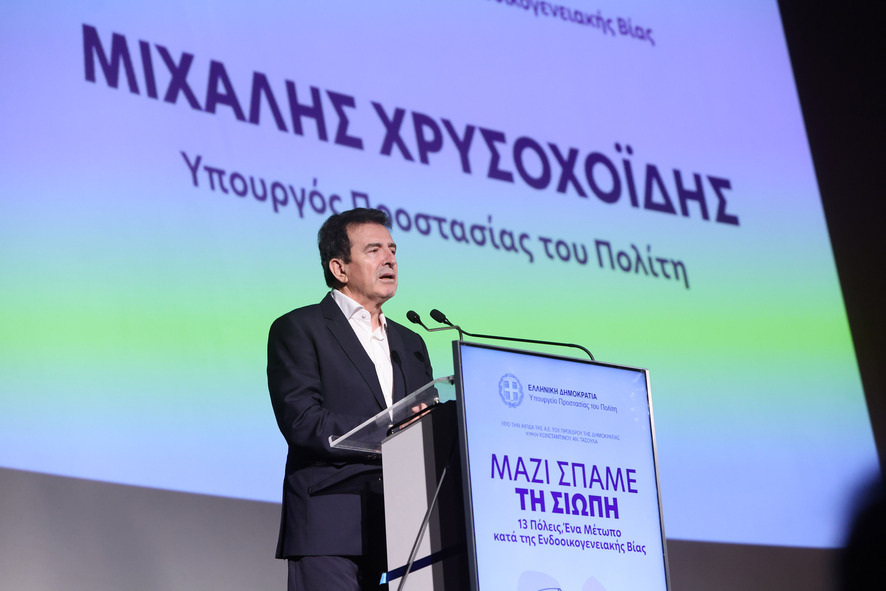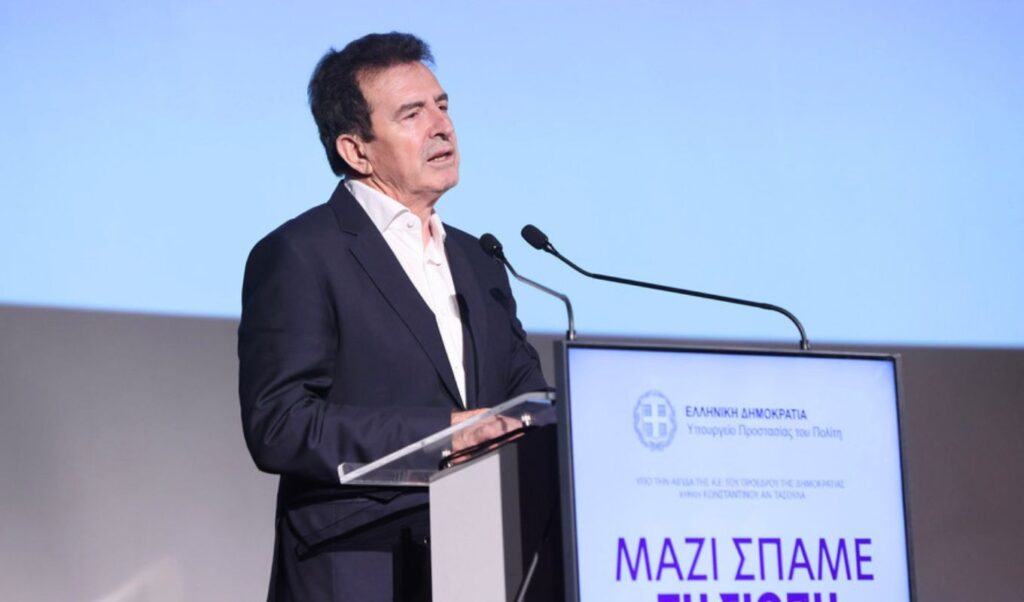
Greece’s Citizen Protection Minister, Michalis Chrysochoidis, opened his speech in Heraklion at an event focused on domestic violence by referencing the latest operational developments in two high-profile cases: the arson attack on the Nestor family home in Thessaloniki and the Marfin bank arson of 2010. The minister linked both cases to the broader fight against all forms of violence, stressing that “Democracy cannot tolerate practices that lead to the loss of human lives.”
Michalis Chrysochoidis: Anti-violence message from Heraklion with references to Marfin and the Nestor case
Commenting on the arrests made in connection with the Thessaloniki arson attack, the minister specifically noted that even actions some consider “low-intensity” can prove fatal. “Today, arrests were made and those responsible will be handed over to justice. These actions, which have proven so utterly futile, must stop,” he said, adding that society as a whole must condemn such mindsets. He made special reference to the Marfin case, noting that the period of economic crisis had deeply wounded the social contract and the fabric of democratic normality. “Democracy always wins. And democracy’s victory means the rule of law, the Constitution, the social contract, and ultimately, security,” he stated. Using the recent arrests as a backdrop, he sent a direct message to those who continue to choose violence, describing three generations — beginning with those arrested for the November 17 terrorist organization: “The first generation is still in prison, the second generation has almost entirely passed through prison, and now the third generation continues down this dead-end path. They are fewer now, with smaller-scale actions — but even these can lead to death.”
Inter-agency cooperation to tackle domestic violence
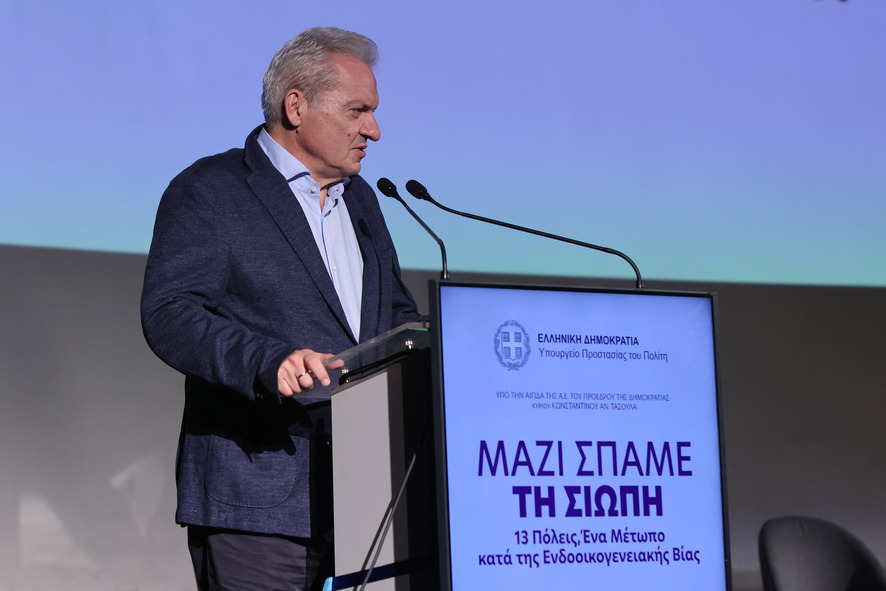
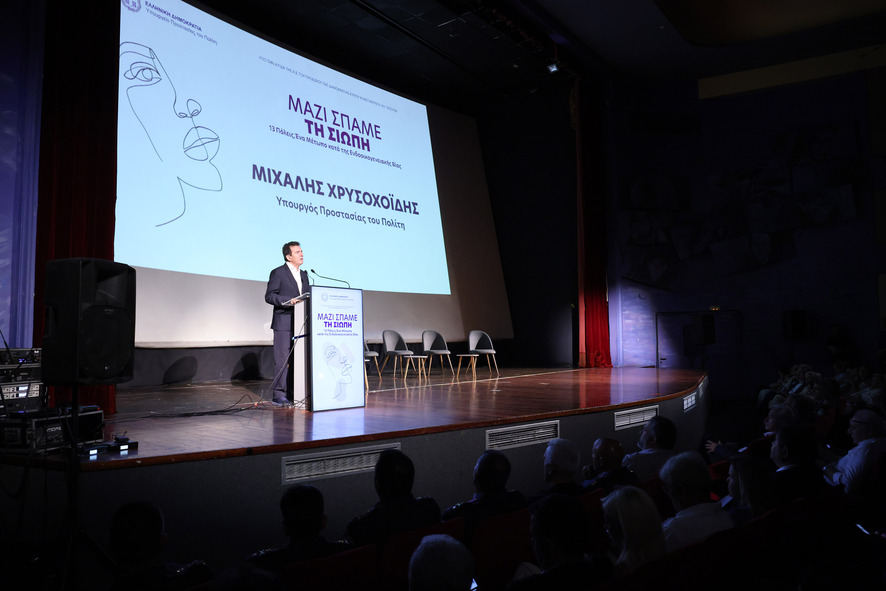
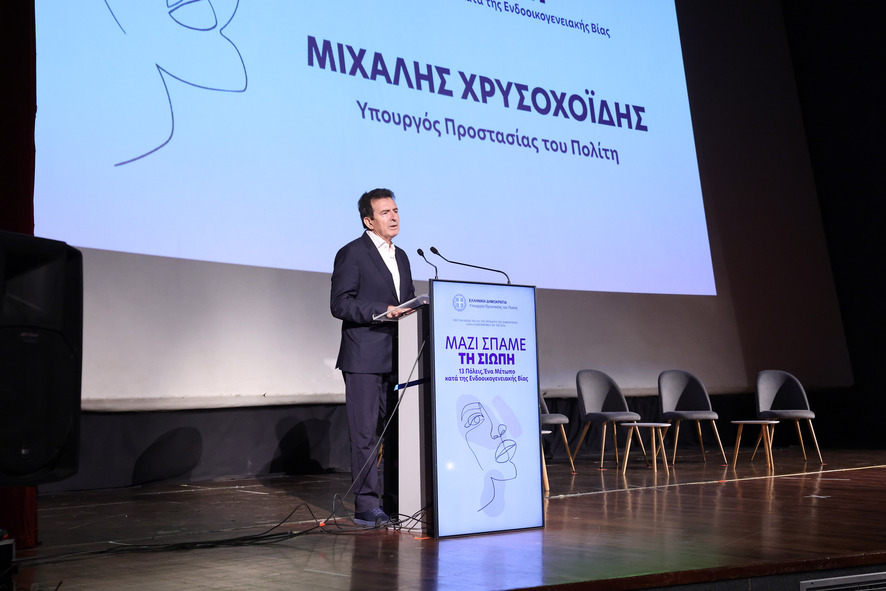
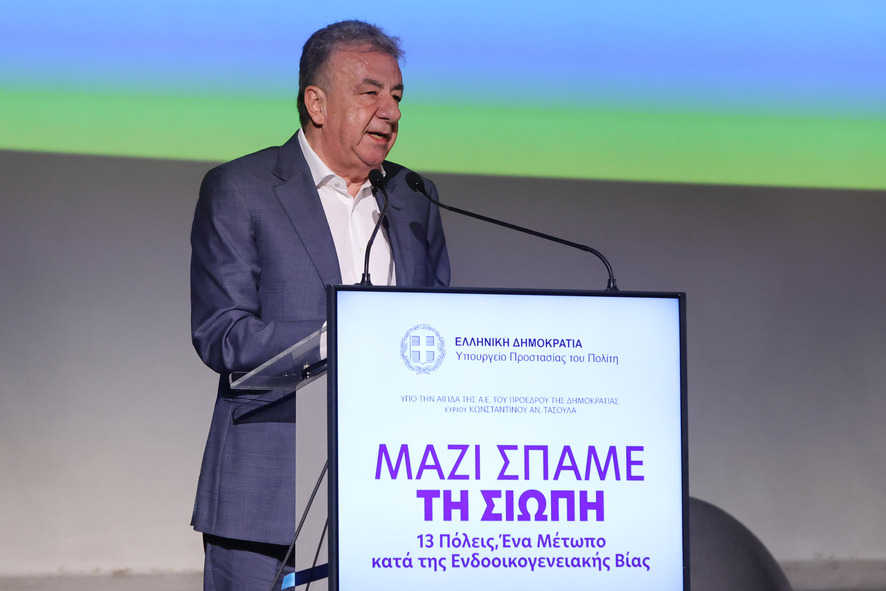
Turning to the main theme of the event, Chrysochoidis addressed the initiative titled “Together We Break the Silence. 13 Cities: A United Front Against Domestic Violence,” whose core objective was to highlight the importance of collaboration between state agencies and civil society organizations at the local level, while also raising public awareness on the prevention and tackling of domestic violence. “We must all act together. Each agency must complement the others,” he emphasized, noting that addressing domestic violence is not solely a matter for the police — it requires the joint efforts of the judiciary, local government, social services, shelters, and civil society organizations.
Chrysochoidis described gender-based violence as “one of the most abhorrent forms of violence,” pointing out that many incidents are rooted in addiction and in attitudes that treat women and children as possessions. He also addressed the traumatic impact on children who grow up in violent environments, stressing the need for a full societal mobilization. “We need to break the silence,” he said, reminding the audience that in recent years the Greek Police has fundamentally transformed the way it handles such incidents. Presenting the scale of the problem, the minister described the figures on domestic violence in Greece as “tragic.” According to his figures, approximately 23,000 complaints were recorded in 2025 — nearly 100 per day — around 13,000 arrests were made, more than 600 suspects were remanded in custody, while the rest were released on restrictive conditions. He also expressed confidence that the introduction of electronic monitoring bracelets would further strengthen the protection of victims. “The problem exists and we have an obligation to monitor it, analyze it, and continuously improve our policies together with civil society,” the Citizen Protection Minister stated, at an event held under the auspices of the President of the Republic, Konstantinos An. Tassoulas. The opening of the event featured a theatrical performance by Thodoris Atheridis and Fiona Georgiadis, carrying the central message that violence tolerates neither silence nor indifference.
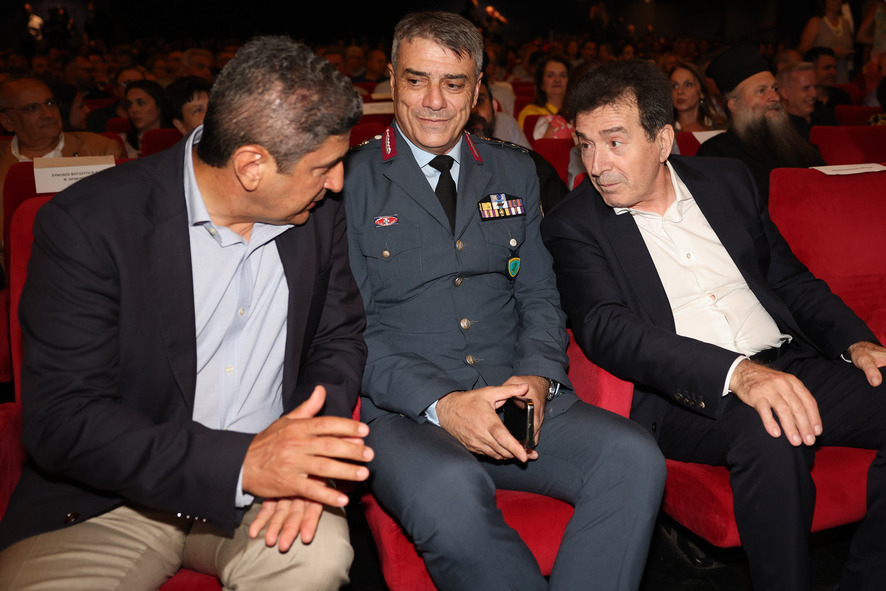
Among those attending the event were Regional Governor Stavros Arnaoutakis, Mayor of Heraklion Alexis Kalokerinos, Archbishop of Crete Eugenios, local government officials, representatives of various organizations, business figures, members of associations and civil society groups, as well as a large crowd of members of the public.
See photos from the event: