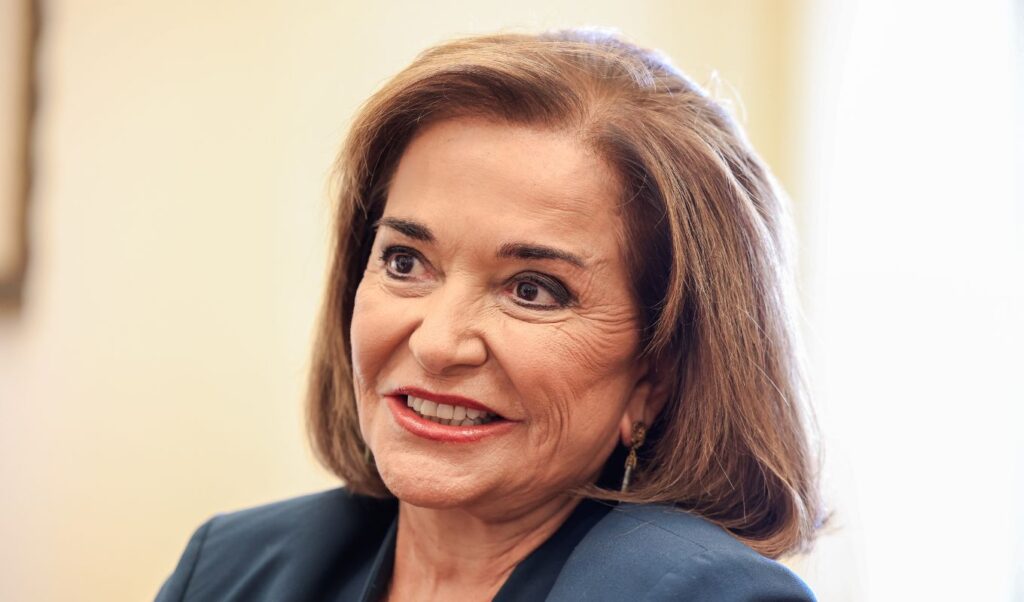
I accepted Andreas Papadopoulos’s invitation to write something on the occasion of the 30th anniversary of the death of Andreas Papandreou, knowing full well that my contribution would be something of an odd one out. There is no doubt that Andreas Papandreou and I found ourselves on opposing sides — engaged in epic battles, profound disagreements, and major ideological clashes. But I want to use this opportunity to speak about the Andreas Papandreou I came to know as a person.
One of the qualities that truly impressed you about Andreas was his remarkable courtesy. He was as gracious as few people I have ever known. I will never forget what happened after his time at Harefield, when a dinner was held at the American Embassy. Andreas was there, visibly exhausted, sunken deep into a large, plush armchair. When I went over to greet him, he made that enormous effort — the kind a person makes when trying to rise from a very deep chair when their body no longer cooperates.
I said to him, “For goodness’ sake, Mr. President, please, please don’t get up.” And he replied: “It is simply impossible for a lady to enter a room and for me not to rise.” That is one of those moments that has remained etched in my memory. His courtesy was innate. And I must say it is a trait that runs through the entire Papandreou family — George Papandreou has it in abundance as well. Andreas was, without question, a charismatic figure.
Our first meeting was in 1985, during a period of intense political tension, at the events marking the liberation of Kalavryta. We had spent three days plastering the town with posters — our side in blue, PASOK in green. It was the era of the poster wars. We found ourselves there early, George Papandreou representing PASOK and I representing New Democracy, waiting for the party leaders to arrive.
Andreas Papandreou was the first to arrive, and he greeted me with great enthusiasm. So great was his enthusiasm, in fact, that George Papandreou felt compelled to intervene and remind him: “Father, you do know she is Konstantinos Mitsotakis’s daughter.” It did nothing to dampen his enthusiasm, and he left in exceptionally good spirits. In every private conversation I had with him, I saw a man of extraordinary personal magnetism. In my view, the only thing that truly mattered to Andreas was the recognition and love of the people. What we would pay later for his decisions — what future generations would pay — was of complete indifference to him. In that moment, he was simply savoring his success.
Originally published in the newspaper “Sto Karfi”