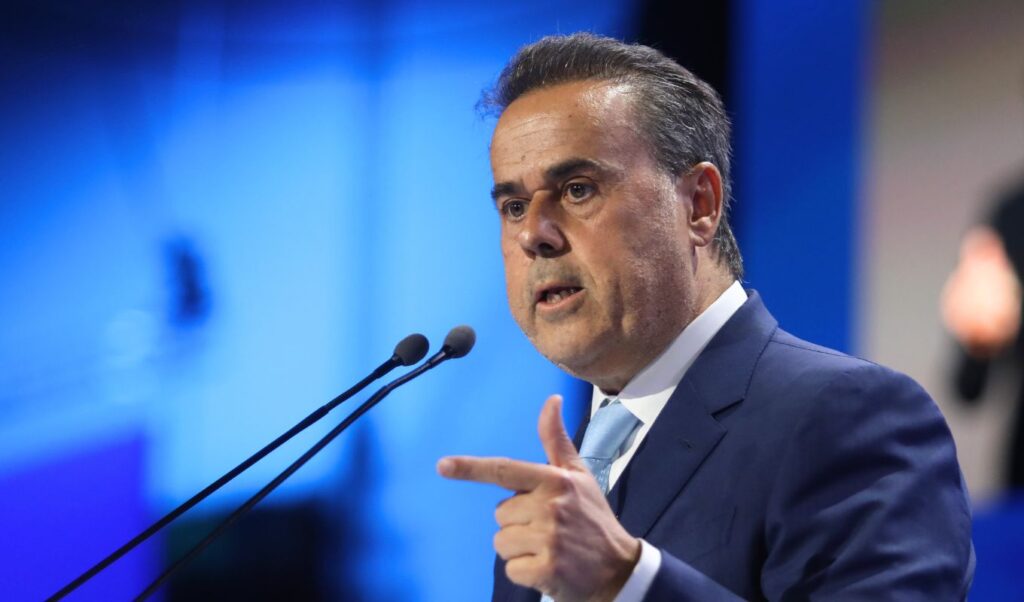
The strengthening of strategic cooperation between Greece and France in ocean protection and environmental conservation, as well as in critical energy transition sectors such as decarbonization and electrification, took center stage during a meeting held in Paris on Wednesday 20/05, between Environment and Energy Minister Stavros Papastavrou and French Minister for Ecological Transition, Biodiversity and International Climate and Nature Negotiations Monique Barbut. Secretary General for Natural Environment and Waters Petros Varelidis also participated in the meeting.
Stavros Papastavrou: Macron’s recent visit to Greece was very significant
Mr. Papastavrou emphasized the importance of French President Emmanuel Macron’s recent visit to Athens and the new enhanced partnership agreement signed between Greece and France, focusing on ocean protection, biodiversity and natural environment conservation.
The Environment and Energy Minister stressed the importance of ocean protection and the cooperation between the two countries within the framework of the European Ocean Eye Observatory initiative, noting that “we will have the capability to know in real time useful scientific data, critical information about marine ecosystem quality, vessel positions, fishing and non-fishing boats, as well as potential marine pollution incidents. Thus, technology and digital tools strengthen the marine environment protection framework, enhancing our understanding of our seas, which constitute a defining element of our identity.”
Greece and France agreed to strengthen their cooperation at the European level and proceed with establishing a working group for ocean protection within the framework of EU Council meetings, a step that Mr. Papastavrou characterized as a “Greek-French axis for highlighting and protecting the Mediterranean and its ecosystem.”
They also discussed the ETS revision framework and cooperation in climate policy sectors, where Mr. Papastavrou emphasized to his French counterpart the importance of maintaining an ambitious yet realistic climate policy, enhancing competitiveness and ensuring citizen support. Specifically, there was convergence between Greece and France on the need for front-loaded financing from ETS and through EIB for energy-intensive industries, to support innovative solutions for their decarbonization, as well as taking initiatives for economic electrification.
“Greece supports continuing free emission allowances for energy-intensive industries, with particular emphasis on shipping, where creating a separate allocation key in ETS is essential, which currently doesn’t exist, unlike for industry and aviation,” the Minister noted, pointing out that “ETS revision represents an opportunity to correct this inequality.”
Ms. Monique Barbut presented the recent energy law passed by the French National Assembly, as well as innovative electrification programs being implemented in France. She also briefed her Greek counterpart on agreements signed within the G7 framework in Paris, particularly those concerning illegal fishing and marine environment protection, agreements that Mr. Papastavrou characterized as of increased interest for Greece.
The two Ministers agreed on further strengthening close cooperation and knowledge exchange in natural environment protection and climate change response. Finally, Mr. Papastavrou invited the French Minister to visit our country soon.